
Huis met toren aan water — History & Facts
In its stillness, it holds a promise of peace, inviting the viewer to linger and reflect. The tranquil ambiance of the scene speaks to a deeper serenity, one that resonates in the quiet corners of the soul. Look to the left at the delicate interplay of water and architecture, where the house stands sentinel over the gentle, undulating ripples. The subtle blues and soft greens create a harmonious dialogue between land and water, while the warm strokes of the house's façade invite contemplation.
Notice how the light bathes the structure, casting soft shadows that evoke a sense of timelessness, suggesting life’s rhythms and the passage of time. Beneath its serene exterior, this work contrasts the solidity of the dwelling with the fluid nature of the water. The stillness of the scene belies an underlying tension — the eternal struggle between permanence and transience. The sky, painted in muted hues, hints at the potential for change, reflecting both calm and the inevitability of shifting seasons, emphasizing the transient nature of human life. In the years 1739 to 1740, the artist was immersed in a burgeoning art scene, characterized by a growing embrace of landscape painting.
While residing in Italy, he sought to capture the essence of idyllic and serene moments, mirroring the cultural shifts occurring in Europe at the time. This period marked a distinctive evolution in the portrayal of nature, emphasizing tranquility and harmony, evident in this work.
More Artworks by Giuliano Giampiccoli
Browse all →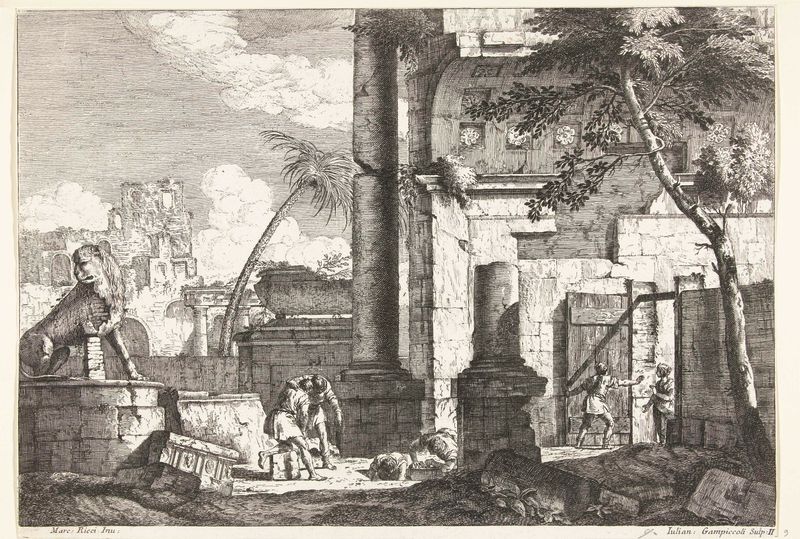
Antieke ruines met graf plunderaars en palmboom
Giuliano Giampiccoli
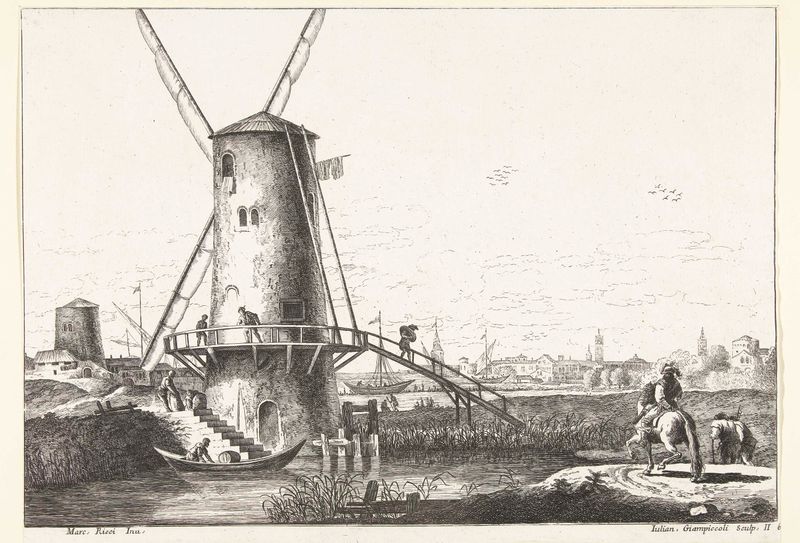
Landschap met molen aan water
Giuliano Giampiccoli
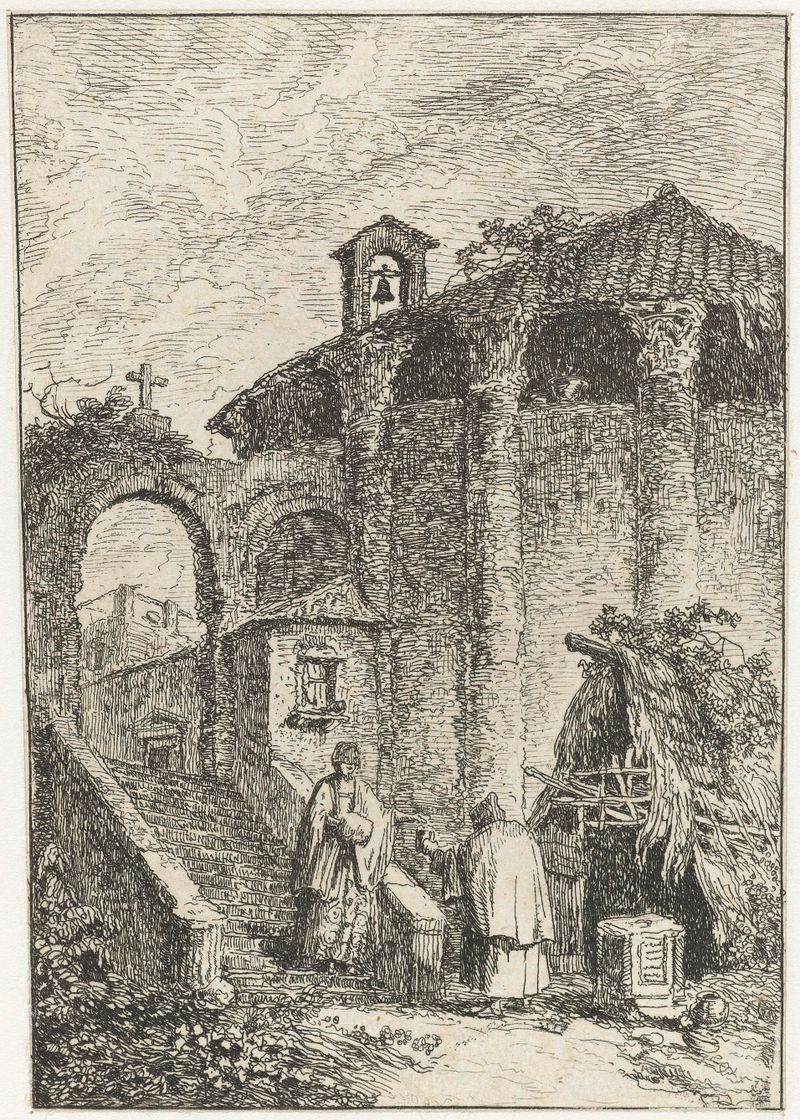
Gezicht op woningen en antieke ruïnes aan rand van stad
Giuliano Giampiccoli
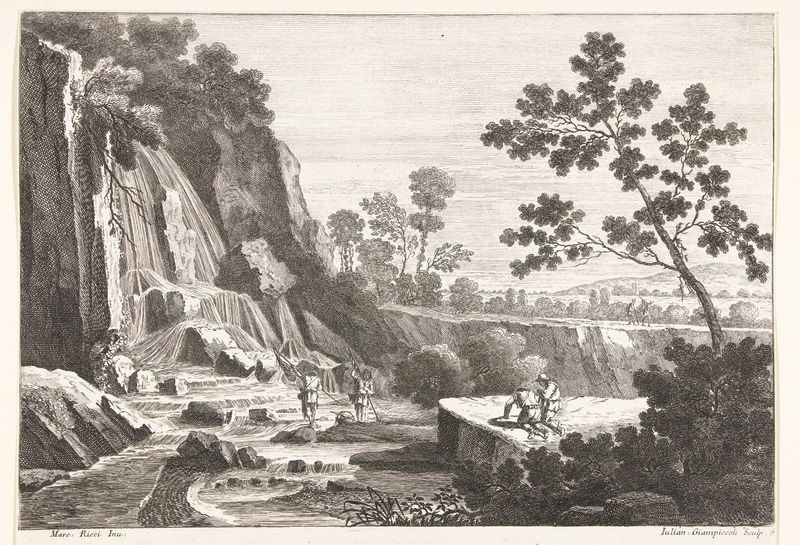
Landschap met waterval en vissers en andere figuren
Giuliano Giampiccoli
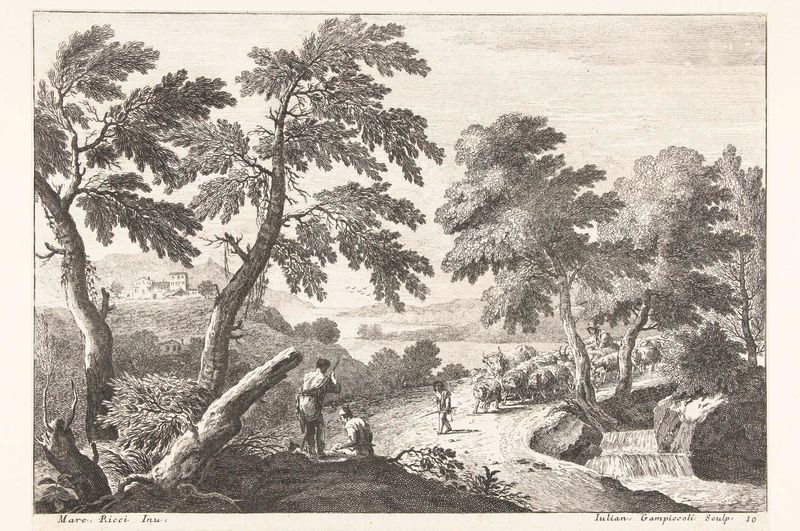
Landschap met herders op weg langs kleine waterval
Giuliano Giampiccoli
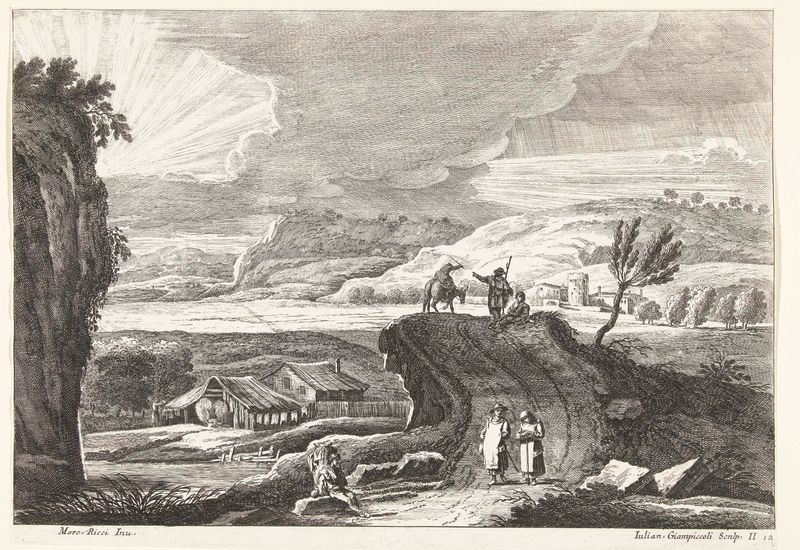
Heuvellandschap met pelgrims op weg en ondergaande zon
Giuliano Giampiccoli
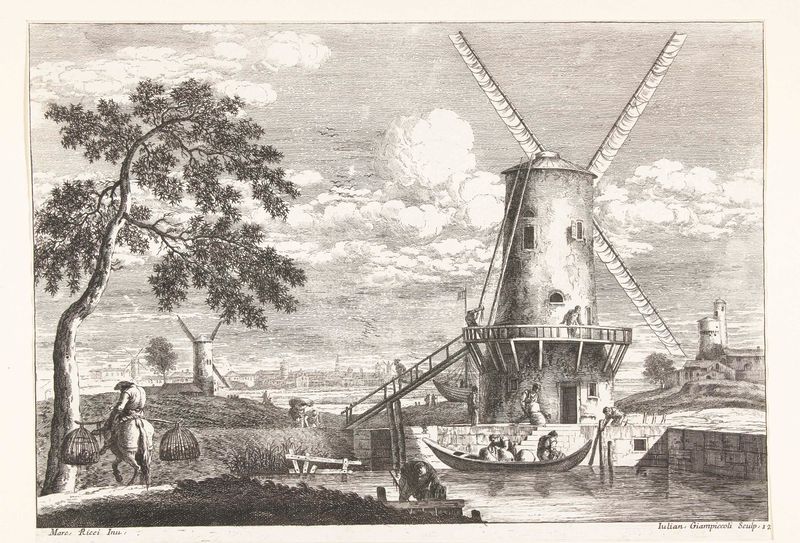
Landschap met molen aan water
Giuliano Giampiccoli
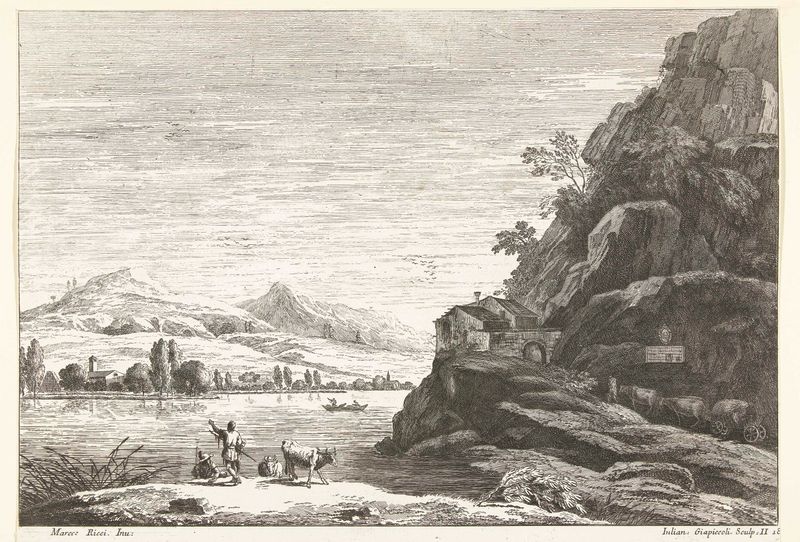
Rivierlandschap met huis tegen rots
Giuliano Giampiccoli
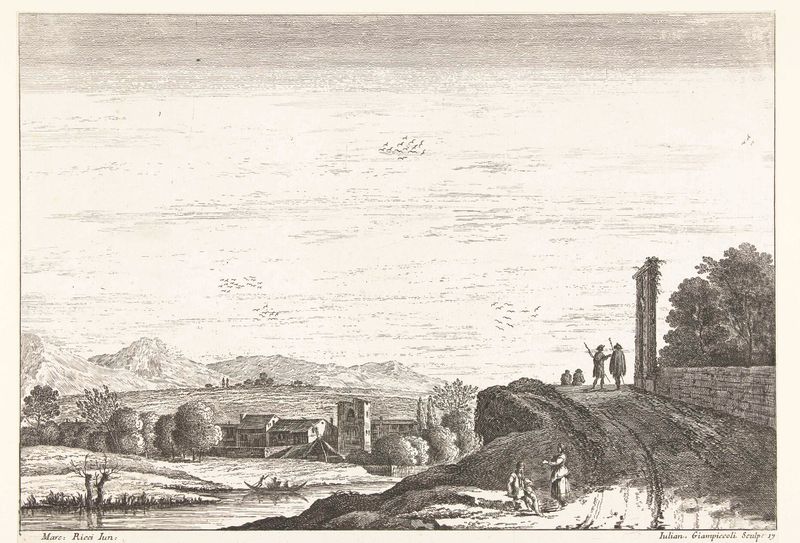
Weg langs rivier met figuren en twee antieke zuilen
Giuliano Giampiccoli
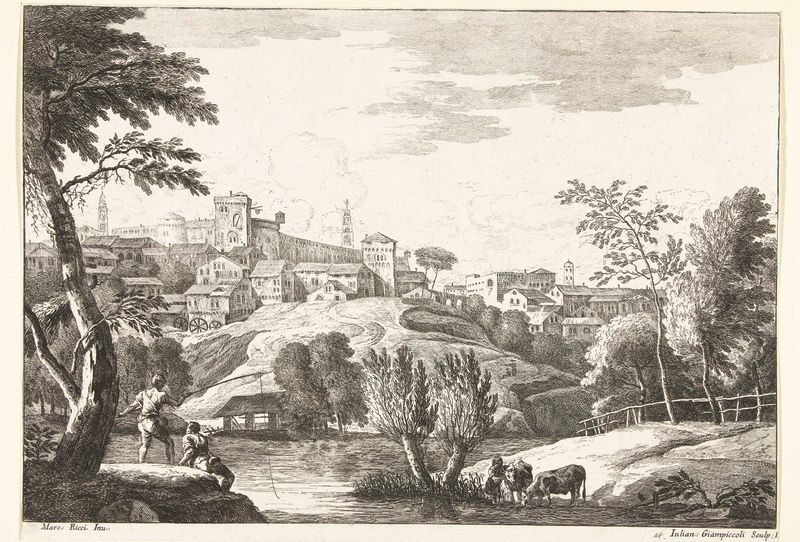
Heuvellandschap met stad en hengelaar
Giuliano Giampiccoli





