
Huis op de Anspachlaan — History & Facts
Can paint confess what words never could? In Huis op de Anspachlaan, a dwelling emerges, cloaked in shadows, hinting at secrets buried deep within its walls. Look to the left at the weathered facade, where vibrant strokes of ochre and green capture the house’s character. The windows, dark and uninviting, draw the eye as if beckoning you closer, while the vibrant sky above hints at a brewing storm, illuminating the tumult beneath the surface. Notice how Ensor’s brushwork dances between chaos and order, emphasizing the tension between the vivacious colors and the desolate structure they envelop. Here, betrayal lingers like smoke in the air, with the house acting as a sentinel to hidden narratives.
The juxtaposition of light and dark reflects the duality of existence—the outward vibrancy shadowing a more sinister reality. This interplay invites viewers to ponder who once inhabited this space and what transgressions unfolded behind those closed doors, each brushstroke whispering the unspeakable. In 1888, when this piece was created, Ensor was living in Ostend, Belgium, a time when his artistic style began to shift toward the avant-garde. The world was undergoing rapid change, with the rise of modernism challenging conventional forms and subjects.
As Ensor grappled with the themes of identity and emotional turmoil, he painted this work at a pivotal moment in his exploration of the deeper, often darker, aspects of human experience.
More Artworks by James Ensor
Browse all →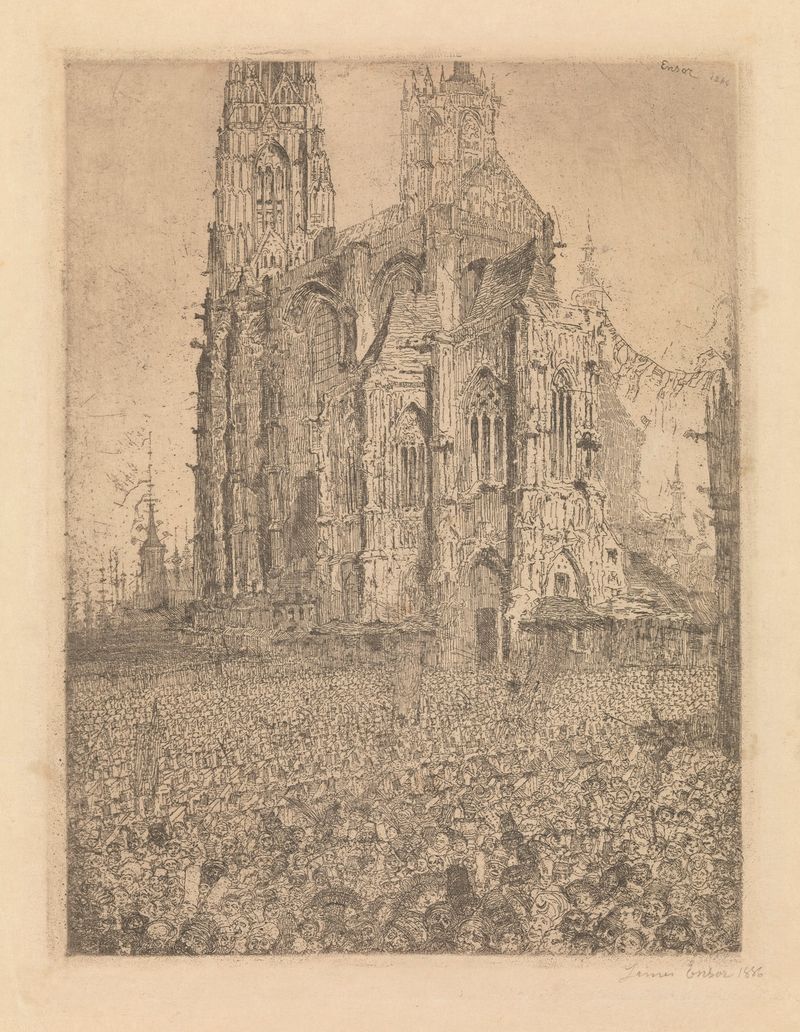
The Cathedral
James Ensor
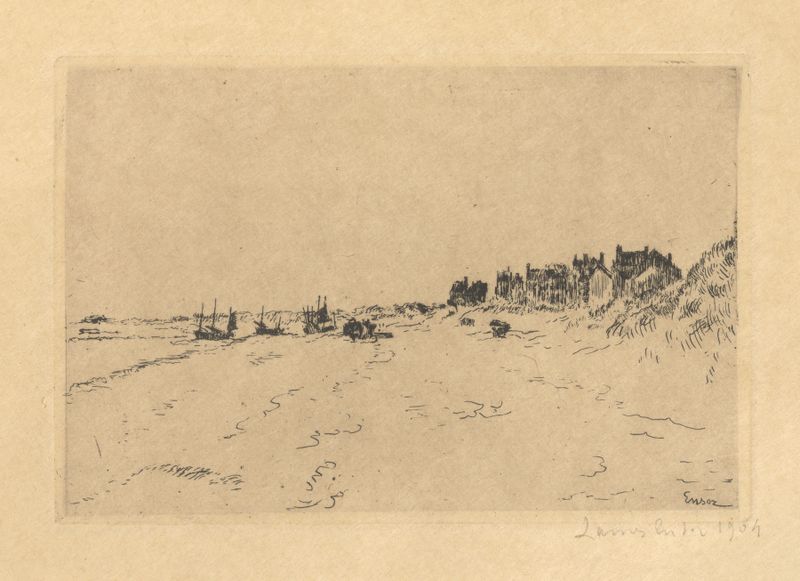
Het strand van De Panne
James Ensor
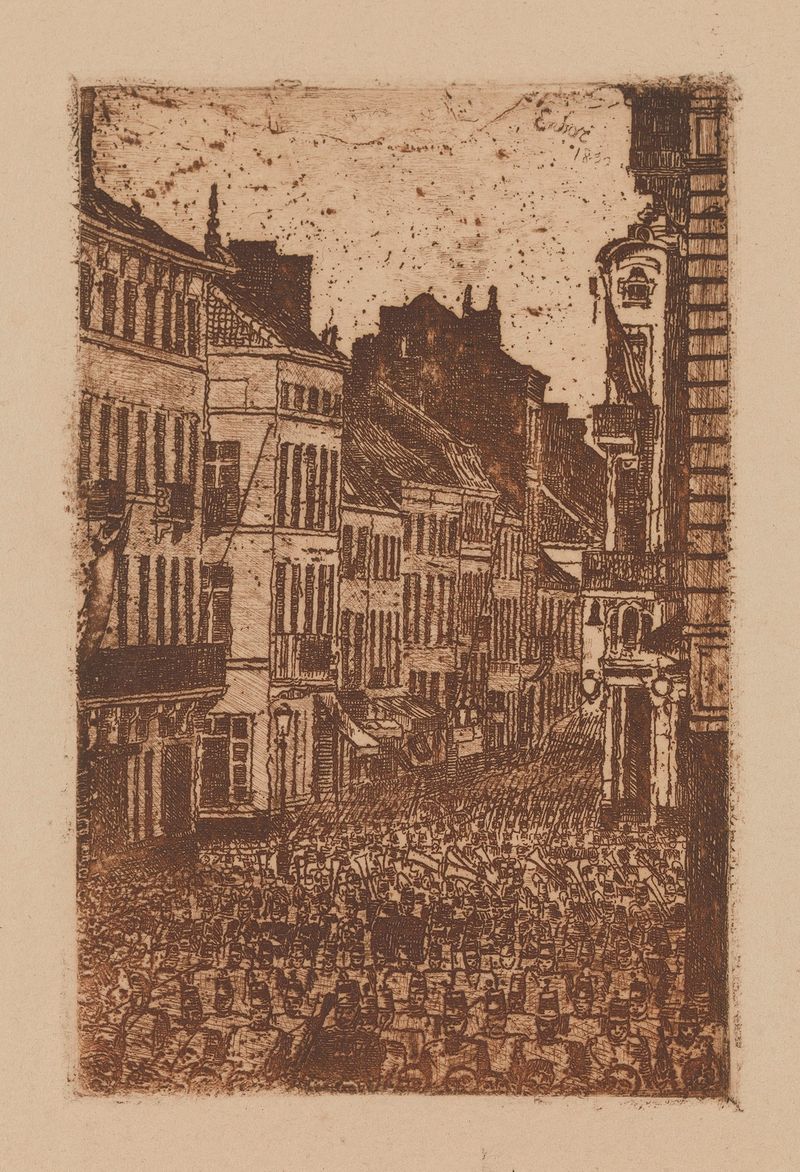
The Music in the rue de Flandre, Ostend
James Ensor
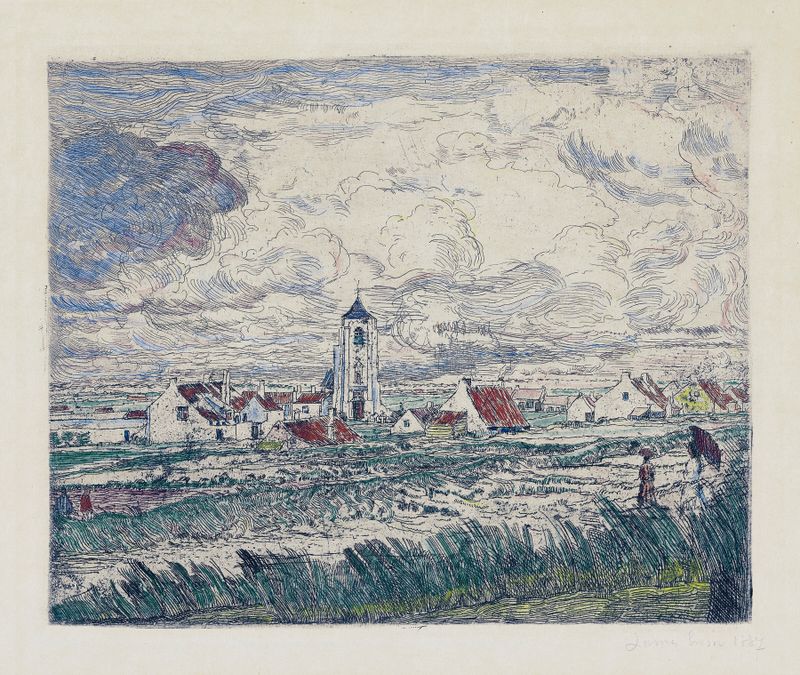
Grande vue de Mariakerke
James Ensor
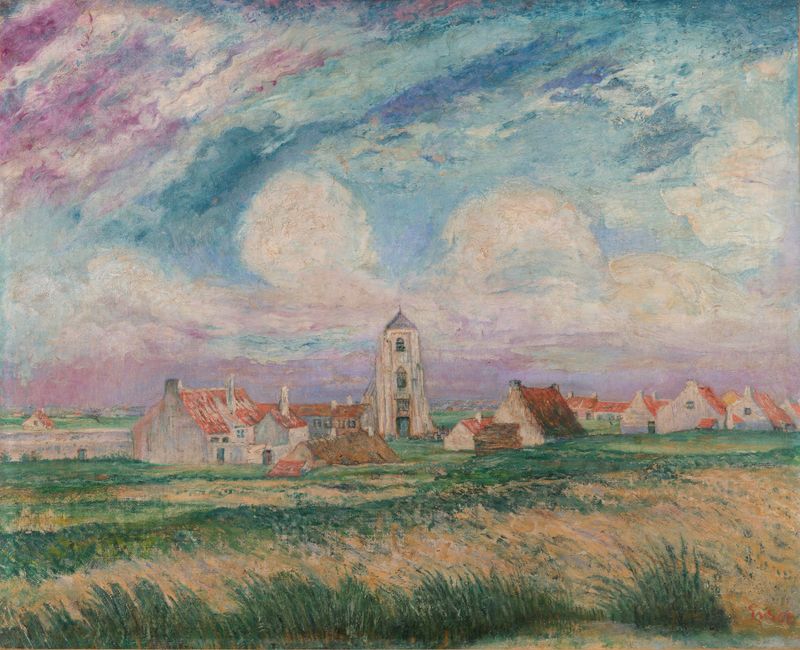
View of Mariakerke
James Ensor
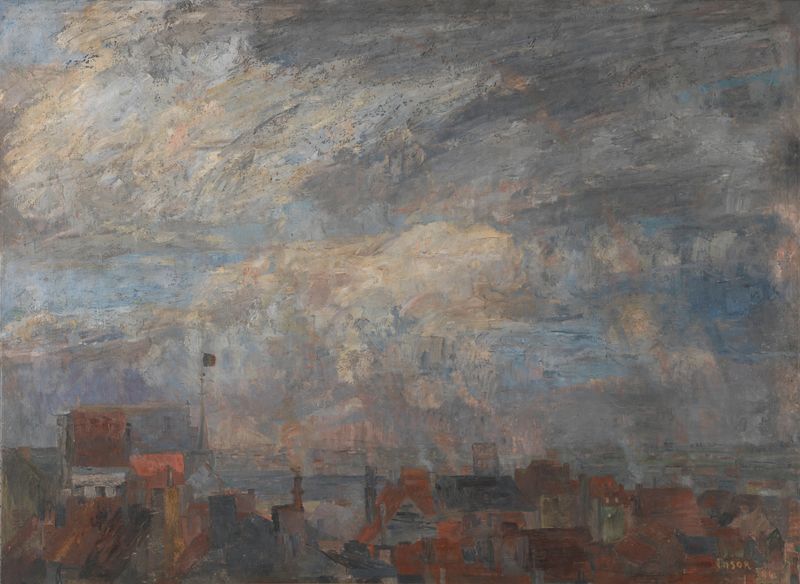
The Rooftops of Ostend
James Ensor
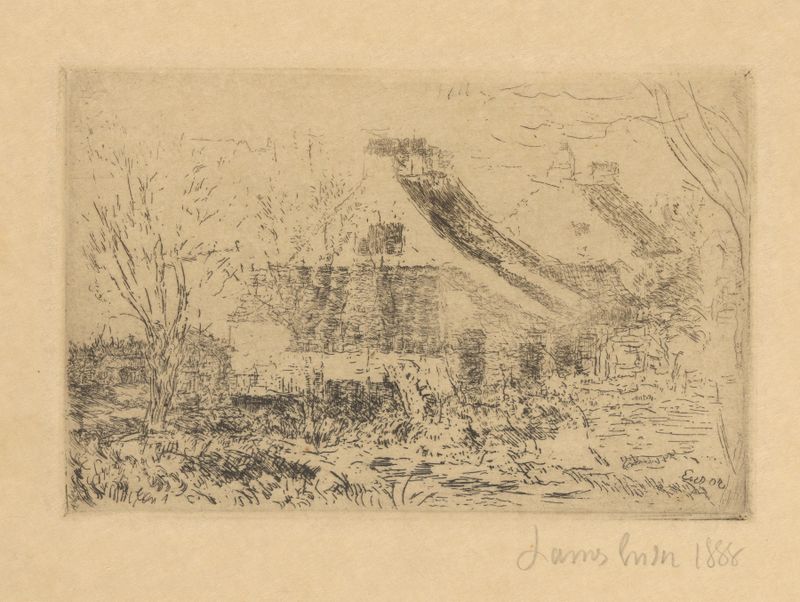
Huisjes in Mariakerke
James Ensor
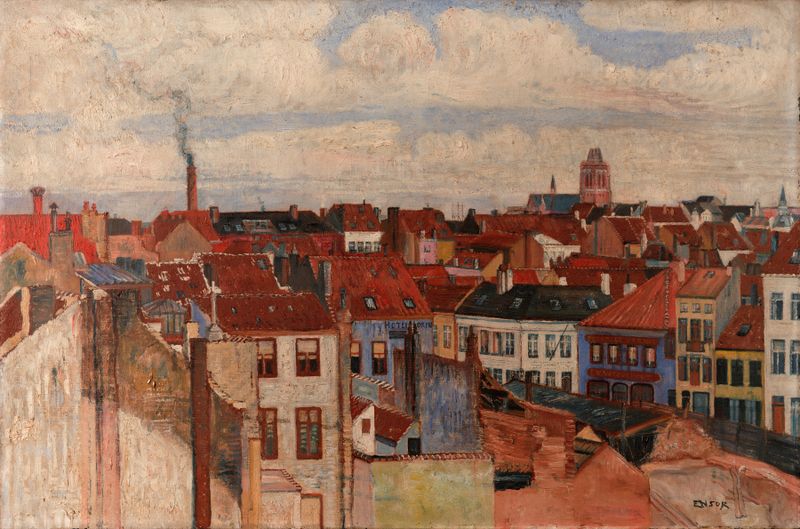
The rooftops of Ostend
James Ensor
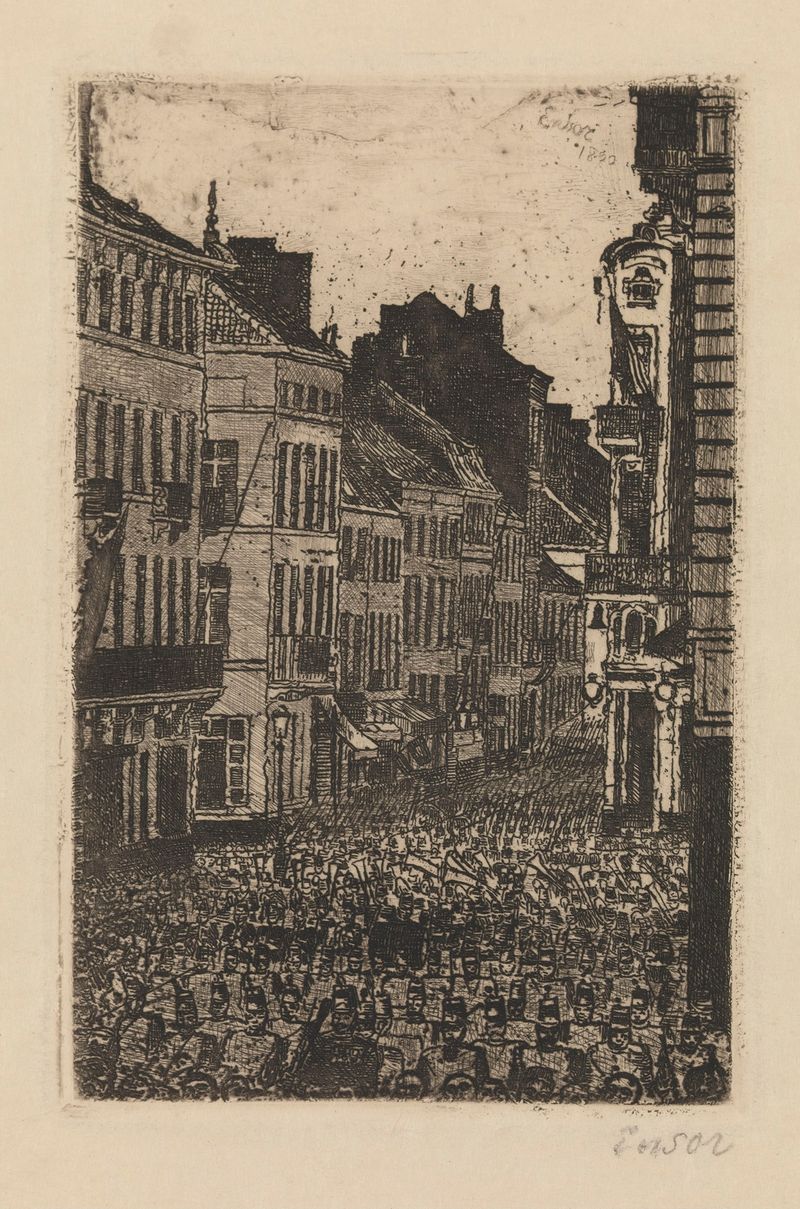
The Music in the rue de Flandre, Ostend
James Ensor
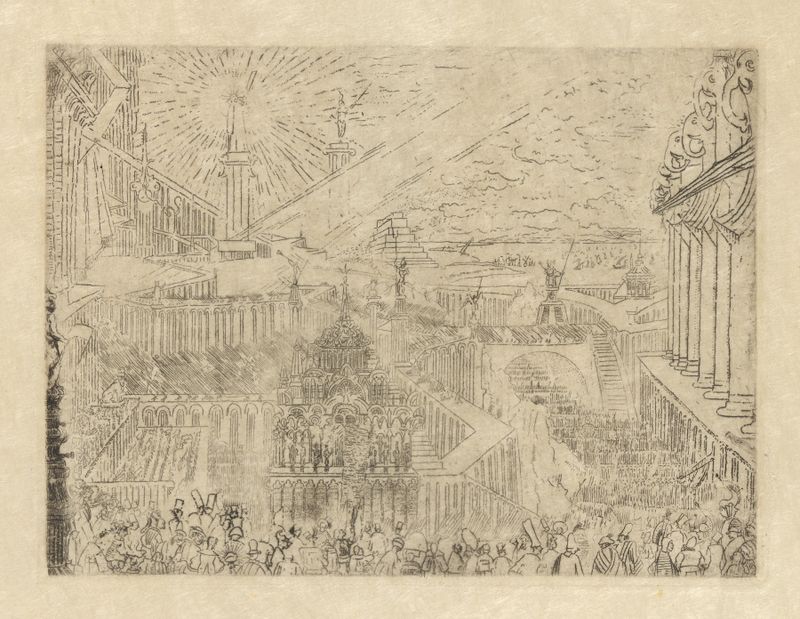
Verovering van een vreemde stad
James Ensor
More Architecture Art
Browse all →
The statue of Liberty
Frédéric Auguste Bartholdi

View of Houses in Delft, Known as ‘The Little Street’
Johannes Vermeer

View of Houses in Delft, Known as ‘The Little Street’
Johannes Vermeer

The Cathedral in Rouen. The portal, Grey Weather
Claude Monet

The yellow house
Vincent van Gogh

The Church in Auvers-sur-Oise, View from the Chevet
Vincent van Gogh