
In front of a House — History & Facts
This delicate interplay of light and shadow transforms a scene of ordinary life into something extraordinary, inviting reflection on the beauty that surrounds us. Look to the left at the sun-drenched facade of the house, its textures laid bare by the artist's skilled hand. The warm yellows and earthy browns dance together, creating a welcoming embrace that contrasts with the surrounding greenery. Notice how the light falls upon the roof's edge, outlining it against the deep blue sky, which serves as a canvas for whispers of white clouds drifting lazily.
Each brushstroke reveals a meticulous attention to detail, bridging realism and impressionism in a seamless blend. In the quiet spaces between the strokes, a deeper narrative emerges. The shadowy corners hint at solitude, while the vibrancy of the flowers blooming in front suggests a life that thrives despite the weight of unexpressed stories. The house, as a character in this tableau, stands resilient—its walls bearing witness to both laughter and sorrow, each detail charged with emotion.
The light, acting as both a literal and metaphorical force, symbolizes hope, illuminating the ordinary in a myriad of ways. Created in 1920, this work reflects Mousson’s life during a tumultuous period in Europe, marked by the aftermath of World War I. Living in the evolving landscape of post-war art, he sought to capture the essence of everyday moments, often infusing them with light and color to evoke a sense of peace amid chaos. The artist's intimate connection to his surroundings is clearly evident in this piece, a testament to his enduring belief in the beauty of the mundane.
More Artworks by Jozef Teodor Mousson
Browse all →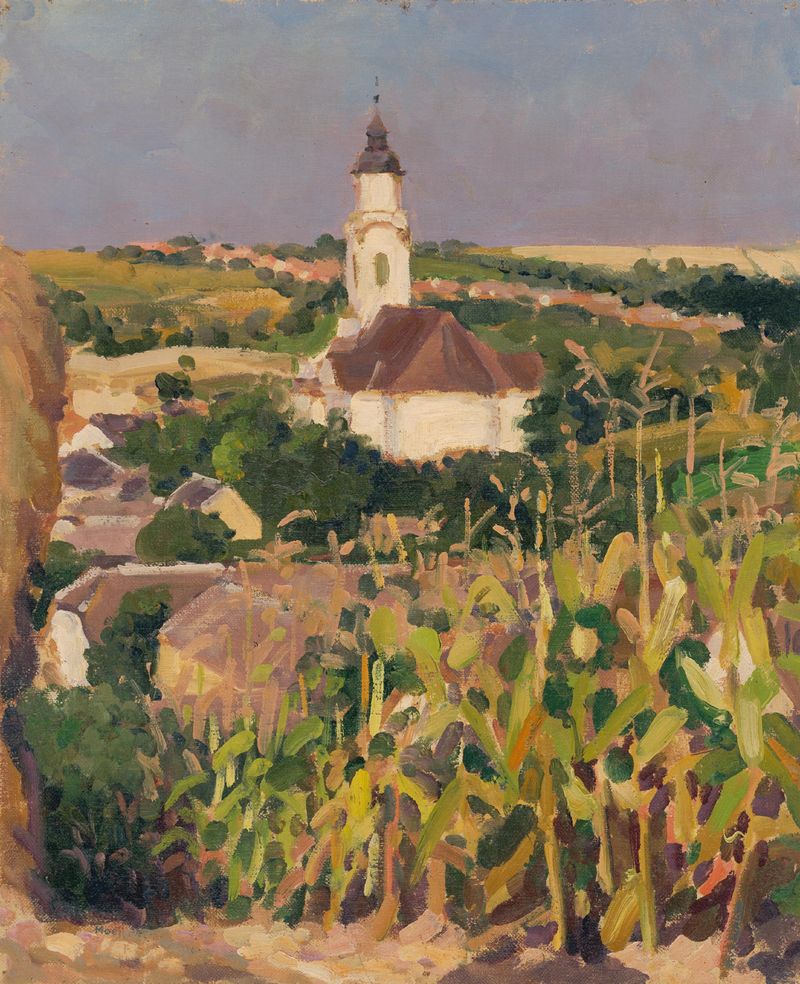
Eastern Slovakia Village
Jozef Teodor Mousson
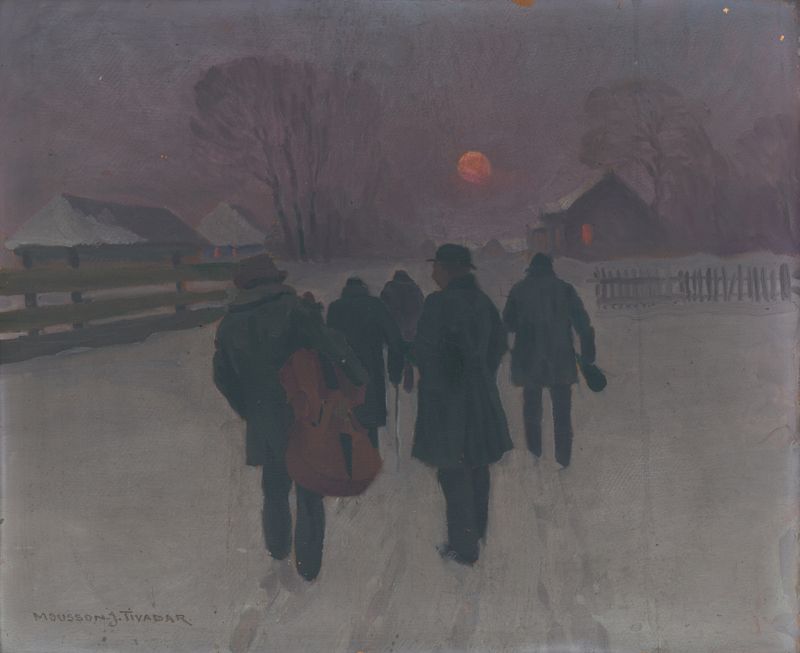
Musicians Returning in the Early Morning through Snowed Landscape
Jozef Teodor Mousson

Na pobreží
Jozef Teodor Mousson

V zime na dedine
Jozef Teodor Mousson

Trh v Michalovciach II.
Jozef Teodor Mousson
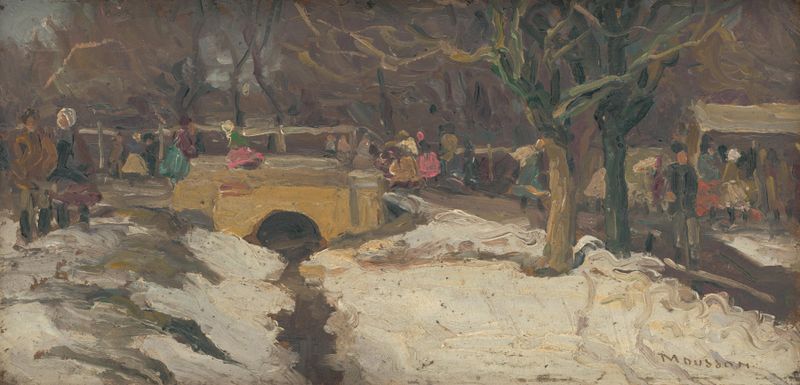
Market
Jozef Teodor Mousson
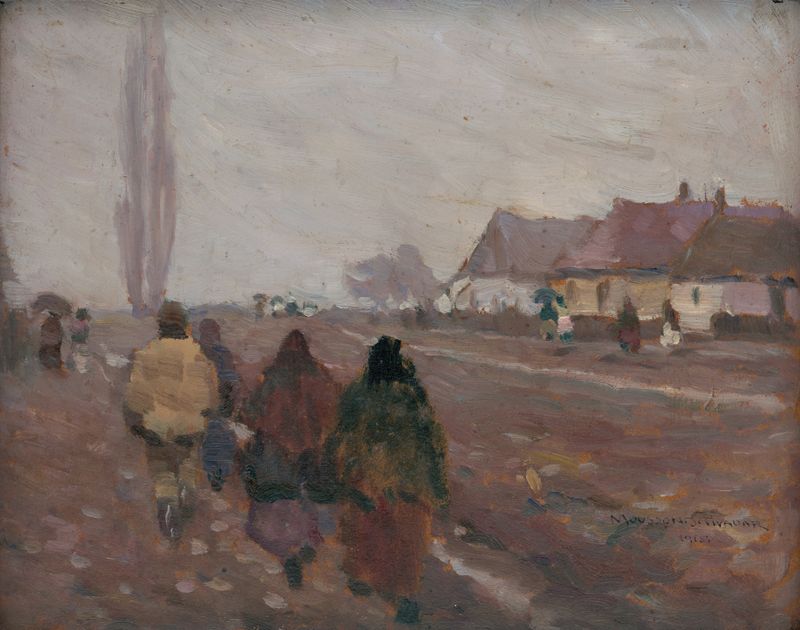
On the Road from the Michalovice Market
Jozef Teodor Mousson

Potato Digging
Jozef Teodor Mousson

Na dedine
Jozef Teodor Mousson
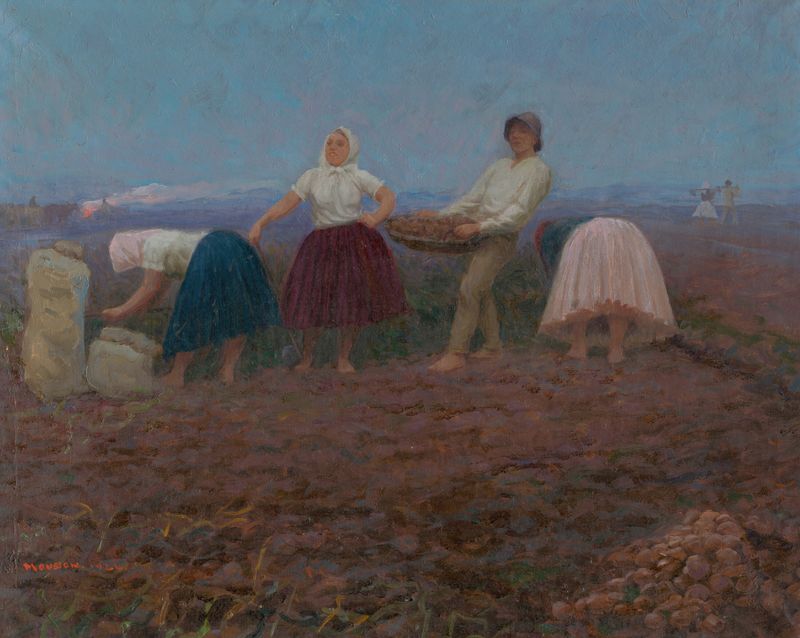
Potato picking
Jozef Teodor Mousson





