
In the Forbidden City in Beijing — History & Facts
The air within the Forbidden City weighs heavy with the echoes of history, each corner steeped in secrets and untold stories. In this sacred space, reverence mingles with the tension of revolution, capturing a moment when the past and future collide. Look to the center of the composition, where the majestic rooftops rise like ancient sentinels against a muted sky. The artist utilizes a palette of rich reds and golds, evoking both opulence and a sense of foreboding.
Notice the intricate detailing on the architecture that invites the eye to explore deeper, while shadows stretch ominously beneath the sweeping eaves. The carefully placed light highlights the delicate workmanship, emphasizing a beauty that feels both alluring and fraught with unease. Within this image lies a commentary on the juxtaposition of tradition and impending change. The serene façade of the city belies the tumult brewing just beyond its walls—an unsettling reminder of the revolution looming on the horizon.
Each ornate tile and delicate carving tells a story of power, yet carries the weight of confinement, suggesting that even beauty can be a form of imprisonment in a time of upheaval. The stillness betrays a yearning for freedom, creating an emotional tension that reverberates throughout the piece. In 1928, Erich Kips found himself deeply influenced by the political climate in China, as the nation was on the verge of significant social and political transformation. Creating this work while living in Beijing, Kips aimed to capture the essence of a society poised between its rich historical legacy and the winds of change.
His artistic exploration reflects the complexities of a time when tradition was both cherished and challenged, embodying the spirit of a pivotal moment in history.
More Artworks by Erich Kips
Browse all →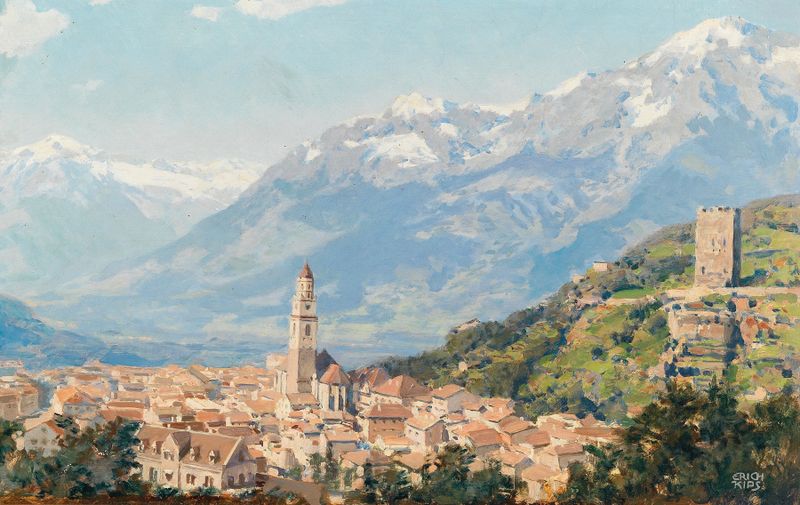
South Tyrol, View of Meran
Erich Kips

Belebte Pekinger Straßenszene vor dem Quianmen Tor
Erich Kips
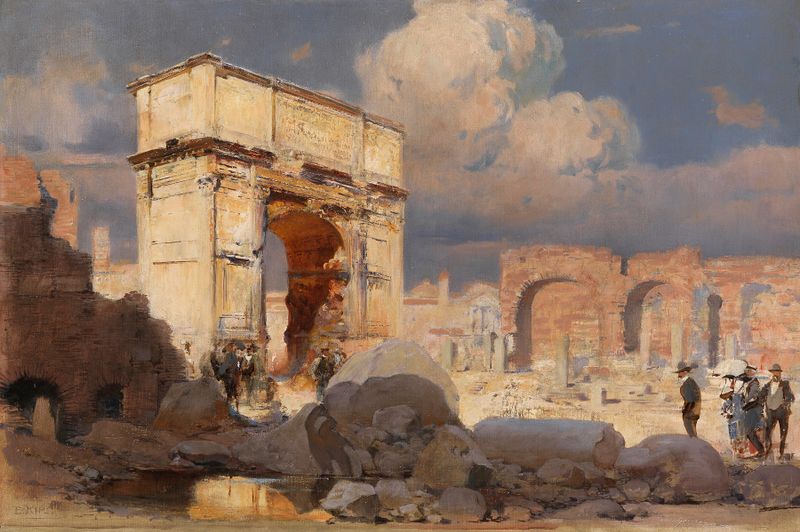
Am Titusbogen in Rom
Erich Kips
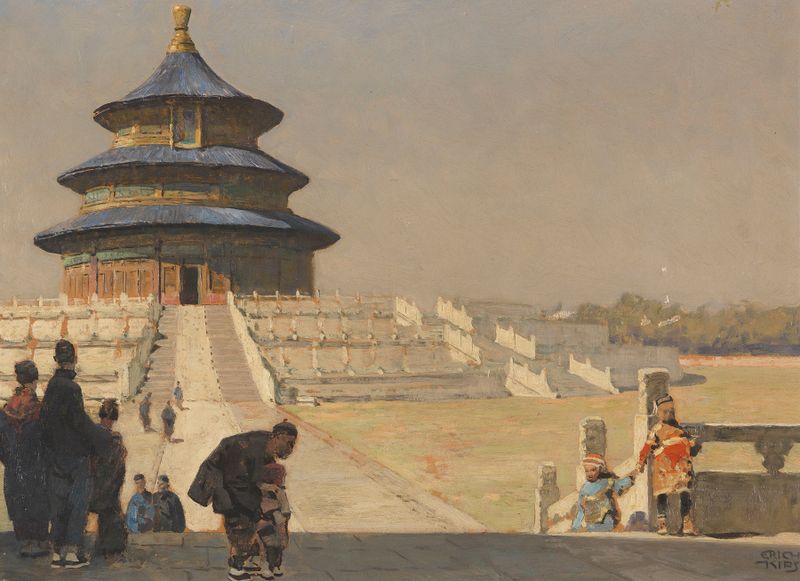
The Temple of Heaven in Beijing
Erich Kips

Munshi Ghat in Varanasi on the Ganges, India
Erich Kips

The Deshengmen City Gate in Beijing
Erich Kips
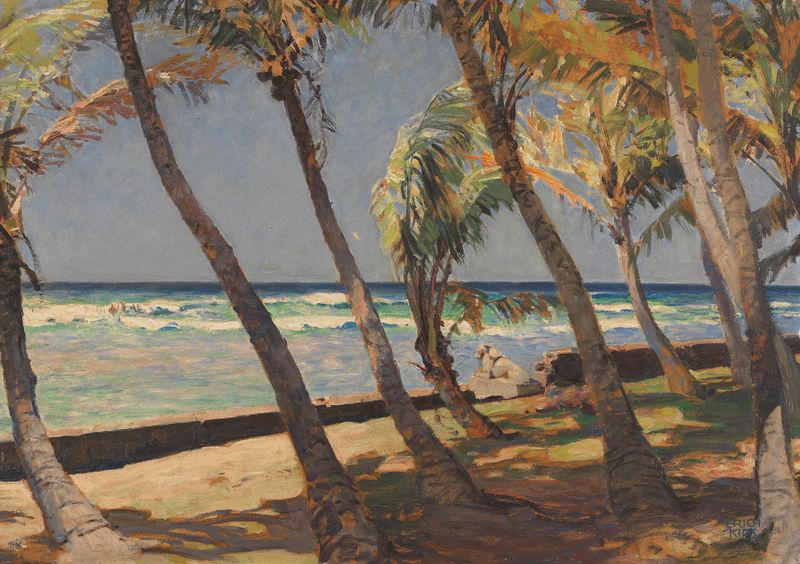
Waikiki Beach
Erich Kips

Ships in Hamburg
Erich Kips
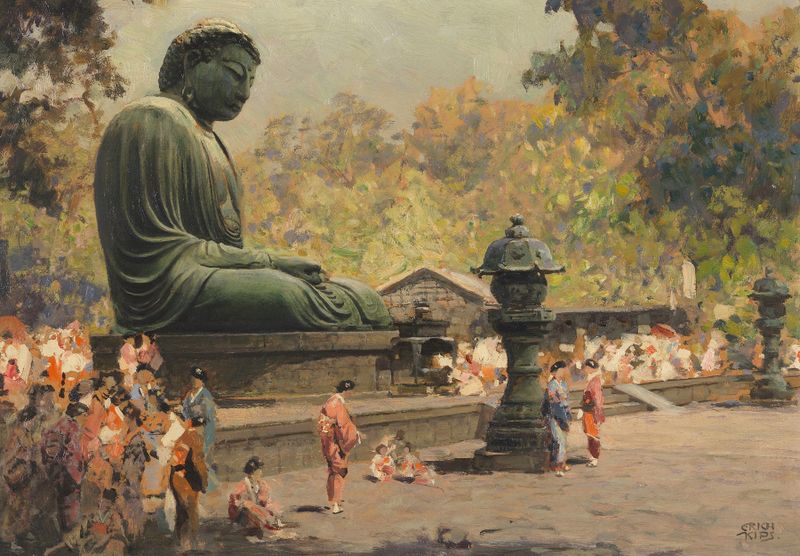
The great Buddha (Daibutsu) in Kamakura, Japan
Erich Kips
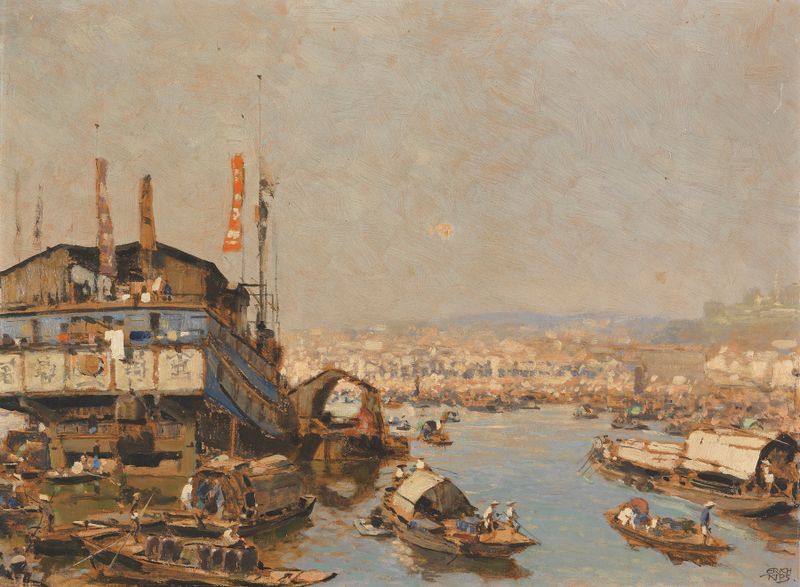
Singapore Harbor
Erich Kips
More Architecture Art
Browse all →
The statue of Liberty
Frédéric Auguste Bartholdi

View of Houses in Delft, Known as ‘The Little Street’
Johannes Vermeer

View of Houses in Delft, Known as ‘The Little Street’
Johannes Vermeer

The Cathedral in Rouen. The portal, Grey Weather
Claude Monet

The yellow house
Vincent van Gogh

The Church in Auvers-sur-Oise, View from the Chevet
Vincent van Gogh