
The Temple of Heaven in Beijing — History & Facts
Can beauty exist without sorrow? In The Temple of Heaven in Beijing, the artist confronts this question amidst a backdrop of architectural elegance and cultural significance, hinting at the turbulence woven into the fabric of history. Look to the center of the painting, where the majestic structure rises against the azure sky, its intricate details shimmering with an ethereal glow. The artist’s brush strokes delicately define the ornate eaves and the harmonious proportions, inviting the viewer to appreciate each facet. Notice how the rich blues and golds contrast with the earthy colors of the surrounding landscape, creating a vibrant balance between the divine and the mundane.
The light suffuses the scene, evoking a sense of reverence while subtly underlining the shadows that lie beneath. Yet, in the allure of this iconic monument lies an undercurrent of tension. The juxtaposition of the temple's serene beauty against the chaotic history of violence and upheaval evokes a haunting sense of melancholy. The temple stands as a sentinel over the turmoil of its time, suggesting that every place of worship can harbor unspoken stories of conflict and loss.
It captures not just a location, but the emotional weight of a culture struggling to find peace amidst strife. Erich Kips created this work in 1928 during a period marked by significant political unrest in China. As modernity began to clash with tradition, Kips captured the essence of a nation caught between its past and an uncertain future. His reflections transcended mere representation, aiming to encapsulate the profound complexities of identity and resilience in an ever-changing world.
More Artworks by Erich Kips
Browse all →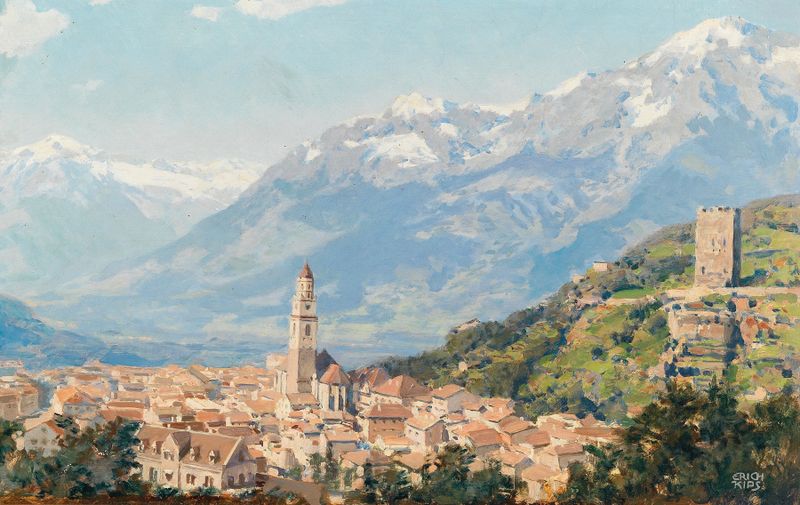
South Tyrol, View of Meran
Erich Kips

Belebte Pekinger Straßenszene vor dem Quianmen Tor
Erich Kips
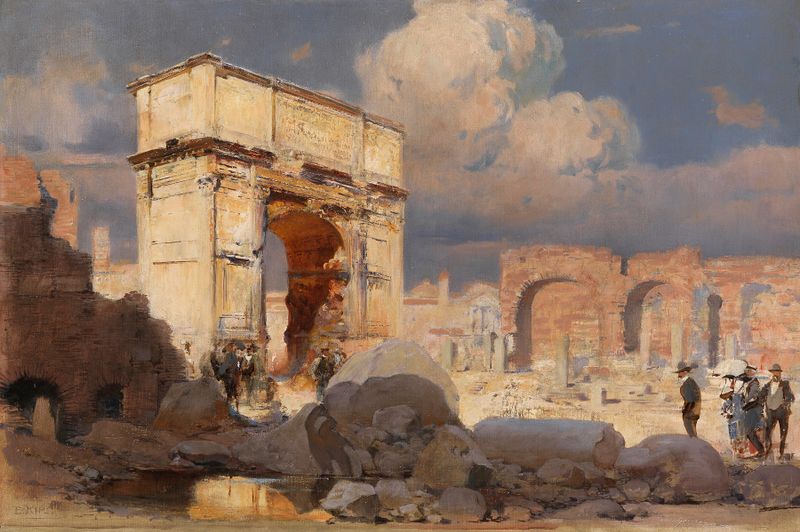
Am Titusbogen in Rom
Erich Kips

Munshi Ghat in Varanasi on the Ganges, India
Erich Kips

In the Forbidden City in Beijing
Erich Kips

The Deshengmen City Gate in Beijing
Erich Kips
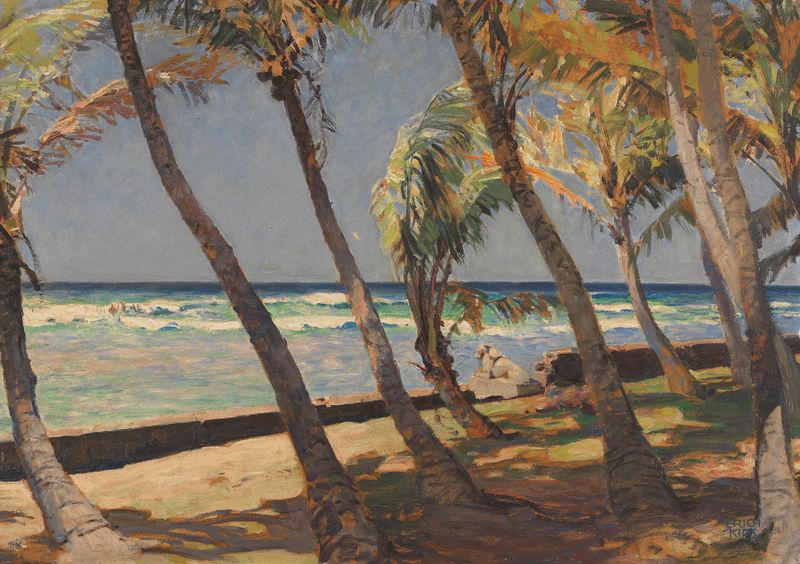
Waikiki Beach
Erich Kips

Ships in Hamburg
Erich Kips
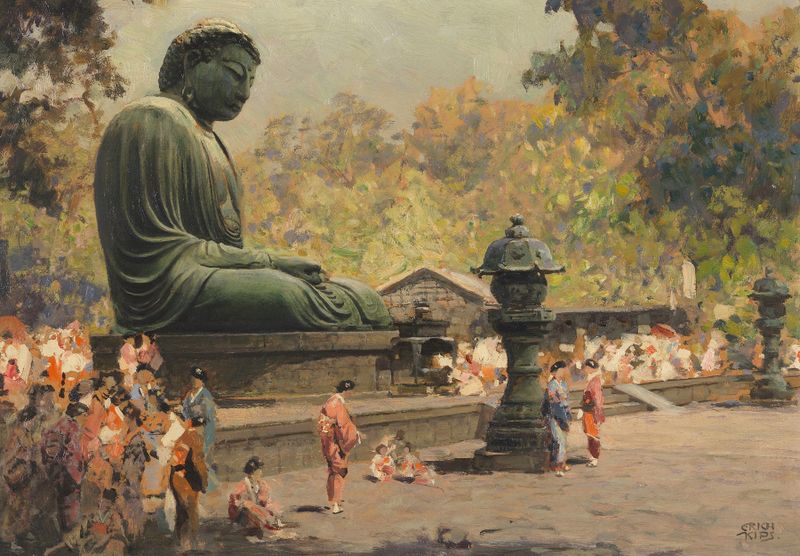
The great Buddha (Daibutsu) in Kamakura, Japan
Erich Kips
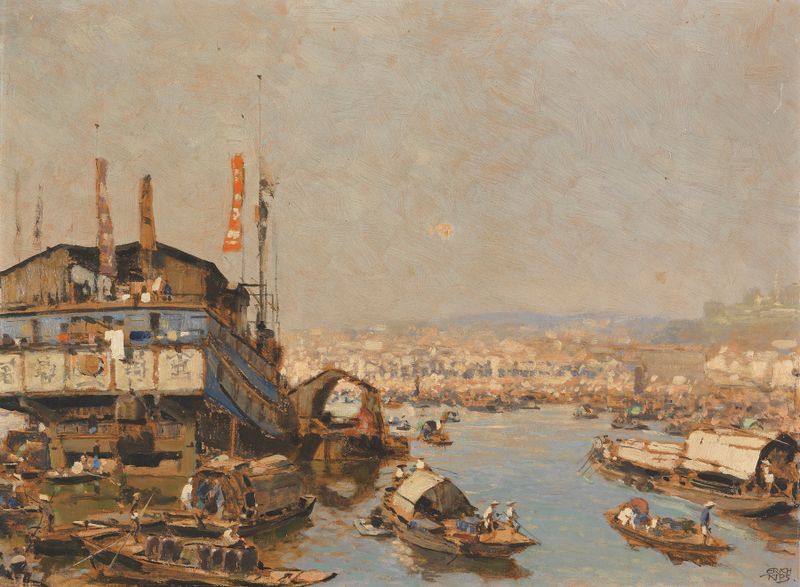
Singapore Harbor
Erich Kips
More Architecture Art
Browse all →
The statue of Liberty
Frédéric Auguste Bartholdi

View of Houses in Delft, Known as ‘The Little Street’
Johannes Vermeer

View of Houses in Delft, Known as ‘The Little Street’
Johannes Vermeer

The Cathedral in Rouen. The portal, Grey Weather
Claude Monet

The yellow house
Vincent van Gogh

The Church in Auvers-sur-Oise, View from the Chevet
Vincent van Gogh