
Waikiki Beach — History & Facts
Where does light end, and longing begin? The gentle rhythms of waves lap against the shore, whispering secrets of a paradise slowly slipping into oblivion. In Waikiki Beach, the interplay of light and shadow evokes a poignant sense of decay, crafting a bittersweet narrative that draws us into its depths. Look to the left at the sun-drenched sands, where muted colors meld with the glistening turquoise of the ocean. The soft brushstrokes create a hazy atmosphere, inviting you to linger in the warmth of the scene.
Notice how the sunlight filters through the palm fronds, casting intricate patterns that dance on the ground below. Each element is meticulously composed, guiding the eye across a landscape that exists in a moment suspended between reality and memory. The painting contrasts vibrancy with the subtle suggestion of deterioration. While the beach appears idyllic, hints of neglect emerge in the crumbling edges of the landscape.
Shadows of life evoke a nostalgia for what once was—perhaps a reflection on the transient nature of beauty. Kips captures a state of yearning, as the viewer is drawn into both the allure of the scene and the silent acknowledgment of its impermanence. Created in 1928, this work emerged during a period when the art world was undergoing rapid transformation, with movements such as Modernism beginning to take hold. Kips, known for his depictions of idyllic scenes, painted from his studio on the islands of Hawaii, where he experienced firsthand the juxtaposition of paradise and decay.
The painting embodies a moment in time where the world was both changing and yet beautifully frozen in its allure.
More Artworks by Erich Kips
Browse all →
South Tyrol, View of Meran
Erich Kips

Belebte Pekinger Straßenszene vor dem Quianmen Tor
Erich Kips
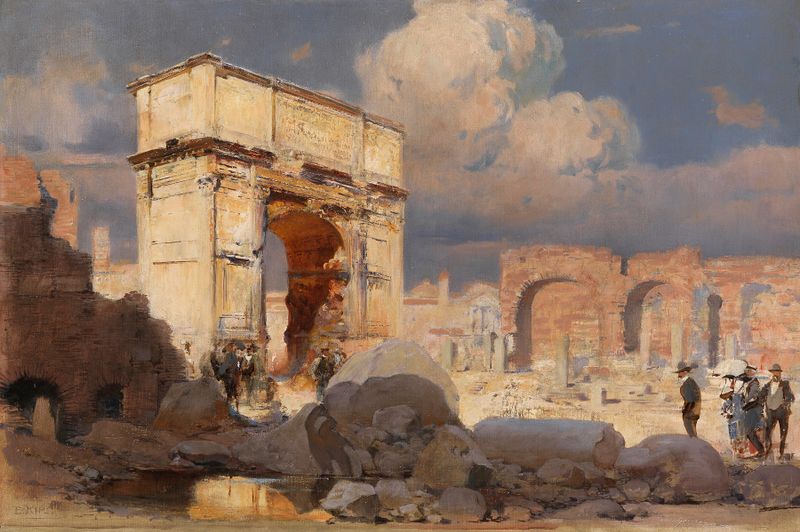
Am Titusbogen in Rom
Erich Kips
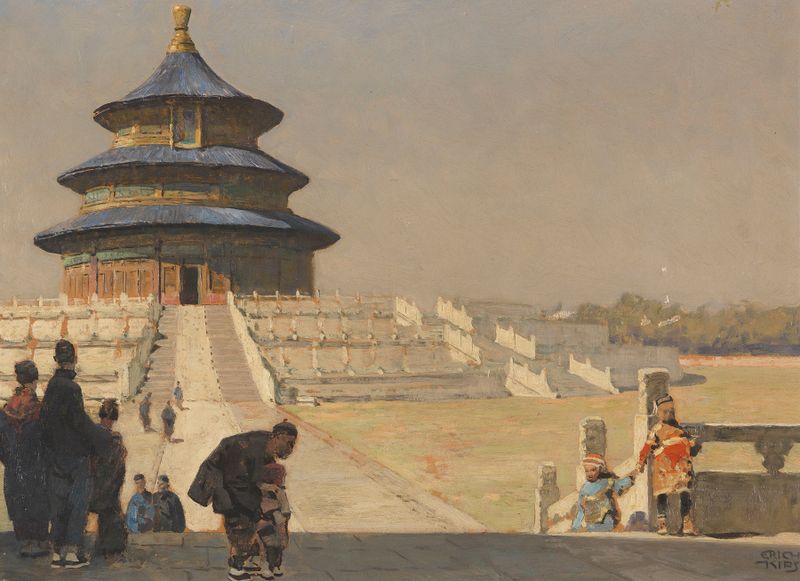
The Temple of Heaven in Beijing
Erich Kips

Munshi Ghat in Varanasi on the Ganges, India
Erich Kips

In the Forbidden City in Beijing
Erich Kips

The Deshengmen City Gate in Beijing
Erich Kips

Ships in Hamburg
Erich Kips
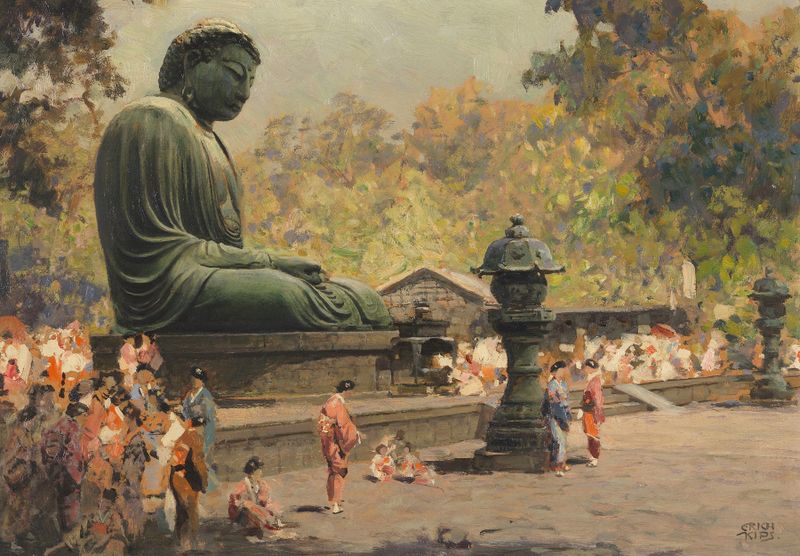
The great Buddha (Daibutsu) in Kamakura, Japan
Erich Kips
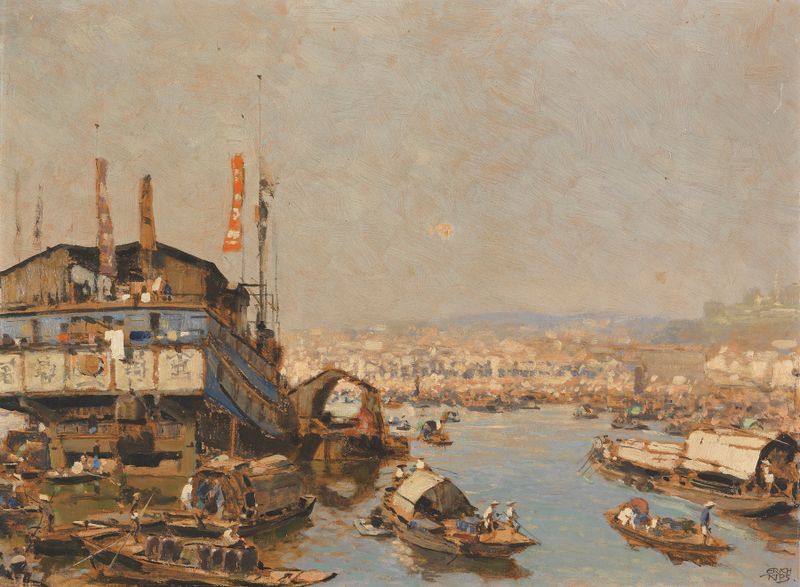
Singapore Harbor
Erich Kips





