In the snow on Yanagibashi — History & Facts
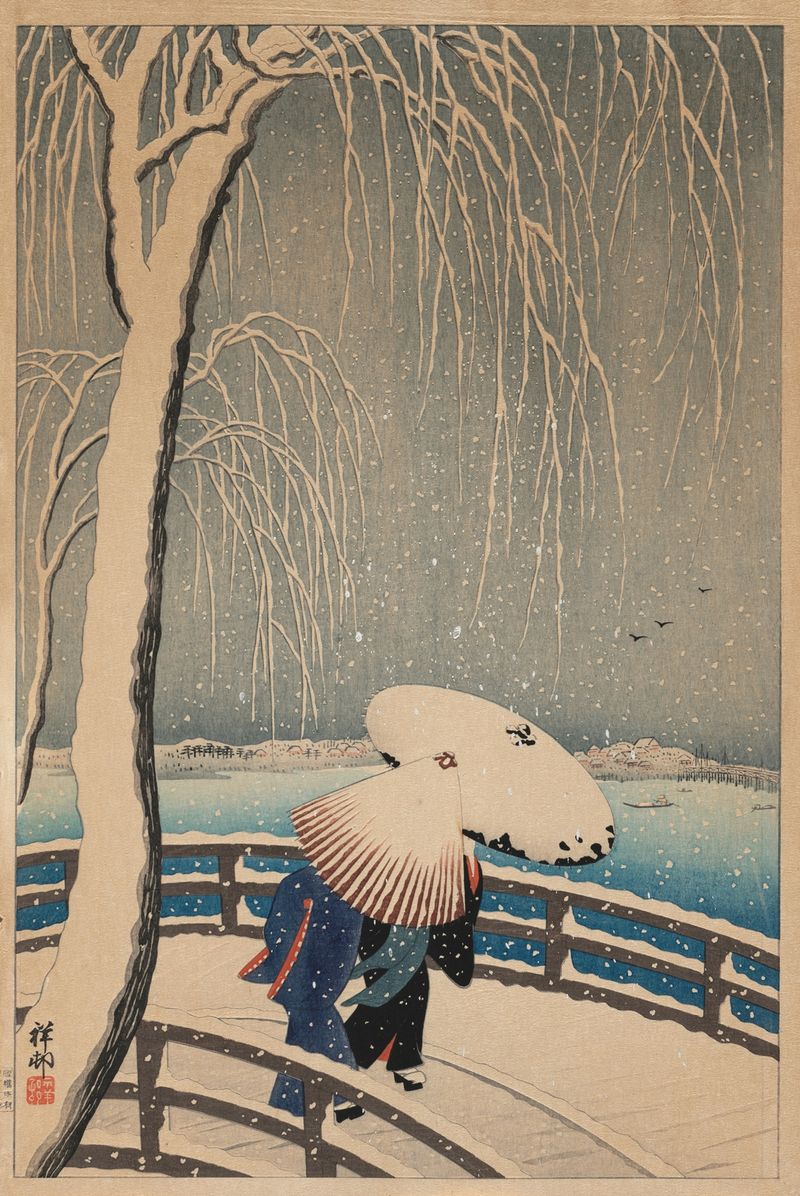
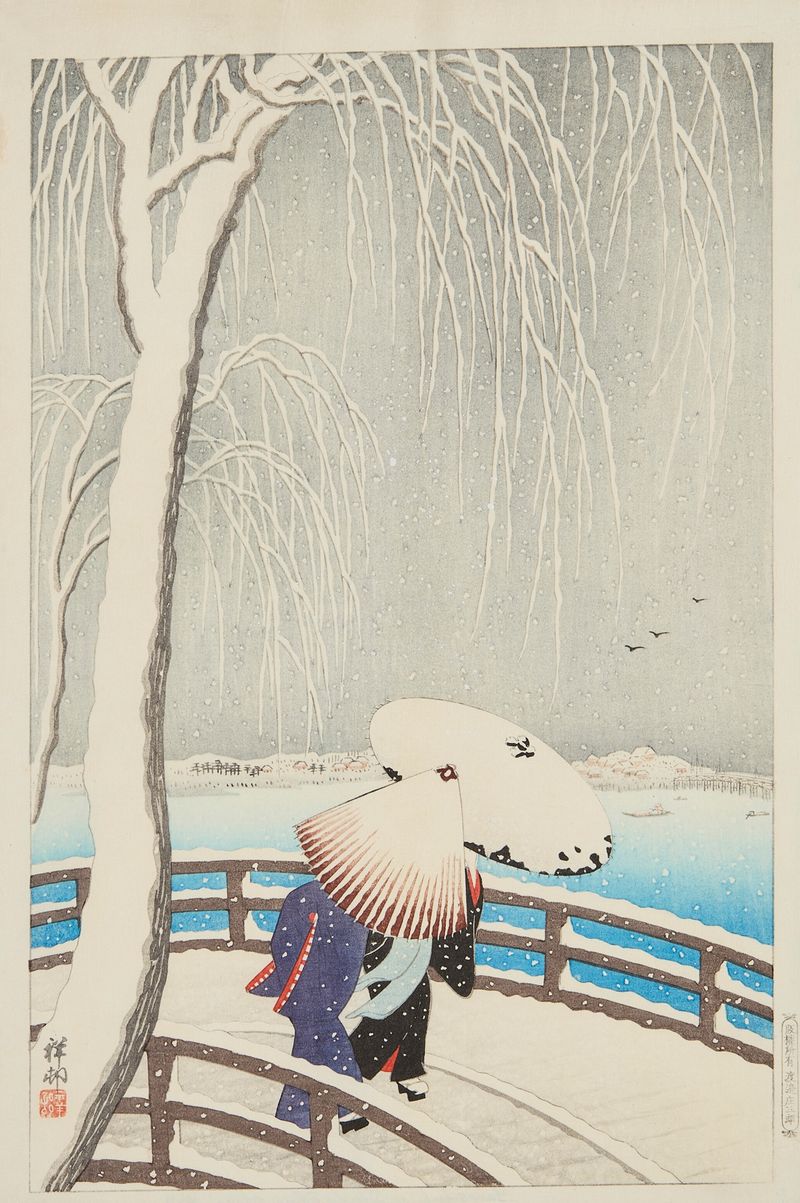
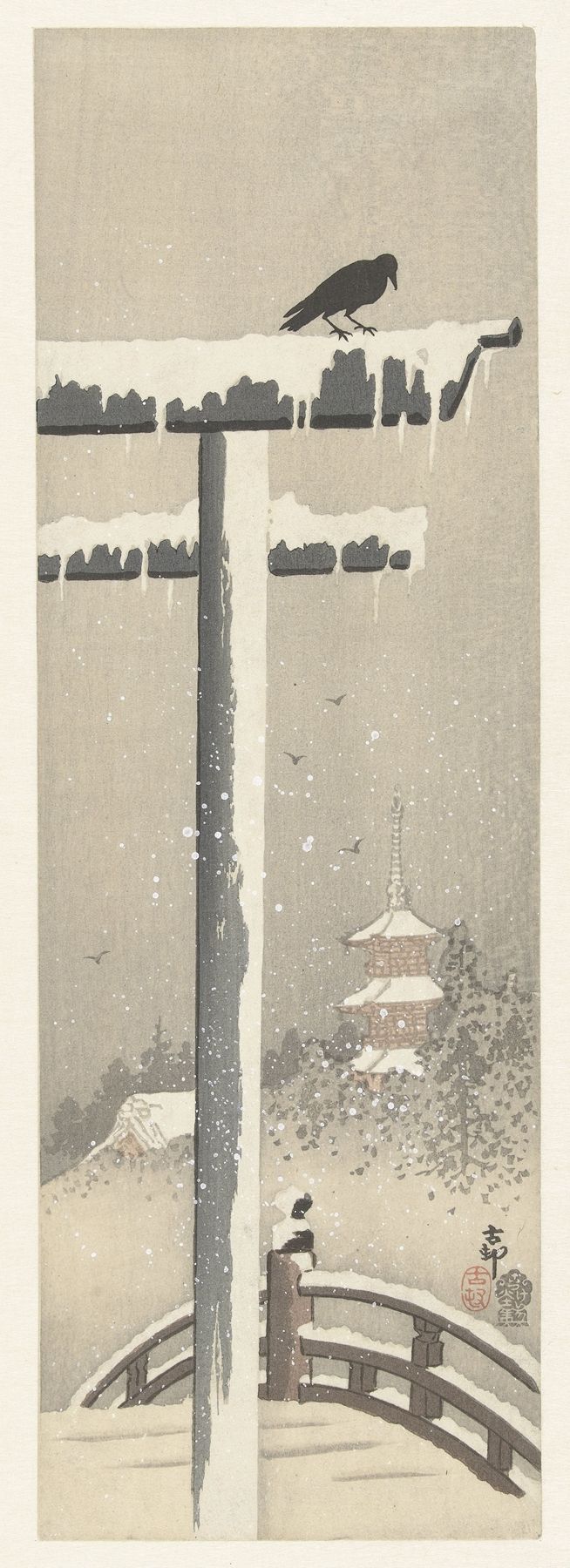
In the quiet solitude of a snow-kissed landscape, melancholy lingers in the air, weaving through the stillness like a gentle breeze. Look to the left at the delicate figures clad in dark, flowing garments, their forms softened by the falling snow. The muted palette of whites and grays creates a poignant contrast with the vibrant hues of their clothing, drawing you into the emotional heart of the scene. Notice how the light dances on the layered snow, each flake a whisper of memory, while the distant bridge, barely discernible through the fog, evokes a sense of longing. The contrast between the serene beauty of nature and the solitary figures speaks volumes of the human experience.
Each figure, seemingly lost in thought, embodies a shared yet individual sorrow, hinting at stories untold. The snow, both a gentle blanket and a hushed barrier, holds the weight of silence, inviting reflection and introspection. In 1927, while creating this piece, the artist was deeply entrenched in the tradition of Ukiyo-e, focusing on the ephemeral beauty of the world around him. Living in Japan during a period of social and artistic transformation, he sought to capture fleeting moments of everyday life, turning to landscapes that mirrored both the tranquility and the turmoil of his times.
This painting stands as a testament to his ability to transform fleeting impressions into lasting visual poetry.