Yanagibashi no yuki (Snow on the Willow Bridge) — History & Facts
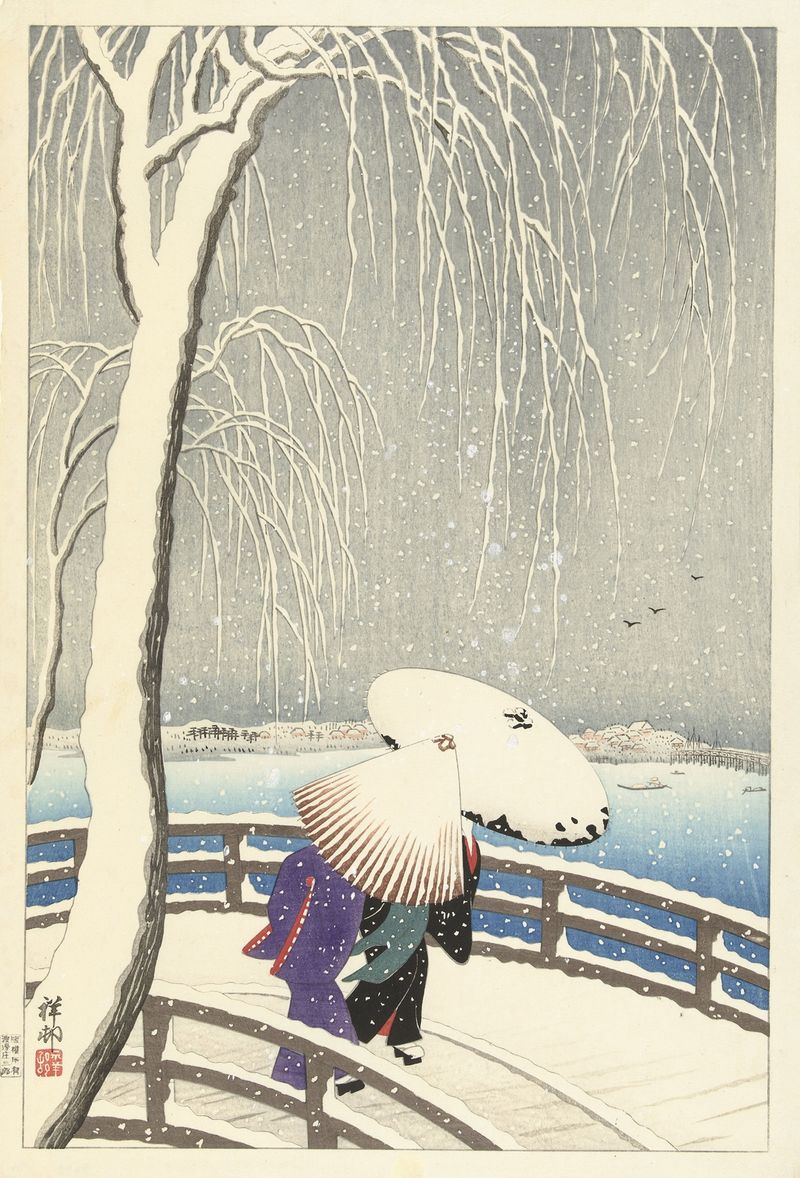
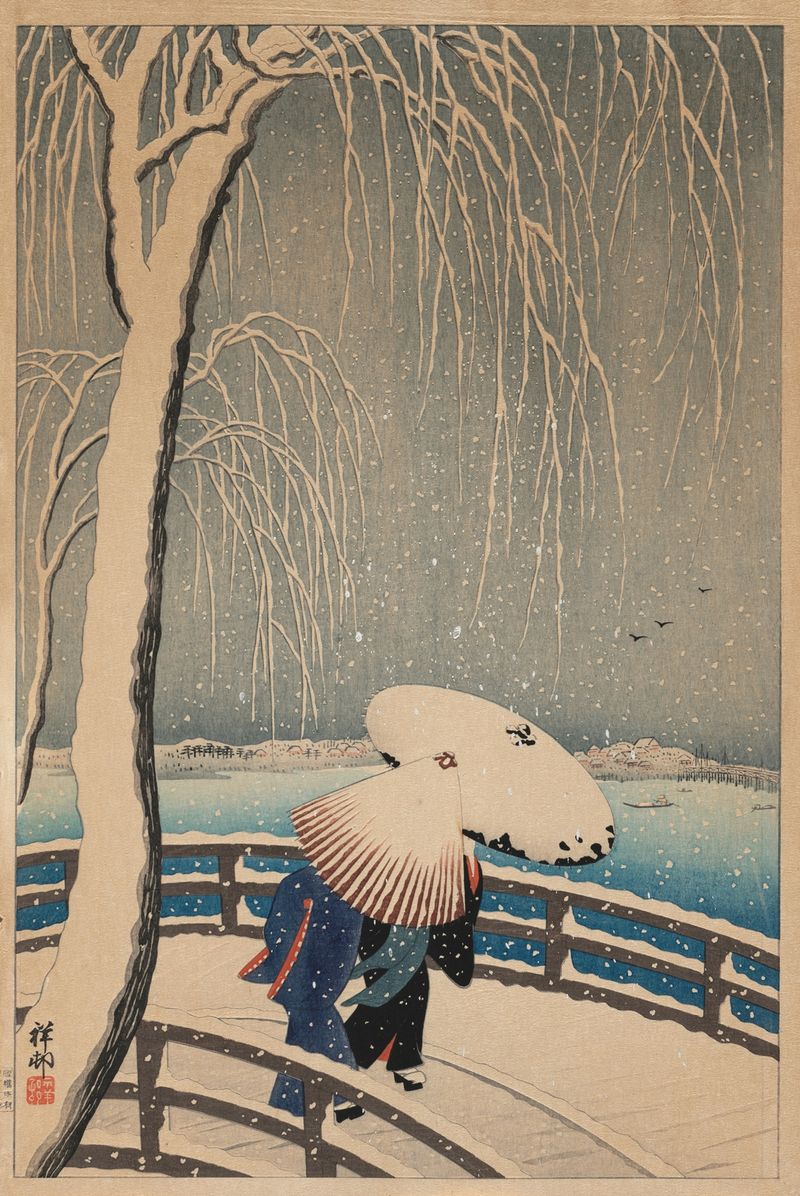
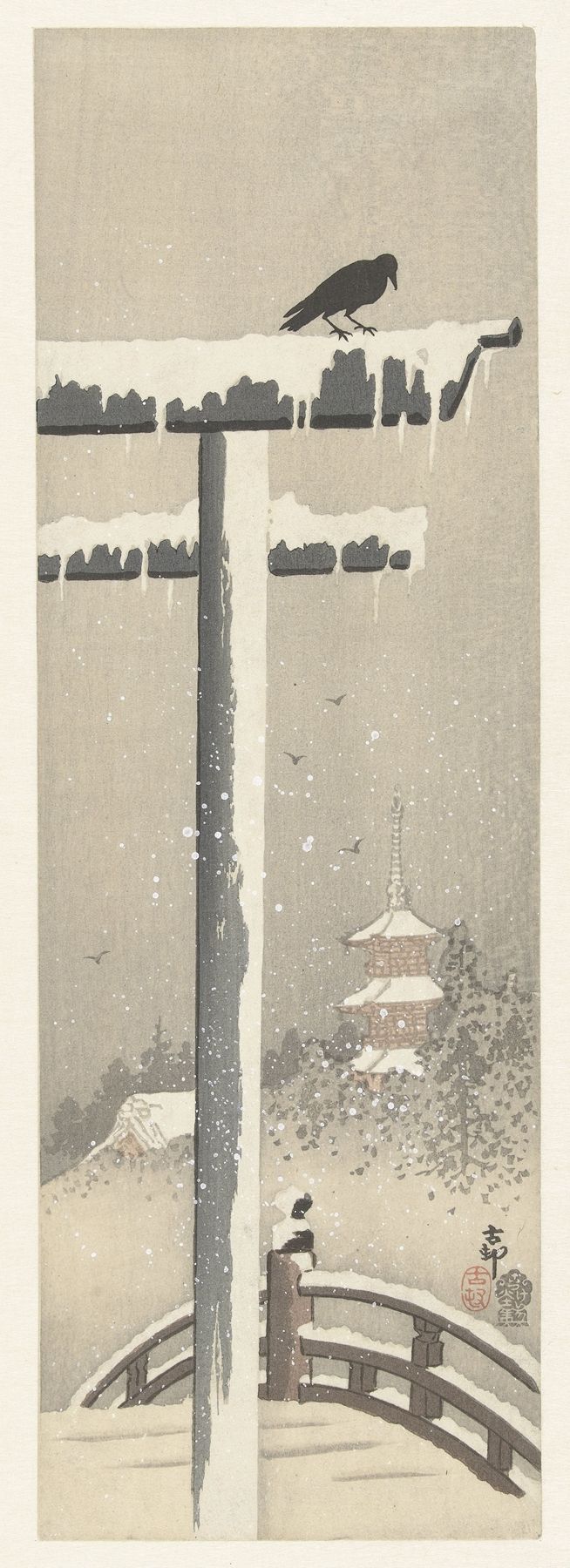
Who listens when art speaks of silence? In the stillness of Yanagibashi no yuki, the weight of solitude almost echoes, inviting viewers to delve deeper into the unvoiced stories held within its frames. Look to the right at the delicate willow branches, their slender forms draped gracefully with snow. Soft, muted colors create a serene atmosphere, while the subtle play of light against the white snow and the dark water beneath draws your eye into a tranquil yet haunting scene. The bridge, a central element, stands resolute against the winter backdrop, inviting contemplation of the fleeting beauty of nature. Beneath the surface, the painting conveys profound loneliness and introspection.
The stark contrast between the vibrant life of the willow and the heavy quietude of snow emphasizes the tension between warmth and isolation. The empty span of the bridge, stretching into the distance, symbolizes a journey or longing unfulfilled, and one can almost hear the absence of life in the scene as it unfolds. Each brushstroke whispers the unacknowledged emotions of the viewer, allowing a personal connection to the theme of solitude. In 1927, Ohara Koson painted this work during a period when Japanese art was transitioning between traditional themes and Western influences.
Living in a time of great societal change, Koson drew inspiration from the natural world, encapsulating the essence of landscapes and nature’s tranquility. His ability to convey emotion through simplicity resonated with the broader movements in art, marking a moment of reflection and introspection in both his life and the world around him.