Umbrellas in Snow — History & Facts
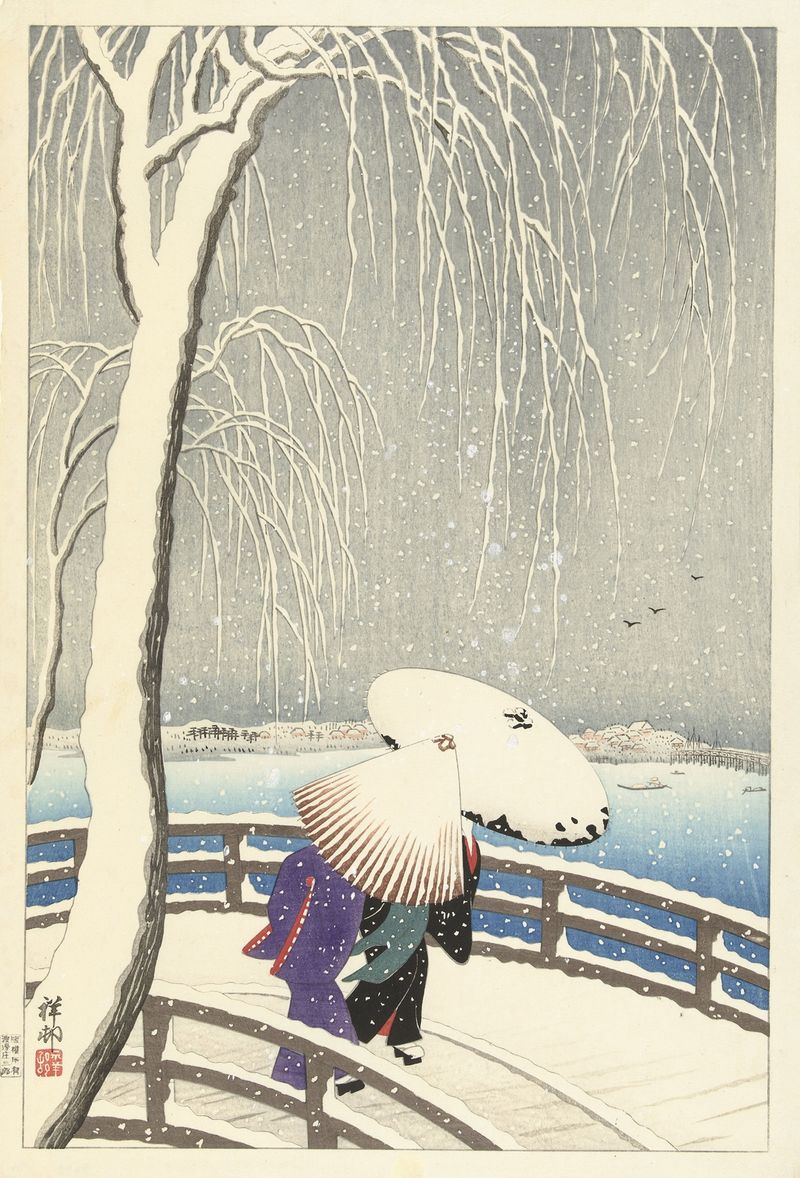
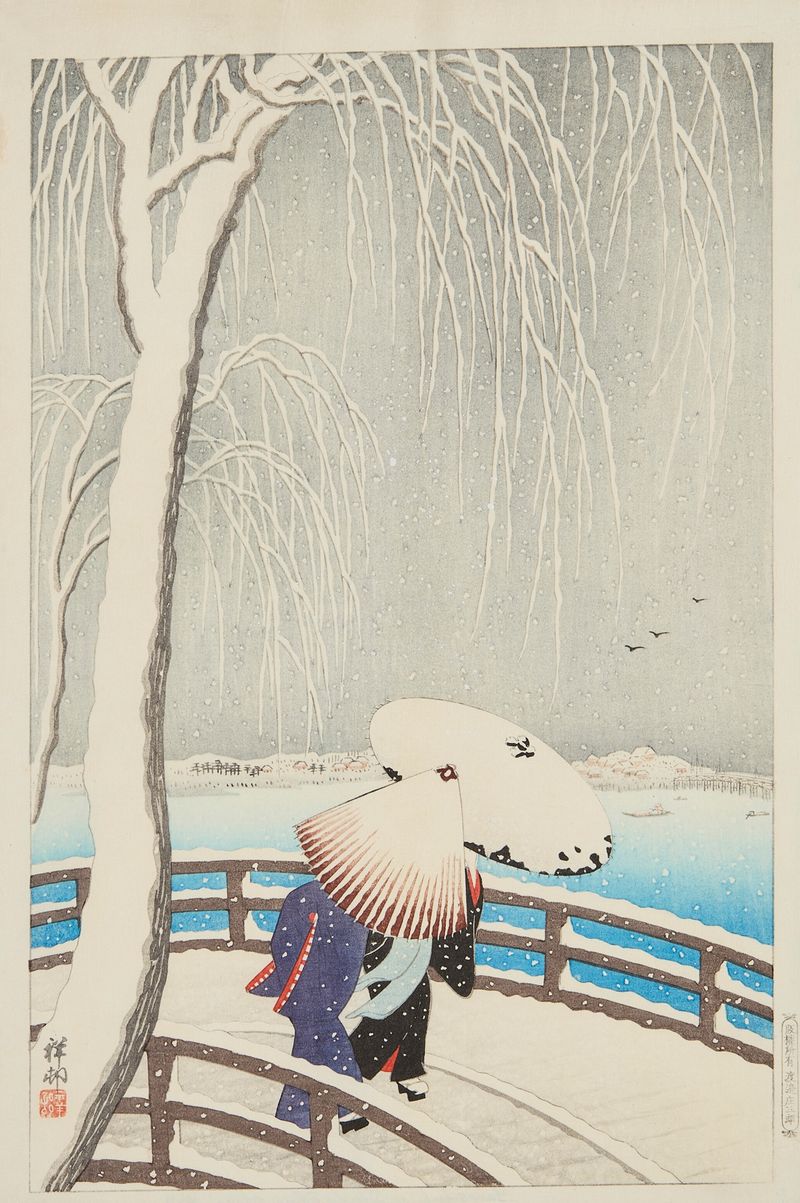
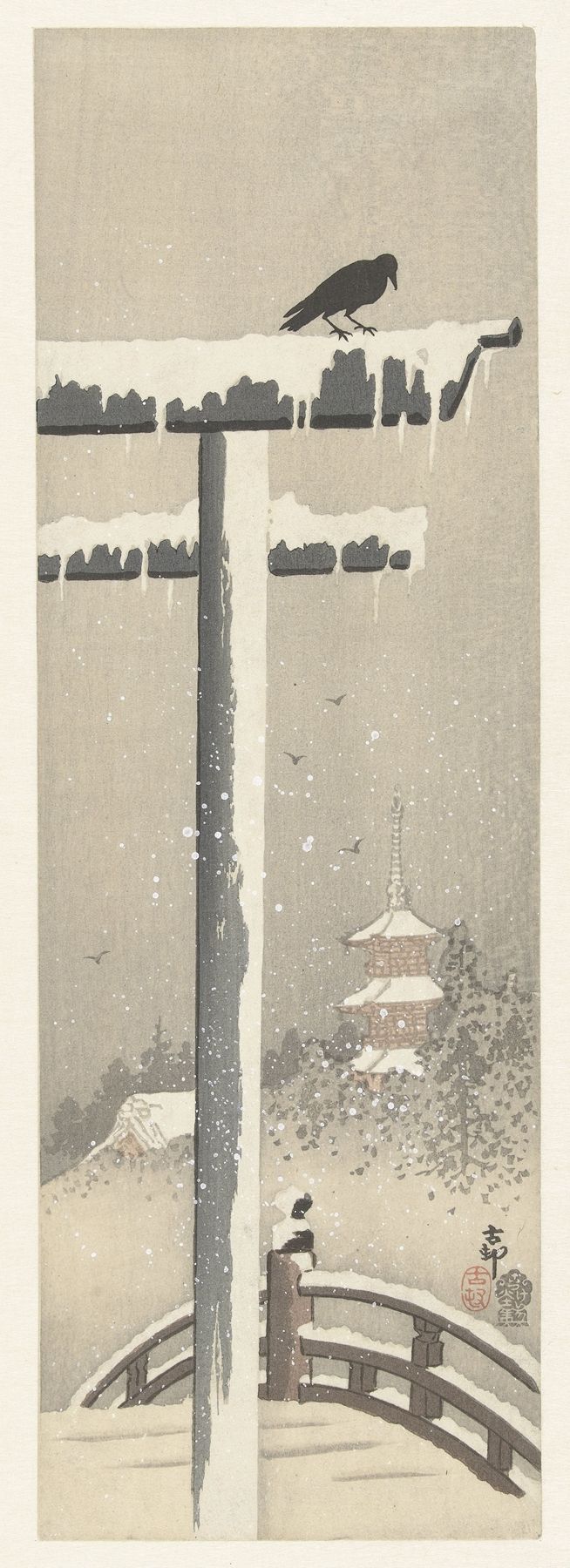
In an era defined by fleeting moments, this artwork captures the enduring nature of human experience — an obsession with preservation amid transience. Focus on the elegant umbrellas clustered in the foreground, their vibrant hues stark against the soft, muted snow. The delicate brushwork creates a sense of movement, as if the wind is gently nudging them; each umbrella possesses its own character, inviting you to ponder the stories they hold. Notice how the cool blues and whites of the snow contrast with the rich reds and greens, infusing the scene with warmth and life, a celebration of color against the chill of winter. The umbrellas signify more than mere protection from the elements; they evoke feelings of nostalgia and longing.
Each one stands as a testament to individuality in shared experiences, hinting at human connection amidst isolation. The falling snow, rendered in gentle strokes, blurs the lines of reality and memory, suggesting a world both beautiful and melancholic, where time and place intertwine and slip away. In 1931, during a transformative period in Japanese art, Ohara Koson worked to blend traditional themes with modern sensibilities. Living in a time when Japonisme influenced Western art, he embraced the tranquility of nature and the vibrancy of urban life.
His dedication to capturing fleeting moments like this underscores a profound desire to hold onto beauty as the world around him changed rapidly.