
Indian Bridge, Lower Thornery, Sezincote — History & Facts
What stories lie beneath the surface of this tranquil scene, echoing the whispers of fears long buried? In the quietude of Indian Bridge, Lower Thornery, Sezincote, Anne Rushout captures a moment where nature and architecture intertwine, inviting reflection on the fragility of beauty and the shadows it may conceal. Look to the left, where the elegant arch of the bridge gracefully spans the water, its reflection rippling with a sense of both harmony and unease. The colors are soft yet poignant—earthy greens and muted blues blend together, creating a serene backdrop that belies an underlying tension. Notice how the delicate brushwork renders the foliage alive, almost quivering, while the still water hints at depths untouched, suggesting that not all is as peaceful as it appears. Secrets dwell in the composition; the bridge, while a symbol of connection, also represents a threshold into the unknown.
The juxtaposition of the sturdy structure against the fluidity of water evokes a fear of what lies beyond—an exploration of the boundaries between safety and vulnerability. The light that filters through the leaves may illuminate the scene, yet it also casts shadows that remind us of the unseen, of fears that linger just beneath the surface. Anne Rushout painted this work between 1824 and 1832 during a time of romantic exploration in the arts, where nature was often idealized yet scrutinized for its deeper meanings. Living in England, Rushout was part of a burgeoning wave of artists who sought to intertwine European sensibilities with the exoticism of the East, reflecting an era of cultural fascination and uncertainty.
The tranquility of her brushwork captures a moment that speaks to both beauty and the haunting weight of what we may fear to confront.
More Artworks by Anne Rushout
Browse all →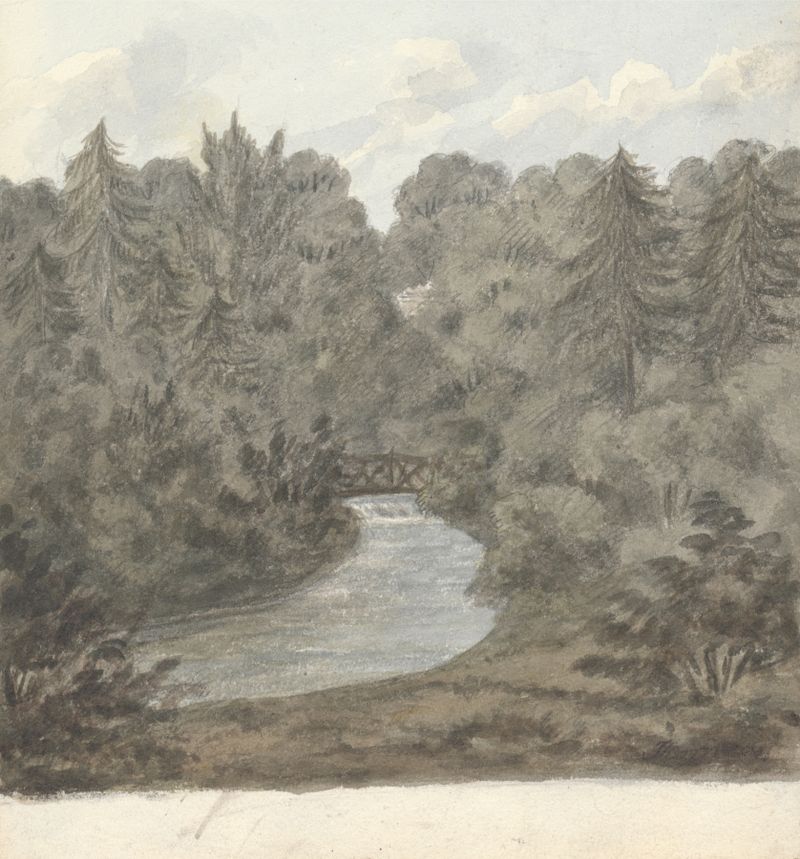
Thornery Pool, Sezincote
Anne Rushout
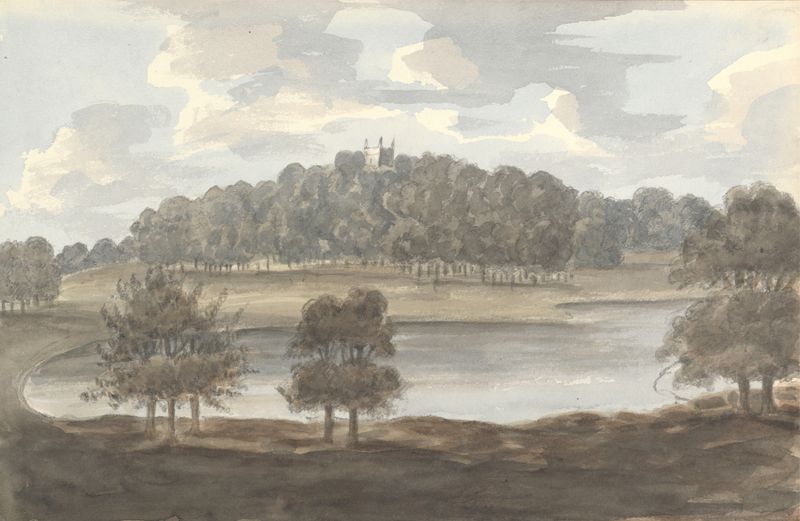
Holkham, August 1824
Anne Rushout

Grove Cottage, Wanstead May 18th, 1825
Anne Rushout
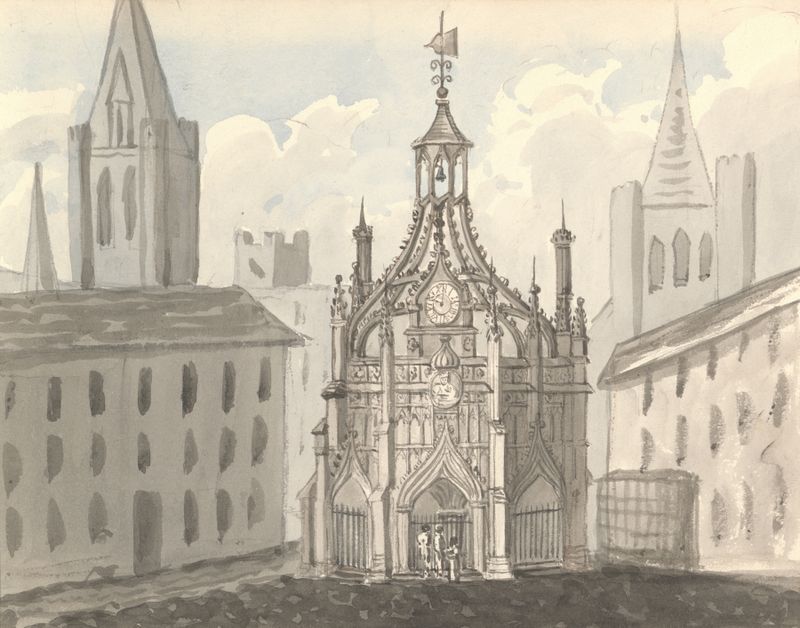
From Inn at Chichester, July 1828
Anne Rushout
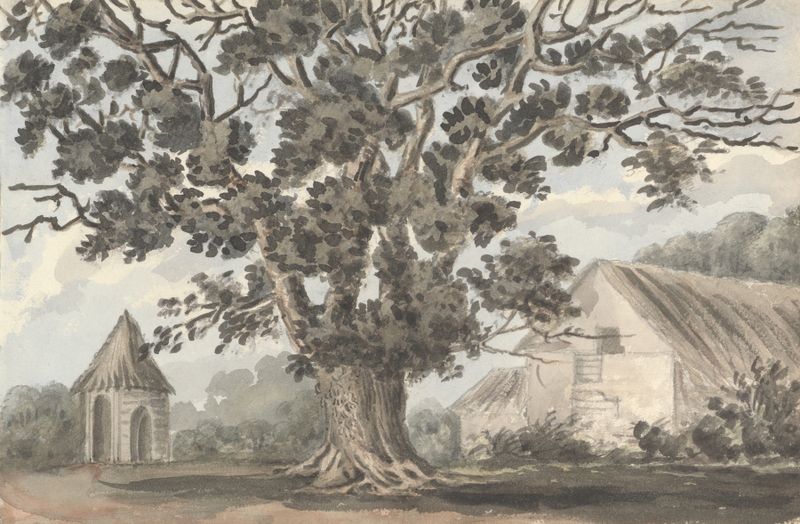
Queen Elizabeth’s Oak near Finborough Hall
Anne Rushout

Holkham, August 1824
Anne Rushout
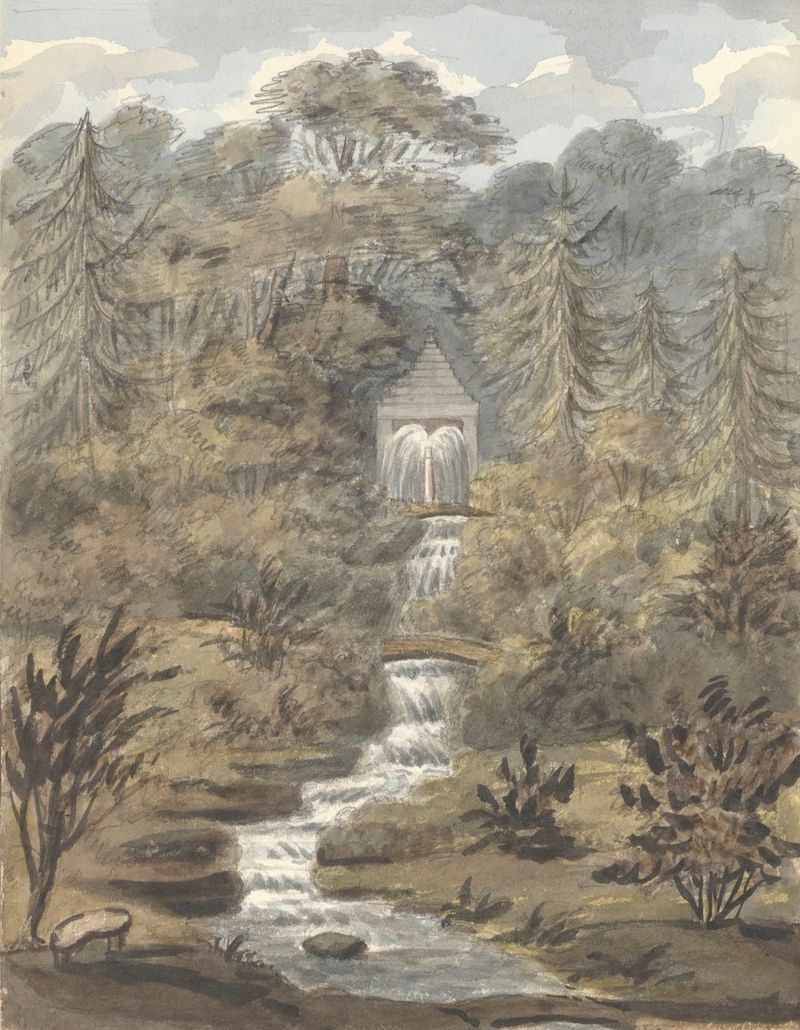
Temple and Falls, Sezincote
Anne Rushout

From Flower Garden, Wanstead Grove
Anne Rushout

From Window at Eastnor Castle, Gloucestershire Beacon, September 28, 1829
Anne Rushout

From Portico at Wanstead Grove, May 24, 1825
Anne Rushout





