Indian Summer Day — History & Facts
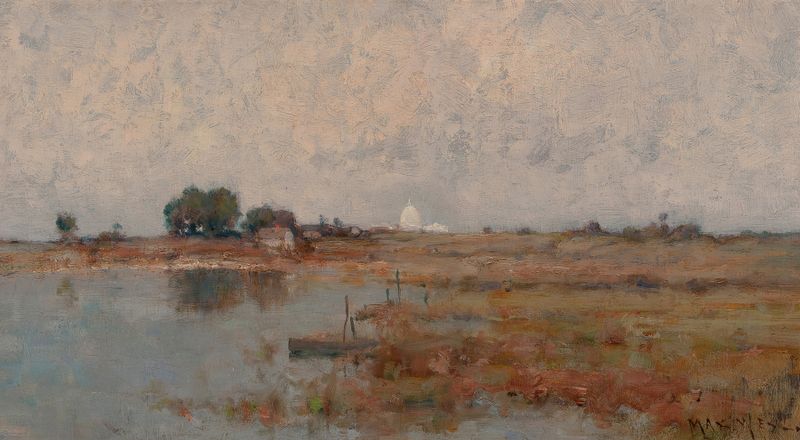
When did color learn to lie? In a world where warmth disguises sorrow, the hues speak a language of their own, spinning tales of longing and nostalgia. Look to the foreground, where soft, golden light blankets the landscape. The brushstrokes, both delicate and deliberate, guide your gaze across a serene expanse, capturing the fleeting essence of an Indian summer day. Notice how the vibrant oranges and rich yellows dissolve into cooler blues and greens, creating a dialogue between the vibrancy of nature and an underlying tension, a contrast that stirs the heart. In the distance, a solitary figure meanders through the meadows, embodying a quiet solitude amidst the lush surroundings.
The way the shadows dance softly on the ground hints at layers of meaning—the melancholy of transience, the bittersweet embrace of beauty that will soon fade. The juxtaposition of warmth and shade captures a poignant stillness, inviting contemplation on the passage of time and the fragility of joy. Painted in 1907, the artist found himself in a period of introspection and transition. Emerging from the confines of traditional techniques, he sought to express the emotional resonance of landscapes.
This era in art witnessed a shift toward more personal narratives, as artists began to explore the subtleties of human experience in relation to nature, reflecting the complexities of a world that was rapidly changing.