Landscape — History & Facts
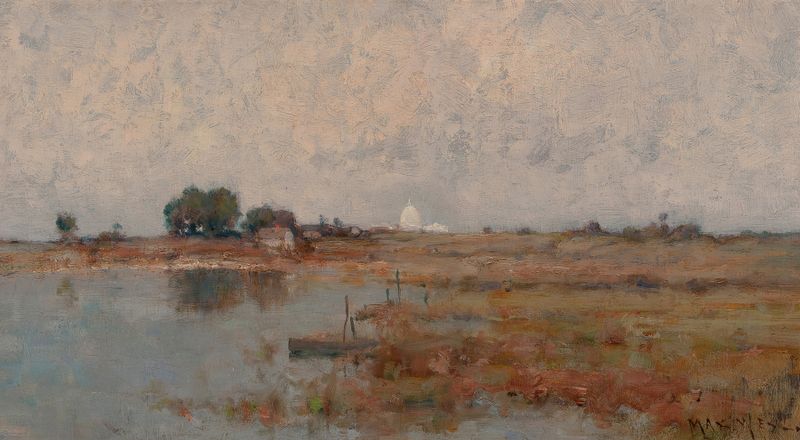
In the quiet embrace of a landscape, the silence speaks volumes, holding the tension between nature's wildness and the artist's delicate hand. Look to the center of the canvas, where a soft horizon line divides the sky from the earth. Here, strokes of muted greens and browns meld, suggesting the gentle undulation of hills under a vast expanse. Notice how the brushwork, seemingly spontaneous, captures the stillness of a moment, while hints of golden light penetrate through wisps of clouds, illuminating the scene with a fragile warmth. Delve deeper into the subtle contrasts that define this work.
The interplay of shadow and light reveals the artist’s command over color, evoking a sense of serenity amidst underlying turmoil. Each section tells a story—where the trees stand steadfast, their branches reaching skyward, while patches of earth hint at life's fleeting nature. This balance between the enduring and the ephemeral resonates, creating an emotional depth that invites contemplation. Created at an uncertain time in his career, the canvas reflects the artist's exploration of form and atmosphere.
Working during the late 19th century, Weyl was influenced by the emerging trends of Impressionism, which sought to capture the essence of a moment rather than a hyper-realistic representation. Amid the shifting tides of the art world, this piece serves as both a personal journey and a broader reflection of an era grappling with the complexities of modernity.