Landscape — History & Facts
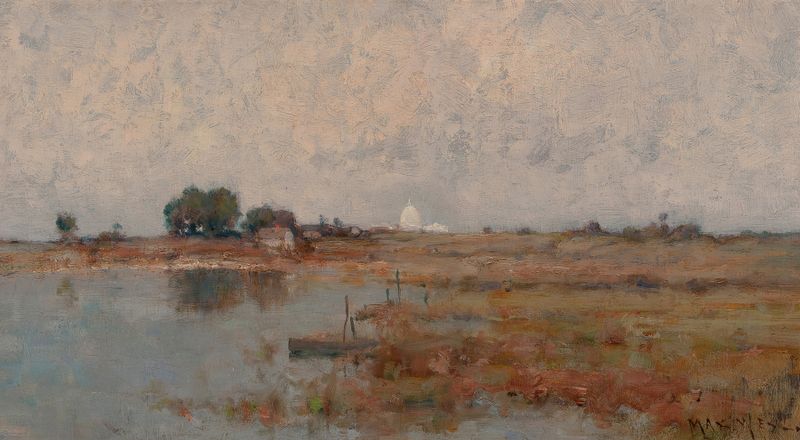
Can paint confess what words never could? In Landscape, Max Weyl transcends the ordinary to explore the divine traces etched within nature's embrace. Look to the foreground, where a gentle stream meanders, its reflective surface capturing the kaleidoscope of colors above. Notice how the light filters through the trees, casting dappled shadows upon the verdant grass. The palette marries vibrant greens with soft blues and warm ochres, inviting the viewer to linger in this serene moment.
The composition draws the eye naturally along the stream, creating a rhythmic flow that harmonizes the elements of earth and sky. Yet, there is an underlying tension present in Weyl's work. The trees, while lush and inviting, can evoke a sense of solitude, standing tall yet isolated, as if guarding secrets of the landscape. The interplay of light and shadow suggests a celestial presence, hinting at a spiritual connection to the world.
The vibrant colors juxtaposed with the quietude of the scene speak to the duality of life—beauty intertwined with the inevitability of stillness. Created in 1905, during Weyl’s time in Germany, Landscape reflects an evolving art scene deeply influenced by Impressionism. As artists sought new ways to capture fleeting moments, Weyl was embracing these changes while also infusing his work with personal reflections on nature and divinity. Amidst a backdrop of rapid industrialization, his painting stands as a testament to the enduring power of the natural world, merging artistic innovation with a search for deeper meaning.