Temple Woods — History & Facts
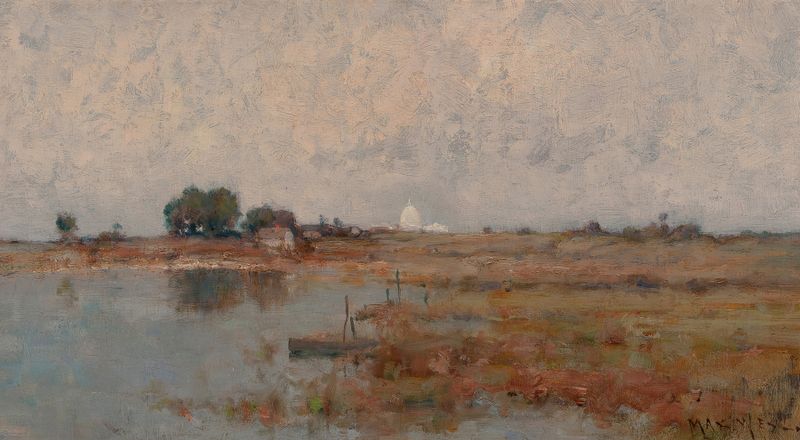
In Temple Woods, the delicate interplay of light and shadow invites the viewer into a realm where nature conceals whispered secrets. It is a world that cradles both beauty and the torment of betrayal, a dichotomy that resonates through every brushstroke. Look to the left of the canvas, where soft greens and earthy browns meld seamlessly, creating a serene yet unsettling atmosphere. Notice how the dappled sunlight filters through the towering trees, casting intricate patterns on the forest floor.
The artist’s use of muted colors evokes a sense of tranquility, while the careful composition draws the eye into the deep recesses of the woods, suggesting both sanctuary and the lurking presence of hidden truths. Beneath the surface, the painting reveals emotional tensions that speak to the experience of betrayal. The trees, sturdy yet looming, symbolize both protection and the potential for harm, hinting at the duality of relationships. The interplay of light and dark signifies moments of clarity intertwined with obscured motives, echoing deeper themes of trust and deception that exist within human interactions. Max Weyl created Temple Woods in 1882 during a period marked by exploration and introspection in the art world.
Working in Germany, he was influenced by the burgeoning Impressionist movement, which sought to capture the fleeting moments of reality. It was a time when artists began to delve into the emotional undercurrents of their subjects, paving the way for more profound interpretations and personal reflections in their work.