
Interior of a Gothic Church — History & Facts
In the shadows of a Gothic church, echoes of the past linger, resting softly among the stone arches and faded memories. Look to the upper left at the intricate ribbed vaults that soar above, drawing your gaze upward. The play of light filtering through stained glass creates a kaleidoscope of colors, illuminating the solemnity of the space. Notice how the deep, somber hues of the stone contrast with the vibrant glimmers, reflecting the duality of sanctuary and sorrow within the church's walls.
Each brushstroke captures not just the architecture, but also the weight of history embedded in the very air. Within the interplay of light and shadow, there's an emotional tension between reverence and loss. The towering pillars stand like sentinels, silently witnessing the passage of time and the fading of faith. The church, a monument to human aspiration, also serves as a reminder of forgotten rituals and beliefs, evoking a sense of nostalgia for a world that once thrived within its embrace.
Each detail, from the craftsmanship of the wood to the intricacies of the stonework, whispers stories of those who sought solace here. In 1793, Johann Ludwig Ernst Morgenstern captured this scene during a time of societal upheaval and artistic transition in Europe. Working in Germany, he was influenced by the rising Romantic movement, which sought to express the sublime in nature and spirituality. The era was marked by profound changes, and as a result, his work reflects a growing introspection about the past, memory, and the inevitability of change.
More Artworks by Johann Ludwig Ernst Morgenstern
Browse all →
Blick in das Innere einer gotischen Hallenkirche mit vielen Staffagefiguren in der Tracht des 17. Jahrhunderts, links liest ein Priester die Messe, 1790
Johann Ludwig Ernst Morgenstern
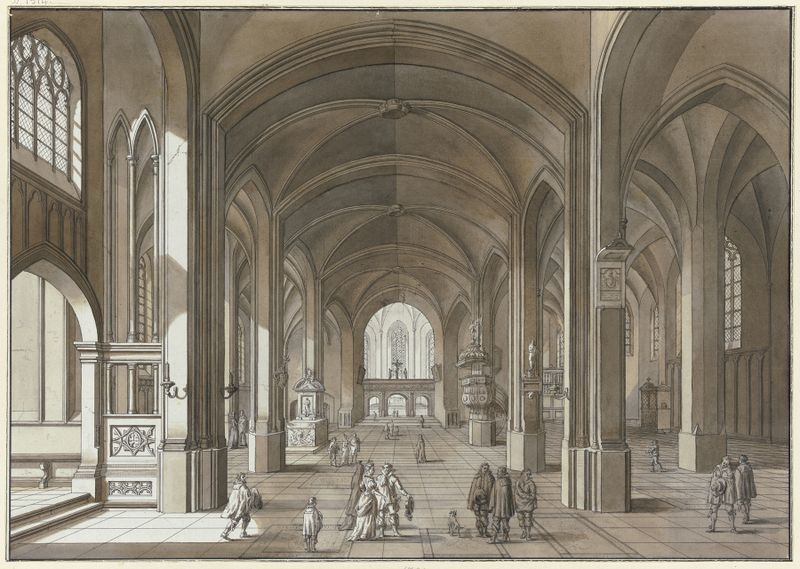
Blick auf Lettner und Chor einer dreischiffigen gotischen Kirche
Johann Ludwig Ernst Morgenstern

A Farm
Johann Ludwig Ernst Morgenstern
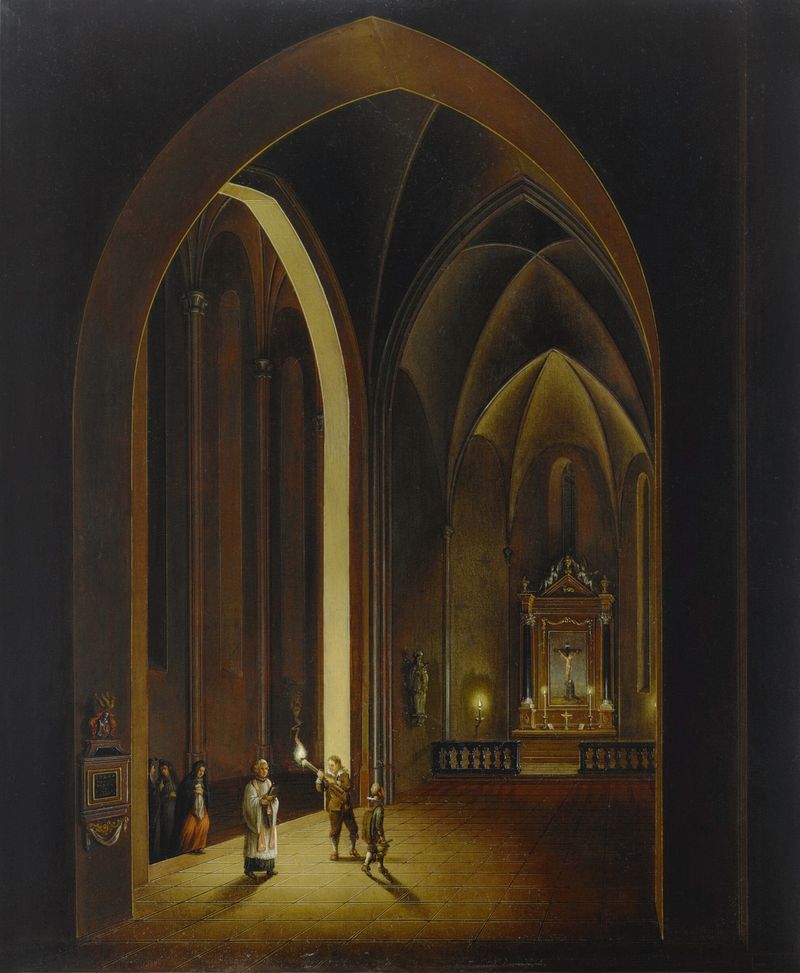
Candlelit church interior
Johann Ludwig Ernst Morgenstern

Interior of a Baroque Church
Johann Ludwig Ernst Morgenstern
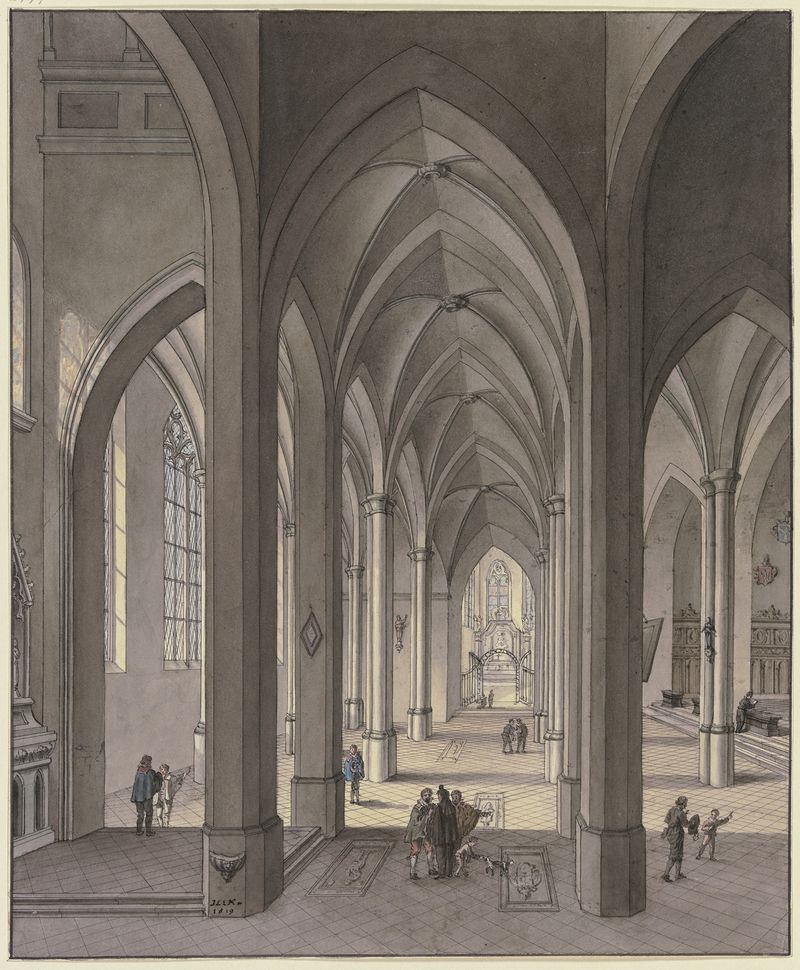
Blick in den Chor einer dreischiffigen gotischen Hallenkirche mit Staffagefiguren in der Tracht des 17. Jahrhunderts, 1819
Johann Ludwig Ernst Morgenstern
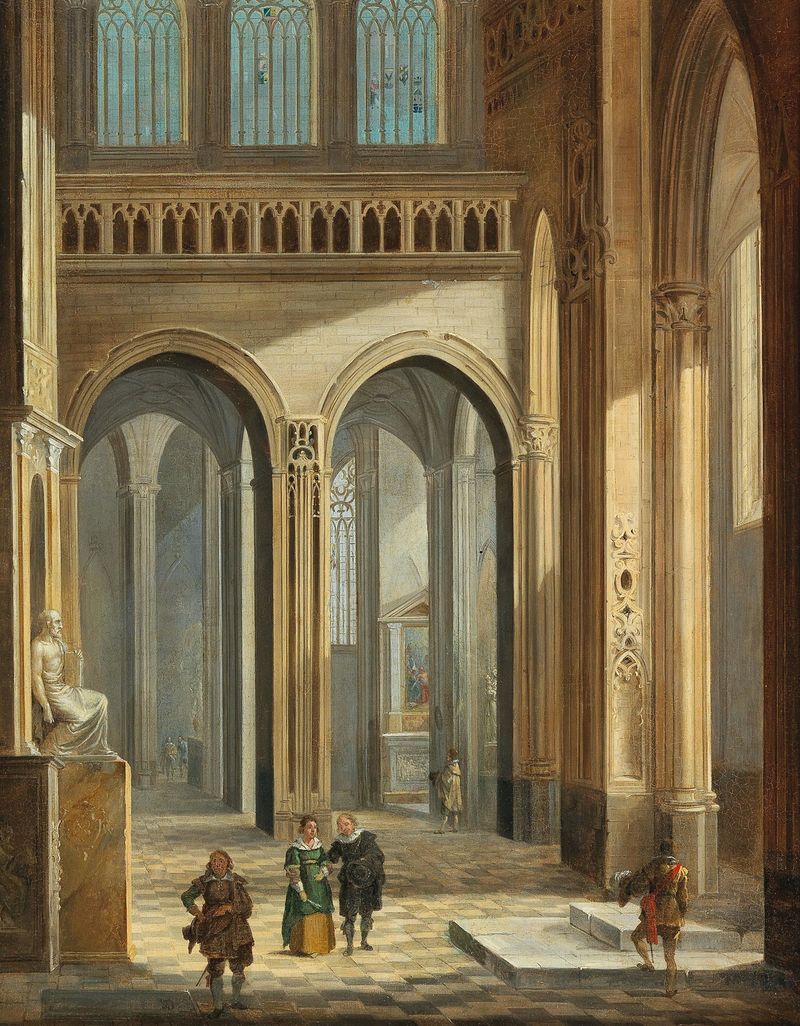
A church interior with figures dressed in seventeenth-century costume
Johann Ludwig Ernst Morgenstern
Bay landscape
Johann Ludwig Ernst Morgenstern





