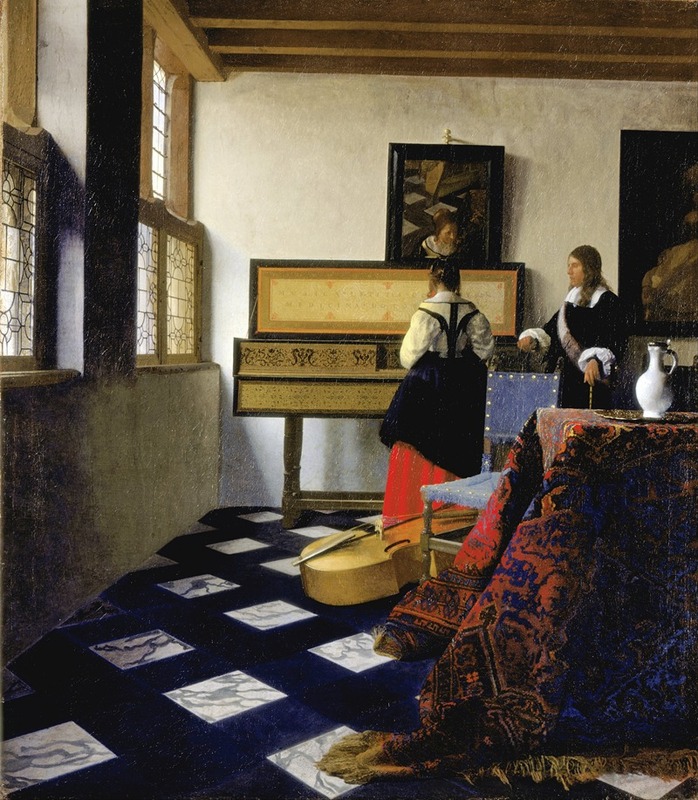
Interior of a Mill — History & Facts
Can beauty exist without sorrow? In the quiet, rhythmic environment of a mill, transformation unfolds as nature and human effort intertwine, revealing both the grace and the toil inherent in everyday life. Look to the left at the intricately detailed wooden beams that cradle the space, directing your gaze to the soft, dappled light filtering through the window. This interplay of light and shadow invites contemplation, while the muted palette—earthy browns and gentle grays—evokes a sense of warmth amidst labor. The figures, though small and understated, are pivotal; their gestures of work and purpose resonate with the viewer, encapsulating the essence of industrious serenity. In the heart of the composition lies a rich tension: the contrast between stillness and motion.
The viewers can sense the quiet yet vital energy of the mill, where the water flows steadily, a symbol of perpetual change. The gentle curves of the mill's structure juxtapose the angular tools, suggesting that beauty can emerge from the most laborious paths. Each element, from the grainy texture of the walls to the reflective surface of the water, speaks to the transient nature of both industry and art. Jean-Jacques de Boissieu painted this piece during a time when the importance of landscape and everyday scenes was gaining momentum in the art world.
Active in the late 18th century, he was influenced by the burgeoning Romantic movement, which valued the beauty of nature and ordinary life. This period saw a shift toward capturing not just the grandeur of landscapes but also the subtlety of human environments, reflecting a deeper understanding of the interconnectedness of life and art.
More Artworks by Jean-Jacques de Boissieu
Browse all →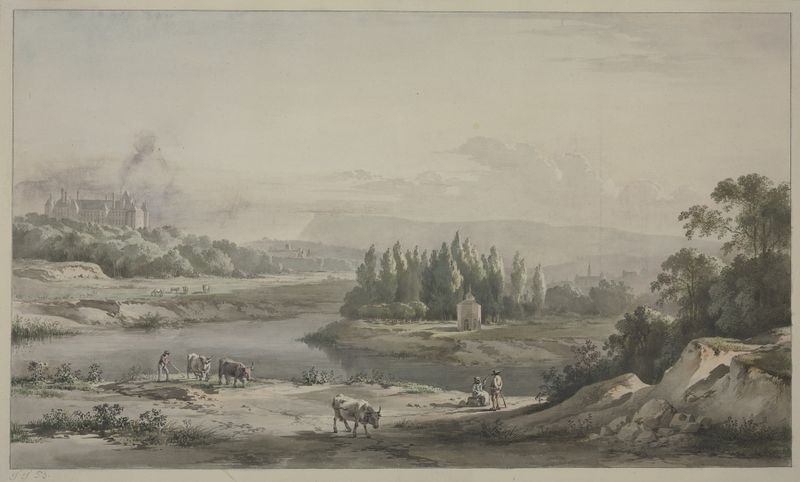
River Landscape
Jean-Jacques de Boissieu

Vestiges du temple d’Apollon au bord du Lac d’Auverne
Jean-Jacques de Boissieu

Vue du pont de la Guillotière à Lyon
Jean-Jacques de Boissieu
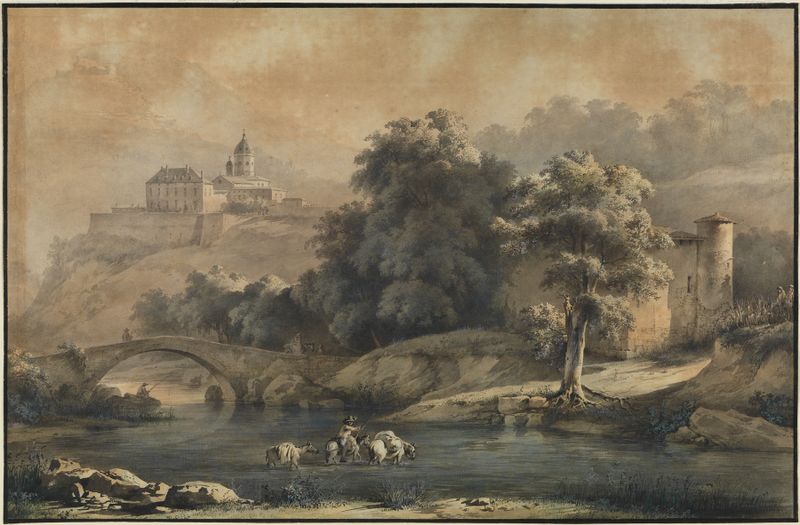
Flußlandschaft mit Bergkloster
Jean-Jacques de Boissieu
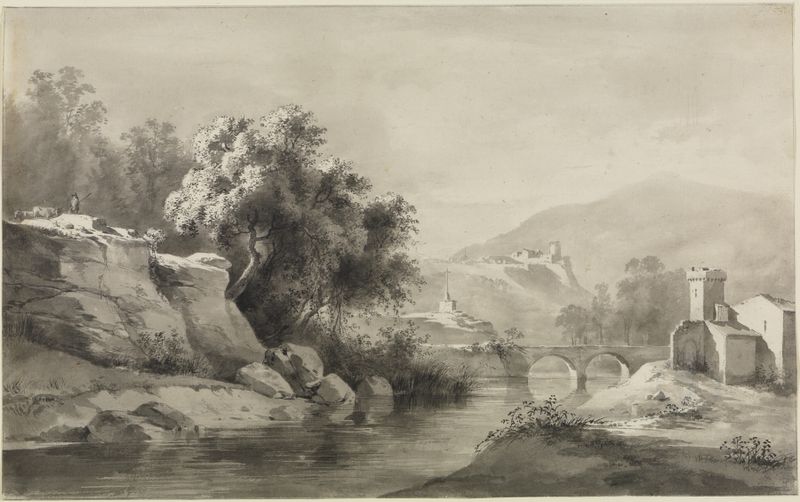
Flusslandschaft mit Doppelbogenbrücke und Kreuz
Jean-Jacques de Boissieu
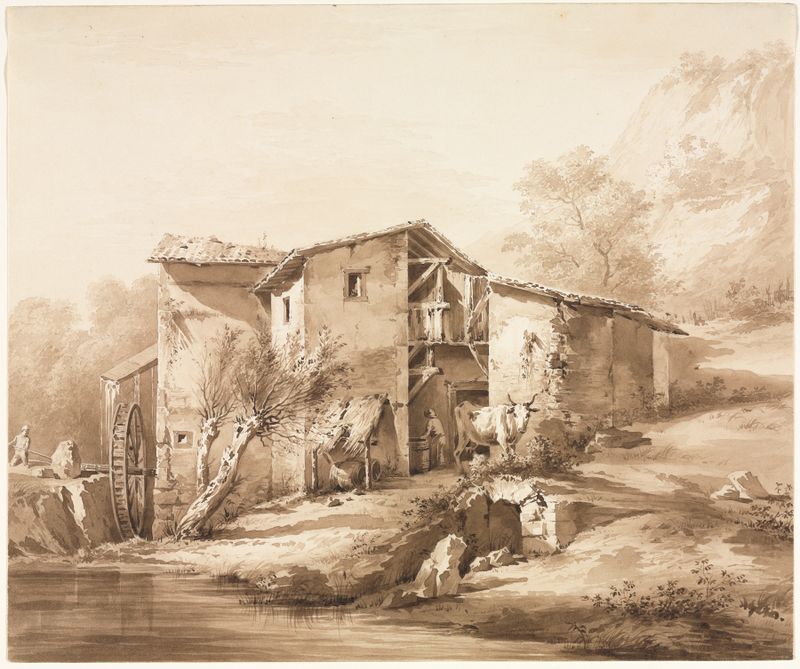
Landscape with Watermill
Jean-Jacques de Boissieu

Château Galliard
Jean-Jacques de Boissieu

Flußlandschaft bei L’Arbresle im Lyonnais
Jean-Jacques de Boissieu
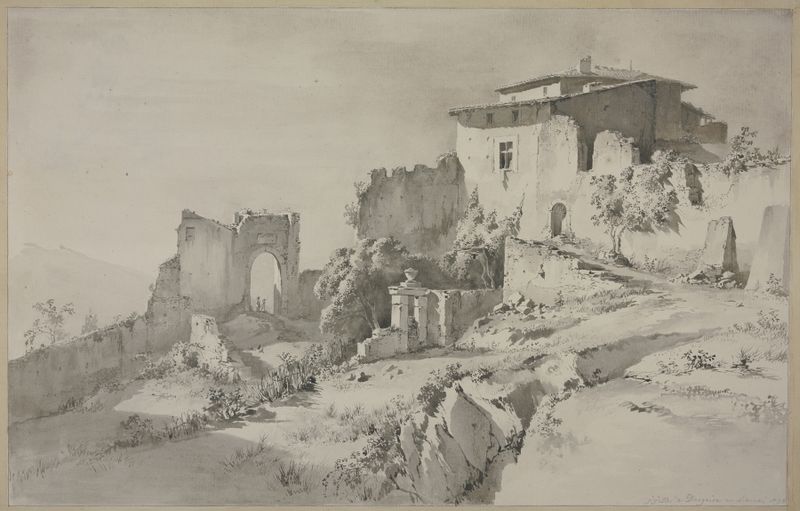
Landscape near Dargoire
Jean-Jacques de Boissieu

Tree with leafless treetop
Jean-Jacques de Boissieu