Interior of Saint Peter’s — History & Facts
Could beauty survive in a century of chaos? Interior of Saint Peter’s invites us to ponder this fragile existence through its serene portrayal of a once-magnificent space. Look to the left at the soaring columns, their grandeur rendered in soft illumination. The artist meticulously captures the interplay of light and shadow, creating a sense of depth that draws the eye toward the intricate architectural details. Notice how the warm hues of gold and cream contrast with the cool blues and grays, evoking both reverence and tranquility within the grandiose interior. Deeper still, the painting reveals a tension between permanence and decay.
The scattered remnants of stone and the delicate presence of figures hint at the passage of time and the fragility of human endeavor. Each brushstroke conveys a quiet resilience, allowing us to reflect on the sanctity of beauty amid the inevitable decline of all things. In 1758, Robert was immersed in the vibrant artistic circles of Paris, where Neoclassicism was gaining ground. This period was marked by a fascination with ruins and the sublime, reflecting the shifting values of society following the upheavals of the previous century.
The artist's focus on the interior of this iconic basilica reveals both a personal connection to the sacred and a broader commentary on the resilience of cultural heritage amidst the tumult of history.
More Artworks by Hubert Robert
Browse all →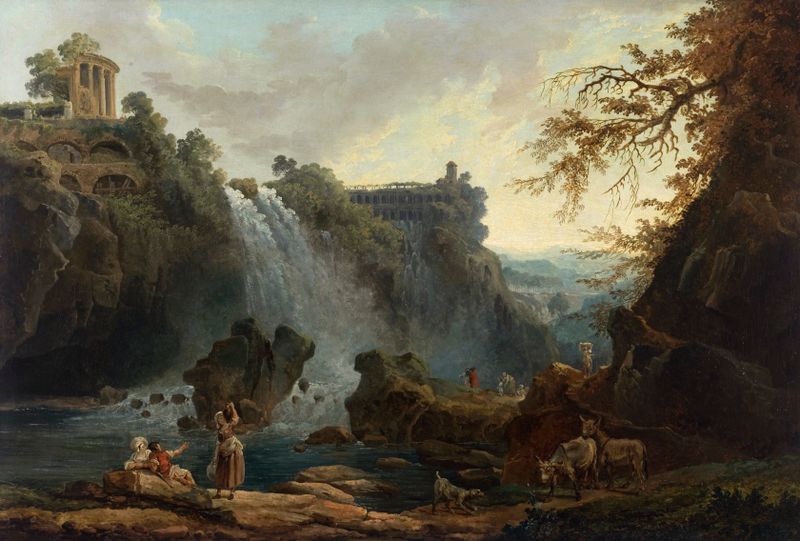
Les Cascatelles de Tivoli
Hubert Robert
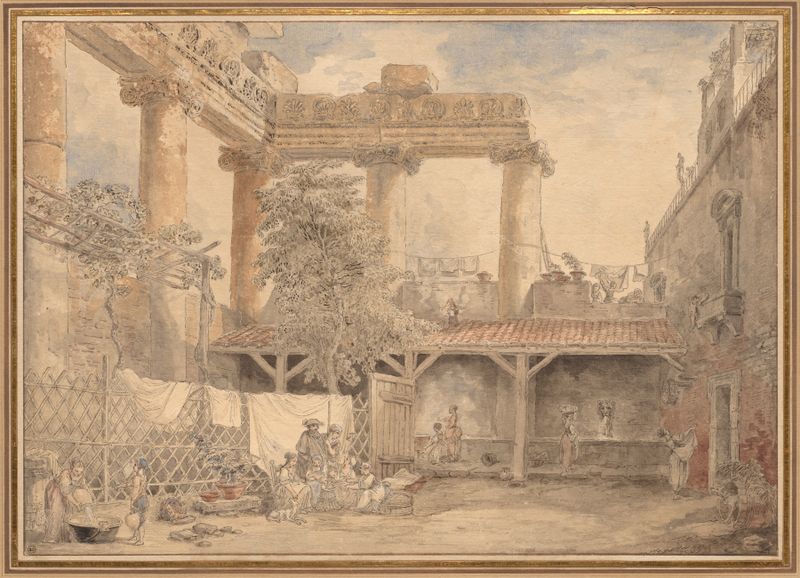
Roman Ruins, Villa Pamfili
Hubert Robert

The Rustic Bridge, Château de Méréville, France
Hubert Robert

The Portico of a Country Mansion
Hubert Robert

Architectural Capriccio
Hubert Robert

The Obelisk
Hubert Robert
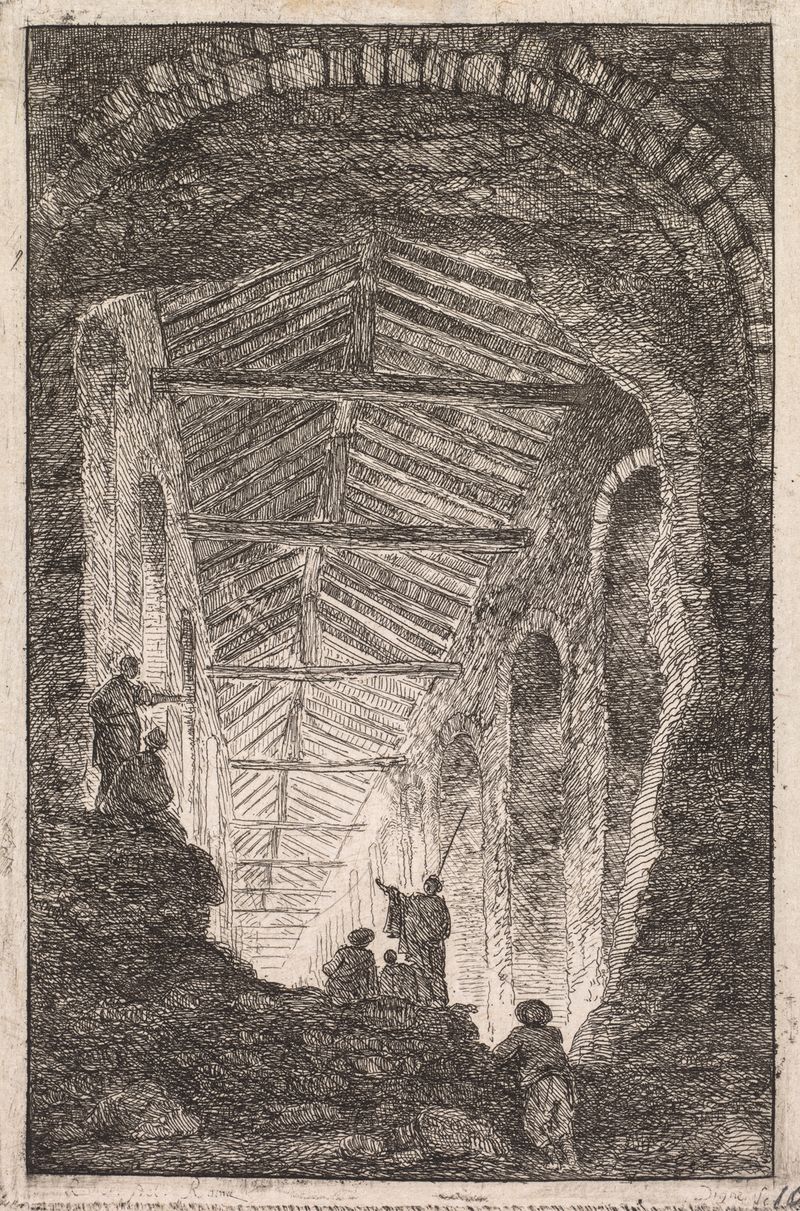
The Antique Gallery
Hubert Robert

L’incendie de l’Opéra, vu des jardins du Palais-Royal, le 8 juin 1781
Hubert Robert
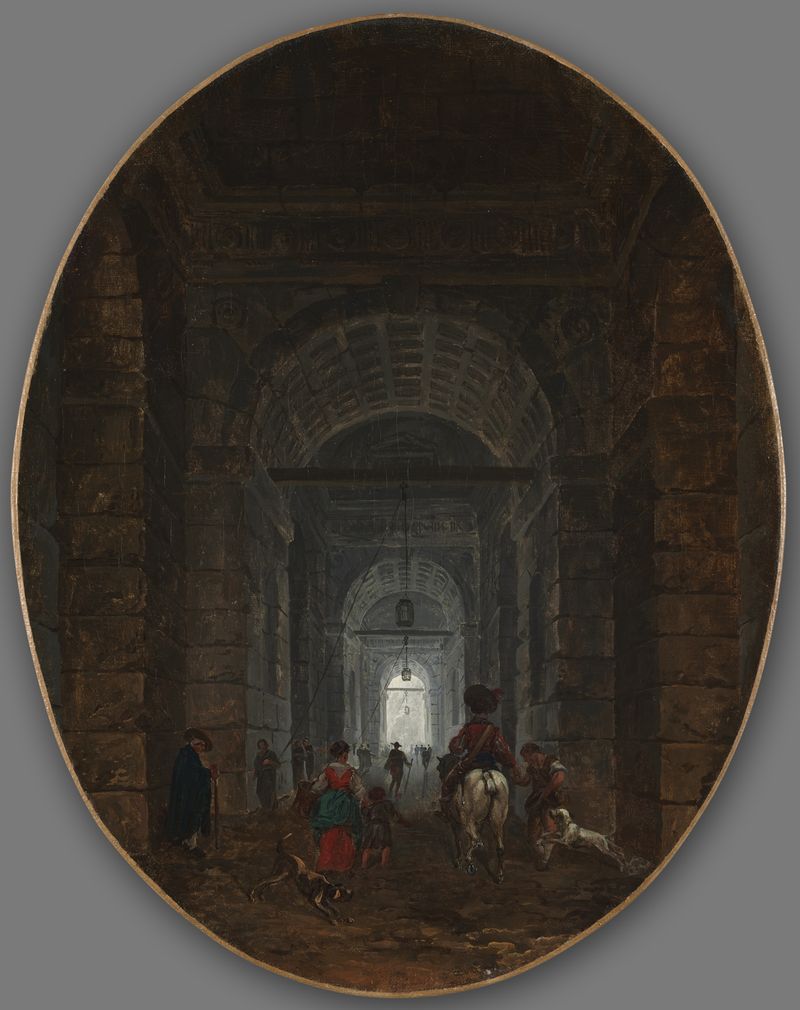
The Grotto of Posillipo
Hubert Robert

Architectural Capriccio with ruins of the Temple of Saturn and the Colosseum in the background
Hubert Robert