
Italienische Landschaftsstudie mit Blick auf das Meer — History & Facts
This notion echoes through the layers of natural beauty captured in the artwork, where balance reigns supreme amid the myriad hues of life. Look to the sweeping expanse of verdant hills that cradle the coastline, inviting the eye to wander toward the serene blue of the sea. The soft strokes of green transition into gentle waves, creating a harmonious dialogue between land and water. Notice how the light filters through the clouds, dappling the landscape and illuminating every detail, from the lush foliage to the distant horizon, where sky and sea kiss. As you delve deeper, subtle tensions emerge in the interplay of color and form.
The contrasting warmth of the land juxtaposes the cool, tranquil sea, embodying a delicate equilibrium of nature’s elements. The distant mountains, rendered with a tender touch, symbolize both stability and distance, while the gentle waves hint at the ever-changing nature of life. Each brushstroke reflects Kirner's desire to capture the beauty of balance, inviting viewers to contemplate their own place within this harmonious tableau. In 1833, Kirner painted this idyllic scene during a time when Romanticism was flourishing across Europe, emphasizing emotion and nature’s grandeur.
Living in Germany, he found inspiration in the Italian landscape, which was a departure from the industrial changes of the time. This moment in his career reflects his pursuit of beauty and the sublime, as he sought to convey a sense of peace and balance through the picturesque vistas that surrounded him.
More Artworks by Johann Baptist Kirner
Browse all →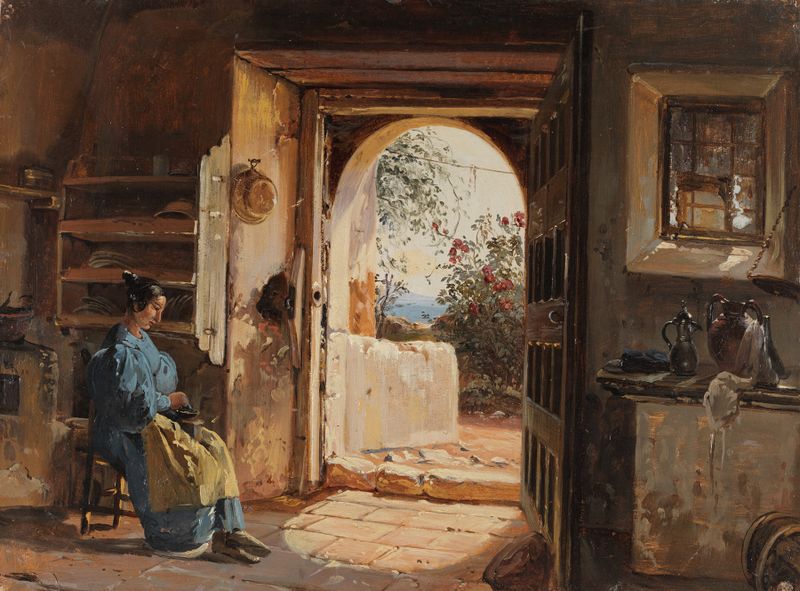
Italienische Stube mit einer sitzenden, Kaffee mahlenden Frau, die den Blick auf Garten und Meer freigibt
Johann Baptist Kirner
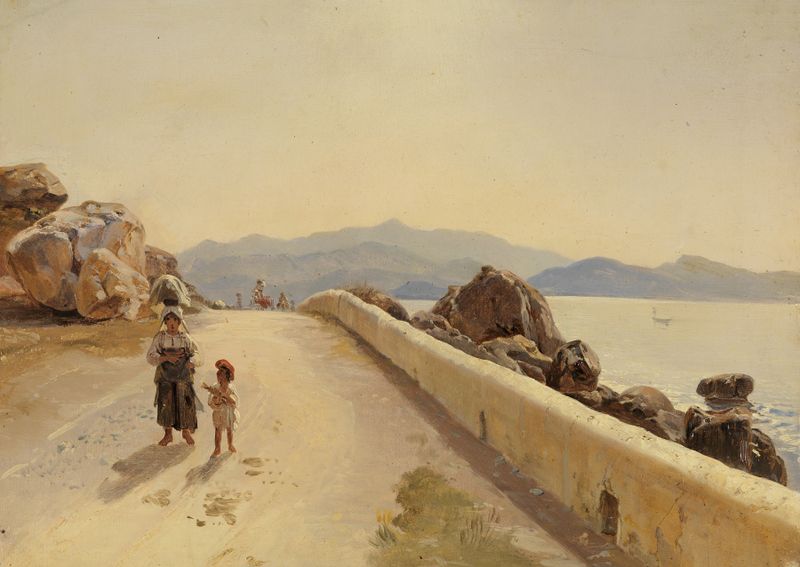
Italienischer Küstenweg
Johann Baptist Kirner
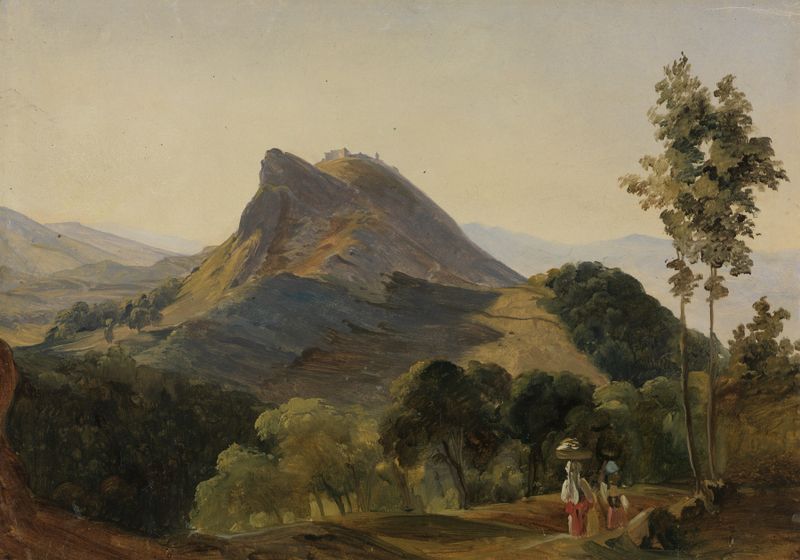
Blick von Norden auf Civitella
Johann Baptist Kirner
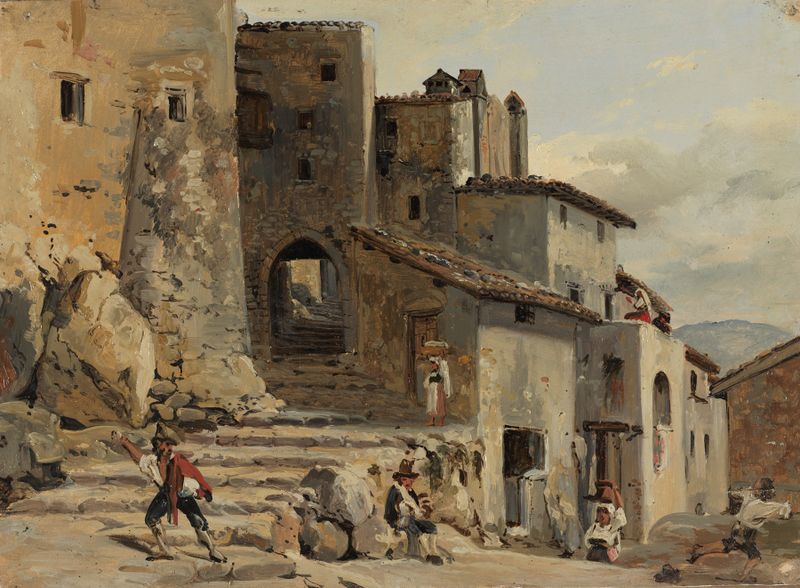
Treppenstrasse in einem italienischen Bergdorf
Johann Baptist Kirner
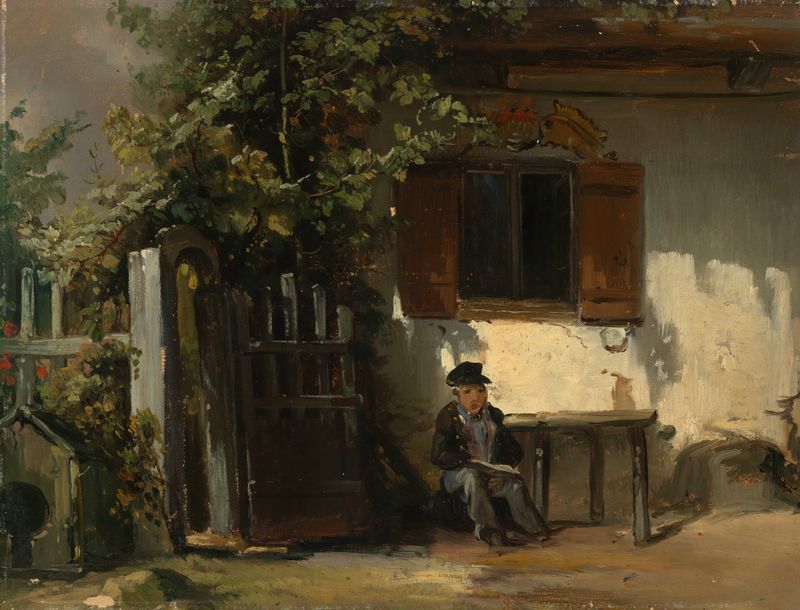
An der Gartentür
Johann Baptist Kirner
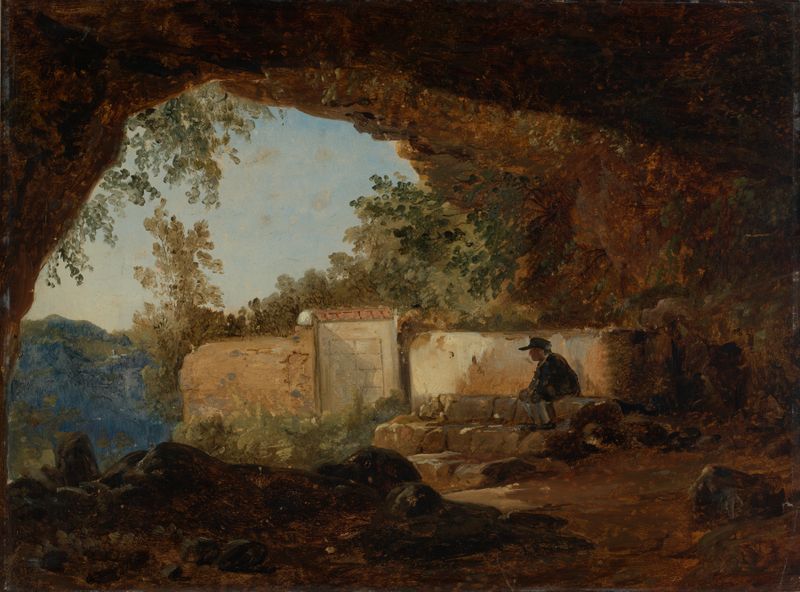
Grotte
Johann Baptist Kirner
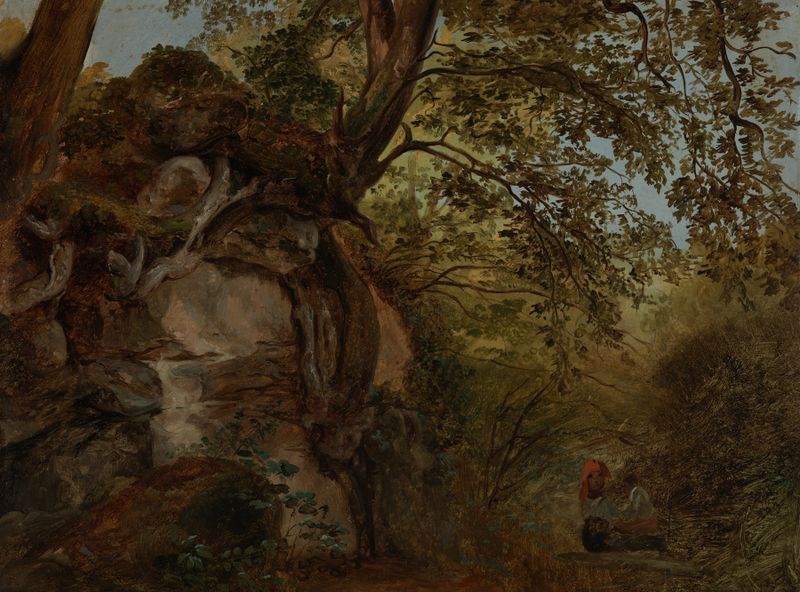
Baumstudie
Johann Baptist Kirner
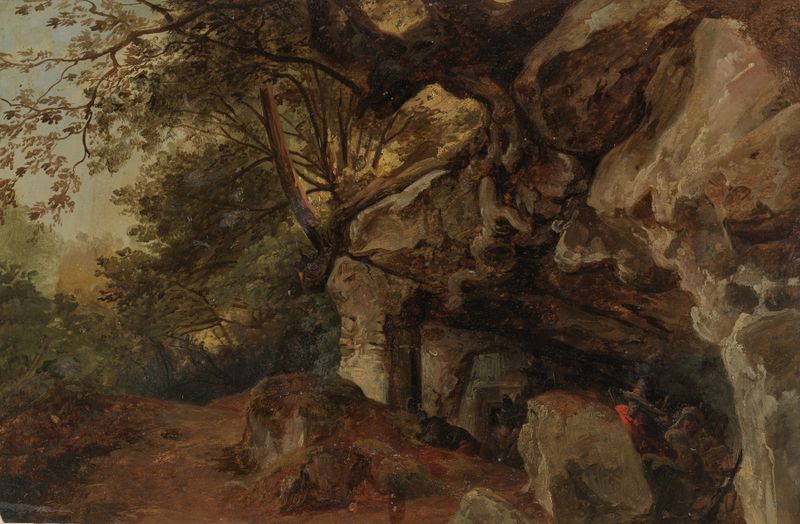
In einem Hinterhalt lauernde Räuber mit vor die Gesichter gebundenen Tüchern
Johann Baptist Kirner





