
Treppenstrasse in einem italienischen Bergdorf — History & Facts
Could beauty survive in a century of chaos? In Treppenstrasse in einem italienischen Bergdorf, the viewer is invited into a moment suspended in time, where the tranquility of an Italian village stands in stark contrast to the tumult of the world outside. Look to the left at the narrow, winding staircase that draws the eye upward, flanked by humble stone houses adorned with terracotta roofs. Notice how the warm light bathes the scene, casting gentle shadows that dance upon the cobbled street. The soft palette of earth tones melds harmoniously, creating an almost nostalgic atmosphere that invites reflection on the lives lived within those walls. As you delve deeper, consider the juxtaposition of the vibrant life teeming within the village against the backdrop of an increasingly discordant Europe.
The lively chatter of unseen villagers, suggested by the open doors and windows, hints at a warmth and community that defies the chaos beyond—a subtle rebellion against despair. Every detail, from the blooming flowers to the daily routines, serves as a testament to resilience, celebrating the ordinary amidst the madness of the age. During the years 1832 to 1837, the artist found himself in a period of personal exploration and artistic growth, capturing the essence of rural life as the continent faced political upheaval. In this intimate portrayal, he reflects a world caught between tradition and the winds of change, reminding us that beauty can flourish even in uncertain times.
More Artworks by Johann Baptist Kirner
Browse all →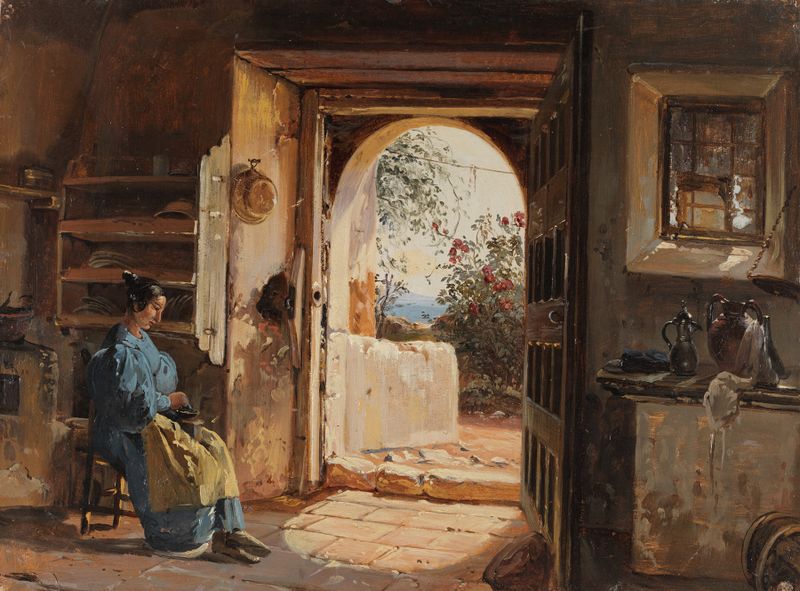
Italienische Stube mit einer sitzenden, Kaffee mahlenden Frau, die den Blick auf Garten und Meer freigibt
Johann Baptist Kirner
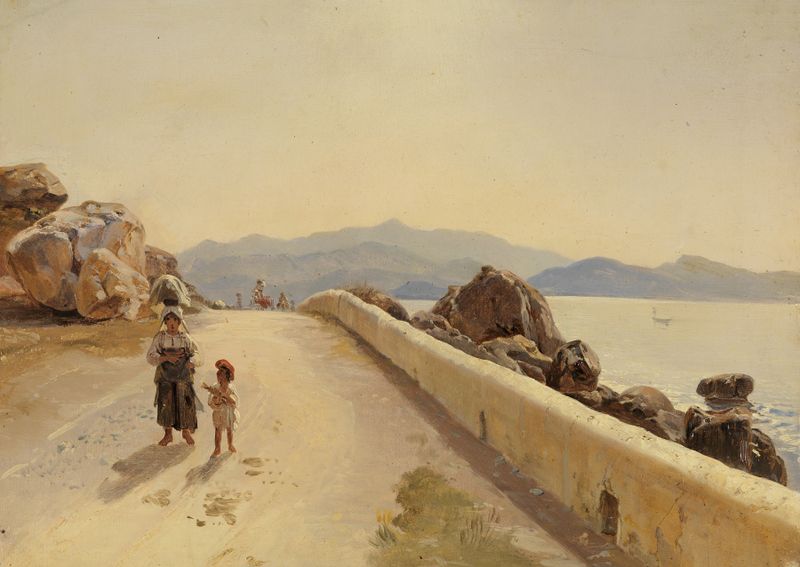
Italienischer Küstenweg
Johann Baptist Kirner
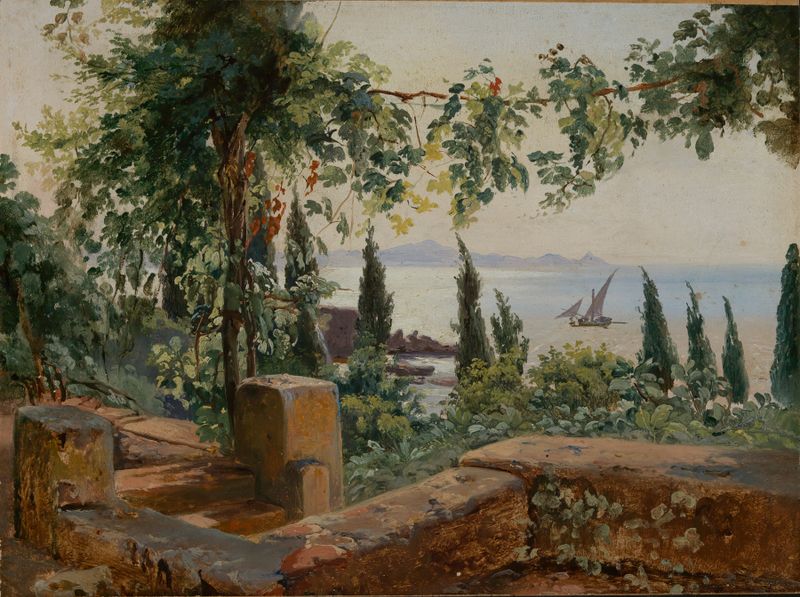
Italienische Landschaftsstudie mit Blick auf das Meer
Johann Baptist Kirner
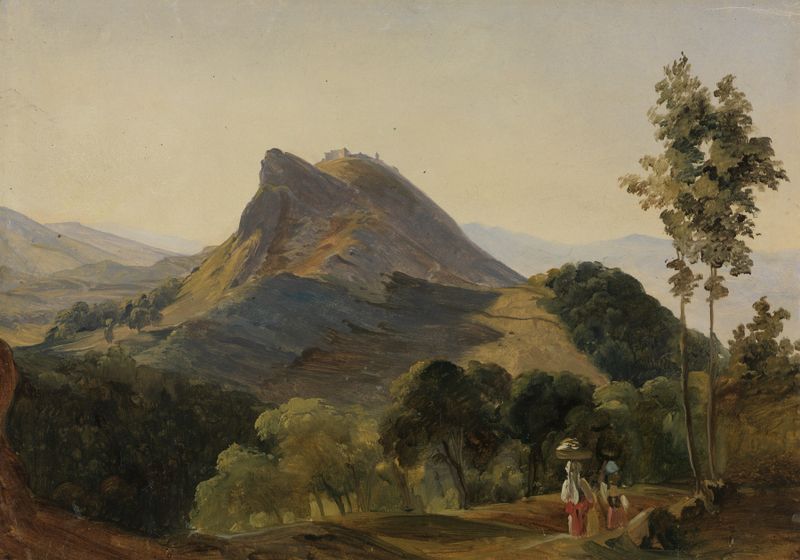
Blick von Norden auf Civitella
Johann Baptist Kirner
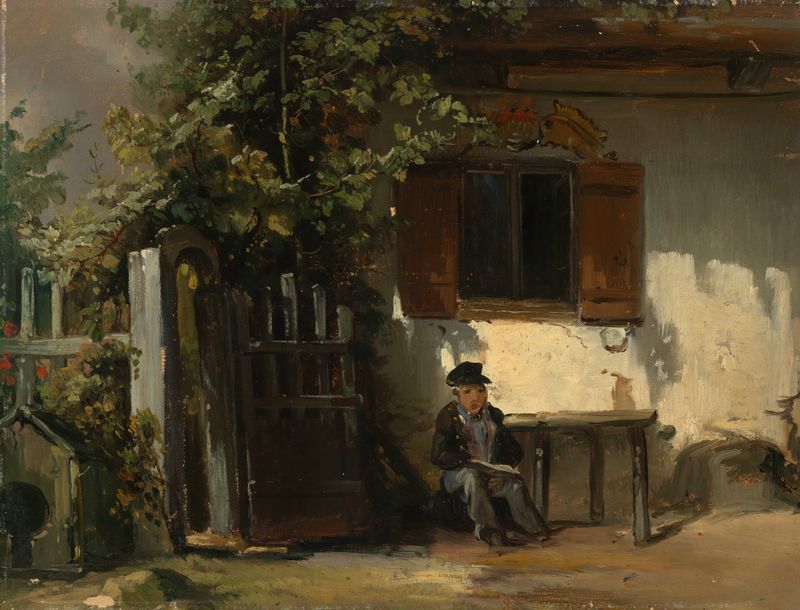
An der Gartentür
Johann Baptist Kirner
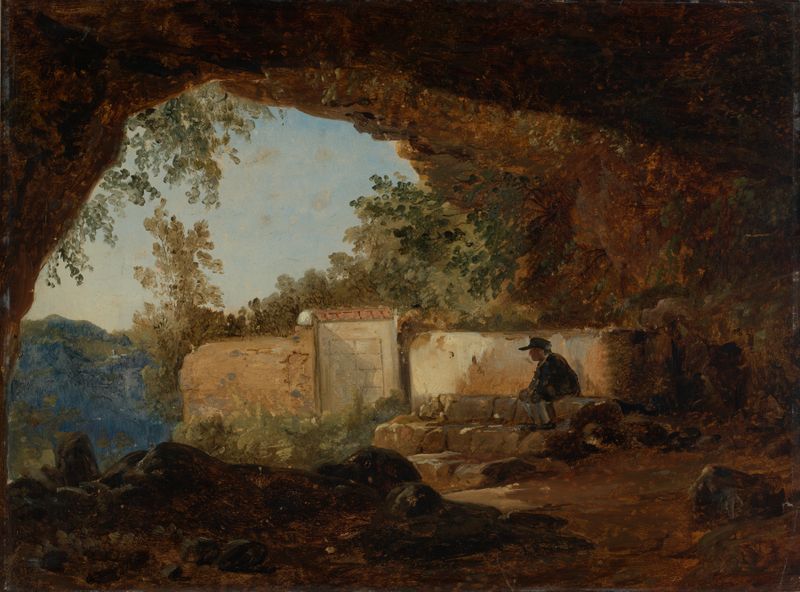
Grotte
Johann Baptist Kirner
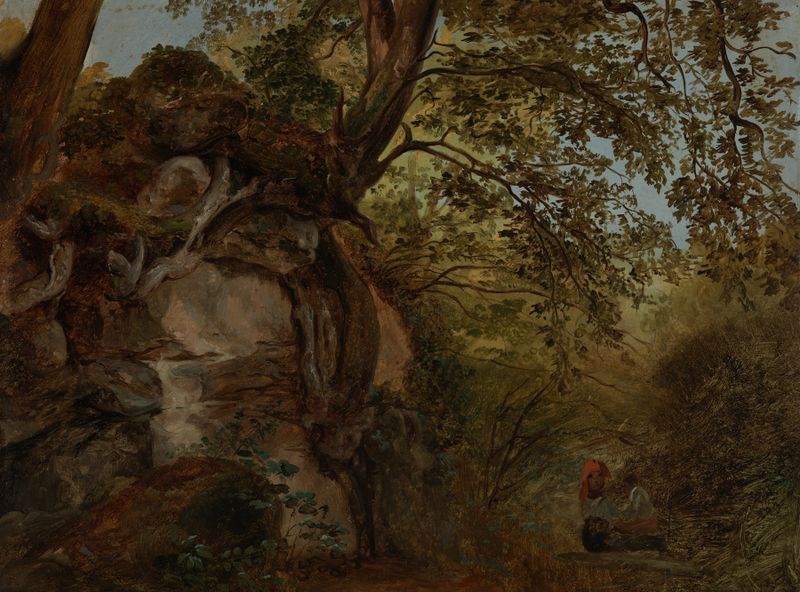
Baumstudie
Johann Baptist Kirner
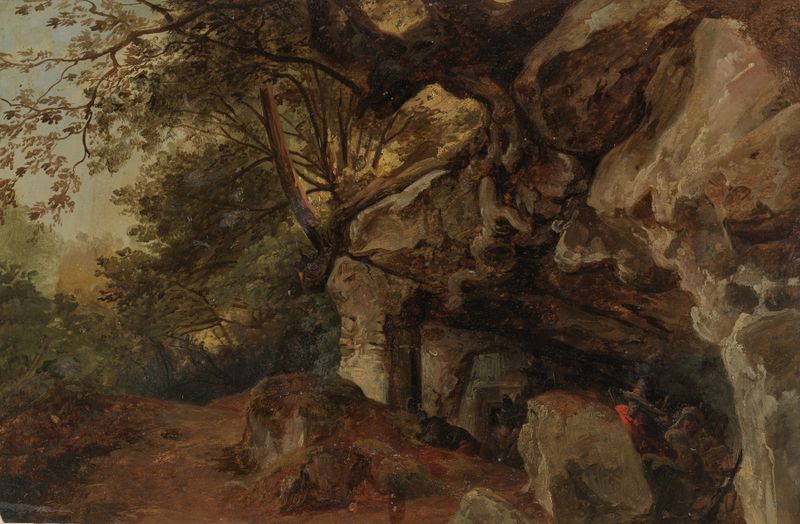
In einem Hinterhalt lauernde Räuber mit vor die Gesichter gebundenen Tüchern
Johann Baptist Kirner





