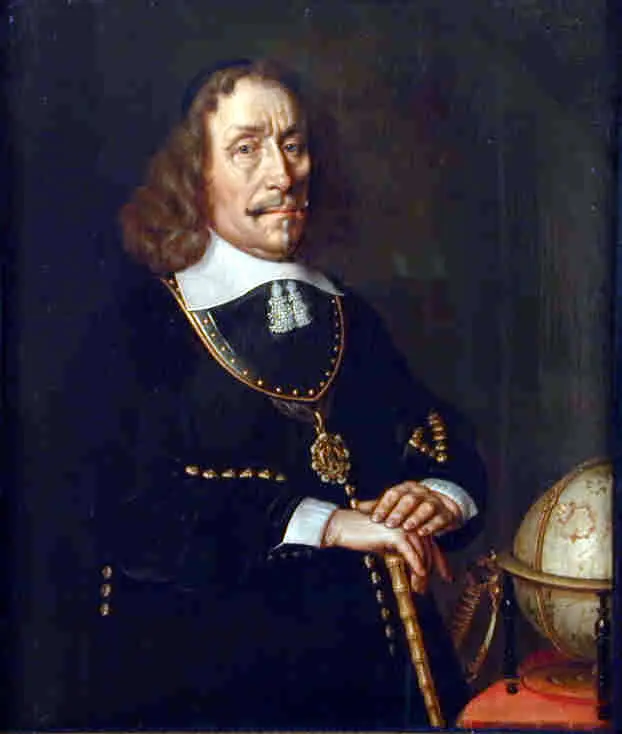
Jacob Baron van Wassenaer (1616-65), lord of Obdam. Vice admiral of Holland and West-Friesland — History & Facts
The first thing that seizes the eye is the sitter’s unwavering gaze, clear and direct, as if the past four centuries have not dulled his sense of command. The artist, Abraham Evertsz. van Westerveld, places his subject in half armor, the steel catching the light with a careful realism that signals both rank and readiness.
A baton is gripped firmly in one hand—an unmistakable emblem of naval authority—while the intricate lace collar softens the martial air, hinting at the wealth and status that underpinned Dutch power in the mid-seventeenth century. Behind him, a fleet of ships emerges from a misty seascape, their tiny flags and sails conjuring the world of maritime conflict and ambition that defined the Dutch Golden Age. The composition leads us from the glint of armor to the distant ships, binding personal presence to the fate of a nation at sea. Portraits like this, painted between 1650 and 1660, were more than likenesses: they were declarations of office and legacy, often commissioned to mark a rise in rank or commemorate a naval victory.
In the Dutch Republic, the men who steered fleets and fortunes were immortalized in oil, their images intended for the halls of government or the family home. The presence of the baton and the fleet in the background are not mere decoration—they are visual shorthand for command and achievement, instantly readable to a contemporary viewer. Today, this painting resides in the Rijksmuseum, a reminder of the era when the Dutch navy ruled the waves and portraiture served as both record and aspiration.
Stand before it and you sense not just the likeness of a man, but the ambitions of an age.