Cornelis Tromp (1629-91), Vice admiral, in Roman costume — History & Facts
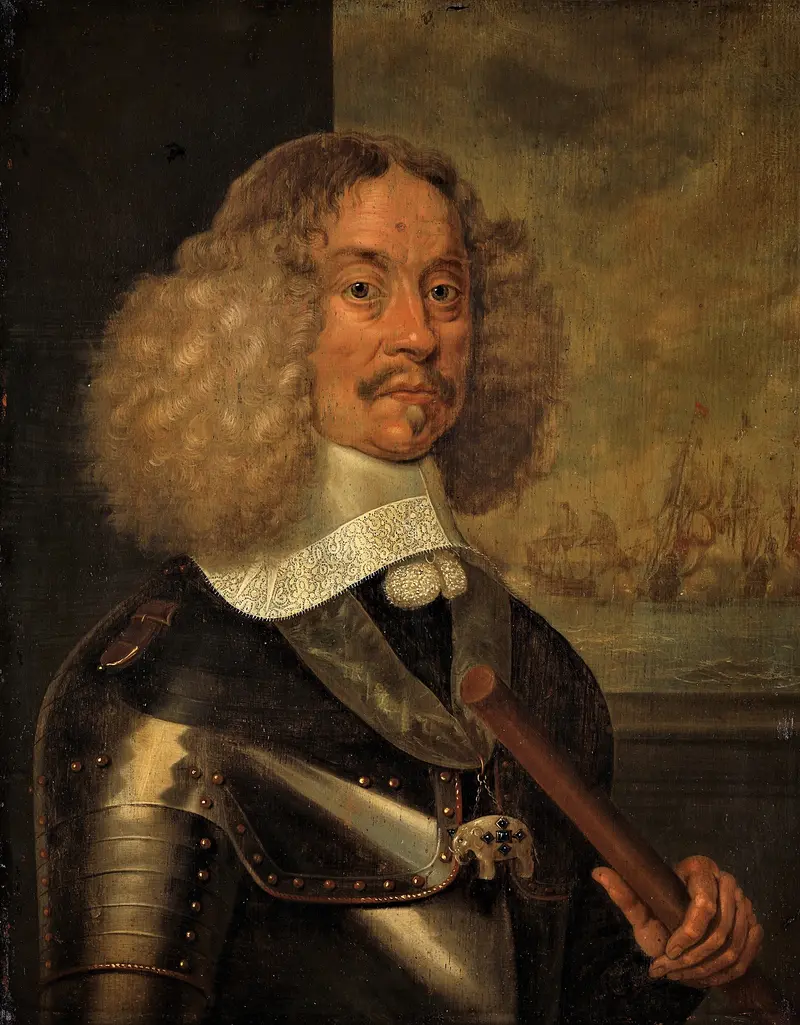
What first catches the eye in Cornelis Tromp (1629-91), Vice admiral, in Roman costume is not just the elaborate armor or the sweep of the orange cloak, but the moment of poised resolve as Tromp draws his sword. The artist, Abraham Evertsz. van Westerveld, has chosen to freeze the vice admiral at the edge of action, the tension in his arm echoed by the distant clash of ships at sea.
The Roman costume is no accident: it transforms a Dutch naval hero into a figure of classical legend, inviting viewers to see contemporary valor through the lens of ancient glory. The light falls from the left, catching the metallic sheen of the armor and the folds of the drapery, guiding us from Tromp’s steady gaze to the drama unfolding on the horizon. This kind of portrait, blending historical costume with contemporary likeness, was a favorite device in late seventeenth-century Dutch art. It was a way for sitters—especially military men—to claim a place in the long tradition of heroism, borrowing the authority of Rome to ennoble their own deeds.
Such works were often commissioned to commemorate a victory or to assert status, and they would hang in homes or public buildings as reminders of both personal and national achievement. Painted between circa 1670 and 1690, this portrait now belongs to the Rijksmuseum collection, where it stands as a vivid testament to the era’s fascination with the theater of power. Look again at Tromp’s face: the painter gives us not only a likeness, but a performance—part history, part myth, entirely of its time.