Jardin du Roy. Les serres — History & Facts
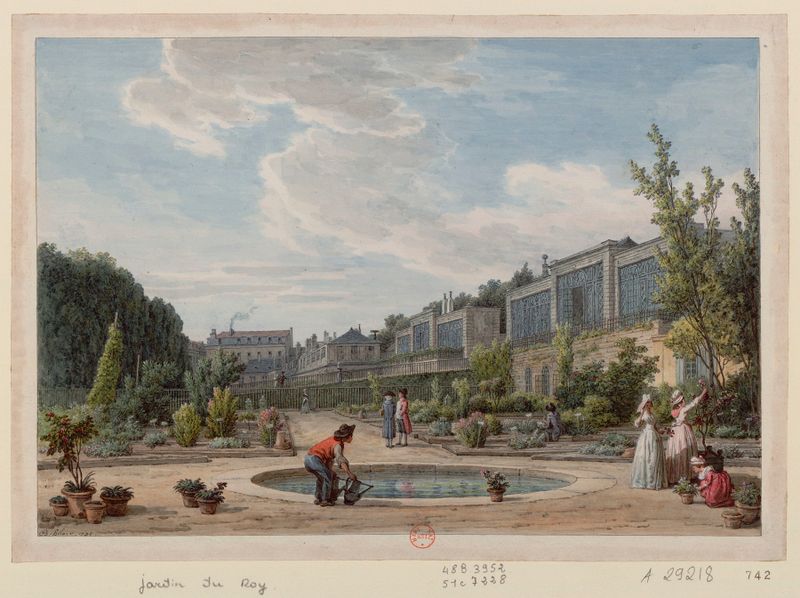
Can beauty exist without sorrow? In Jardin du Roy. Les serres, we are drawn into a lush, vibrant world where nature flourishes amidst the inevitable passage of time. The vivid greens and radiant blooms whisper of life, yet the undercurrents of mortality subtly weave through the composition, suggesting that even the most splendid gardens bear witness to the fragility of existence. Focus your attention on the vibrant foliage that spills over the edges of the canvas.
The meticulous detailing of each petal and leaf invites you to linger, revealing Hilaire's mastery in capturing the intricate textures of nature. Notice how the play of light dances across the scene, illuminating certain clusters while casting shadows that speak of what is hidden, what is fading. The colors burst forth with an exuberance that belies the underlying truth of decay, creating a visual harmony that is both radiant and poignant. As you explore further, subtle contrasts emerge — the vibrant life against the quiet encroachment of time.
The juxtaposition of blooming flowers with wilting edges serves as a reminder that beauty is transient, a fleeting moment in the grand narrative of life. Each element in the painting becomes emblematic of life's dualities: joy intertwined with loss, growth shadowed by decline. This tension enriches the viewer's experience, prompting reflection on the cycle of existence. Jean-Baptiste Hilaire created this work in 1794, a time marked by social upheaval and change in France.
As the world around him shifted dramatically, his focus on nature's beauty provided a sanctuary for contemplation. Within the context of the late 18th century, when artists were increasingly turning to the landscapes and the subtext of human experience, this painting stands as a testament to the enduring complexity of life amidst the backdrop of turmoil.