
Javelles de Seigle, Crèvecoeur — History & Facts
This sentiment whispers through every stroke, beckoning the viewer to delve into the melancholic elegance of the piece. Focus first on the textured expanse of earthy tones swirling together in a harmonious dance. The rich browns and muted yellows breathe life into the landscape, inviting you to trace the delicate lines that form the golden waves of grain. The horizon stretches wide, a fluid blend of color where the warm sunlight embraces the cool shadows, creating a gentle interplay of light and dark that evokes a sense of introspection. As you navigate deeper into the painting, notice the subtle figures, almost ghostly, working amidst the fields.
Their toil speaks to a universal narrative of labor and loss, where the rhythmic motion of harvesting becomes a poignant metaphor for both sustenance and longing. The contrasting stillness of the landscape against the figures’ movement captures a quiet tension, suggesting an underlying narrative of resilience tinged with melancholy. In 1915, Lepère painted this work amidst the turmoil of World War I, a time when the world was plunged into conflict and uncertainty. Living in France, he witnessed firsthand the devastation of war, which deeply influenced his artistic expression.
This piece reflects not only the beauty of the rural landscape but also the sorrowful reality faced by those driven from their fields and homes, encapsulating a poignant moment in both personal and collective history.
More Artworks by Auguste Louis Lepère
Browse all →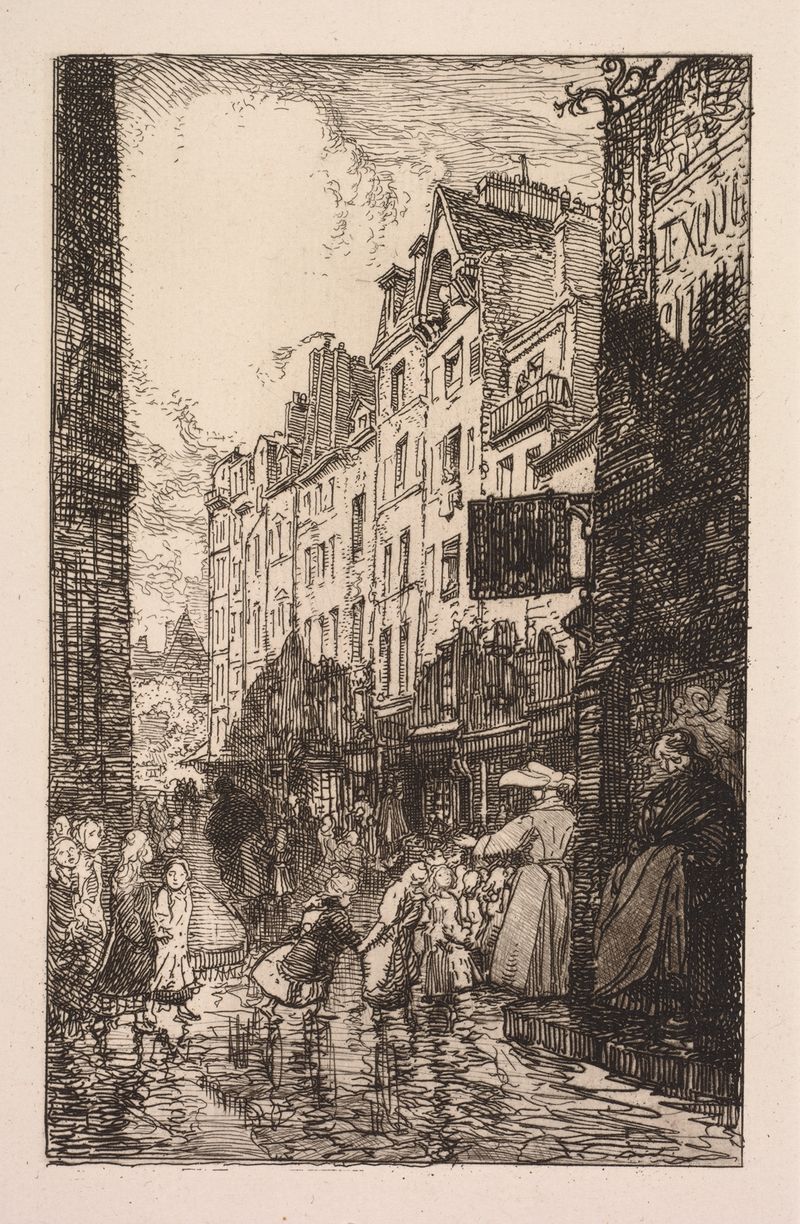
La Rue des Prêtres Saint-Séverin
Auguste Louis Lepère
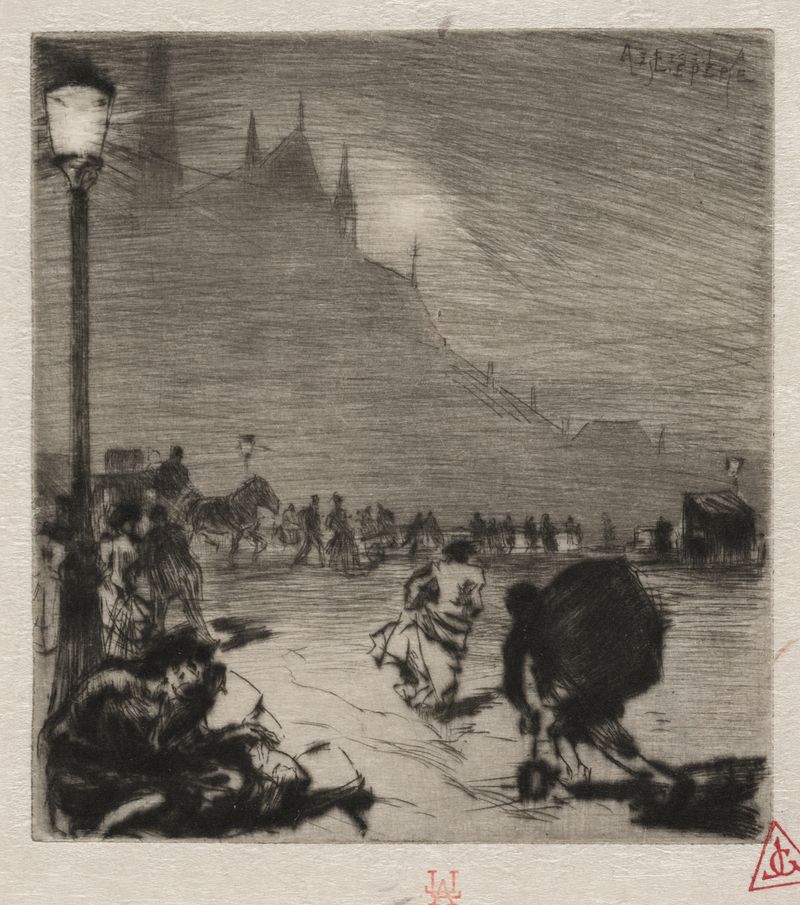
Au Coin du Pont-aux-Doubles
Auguste Louis Lepère
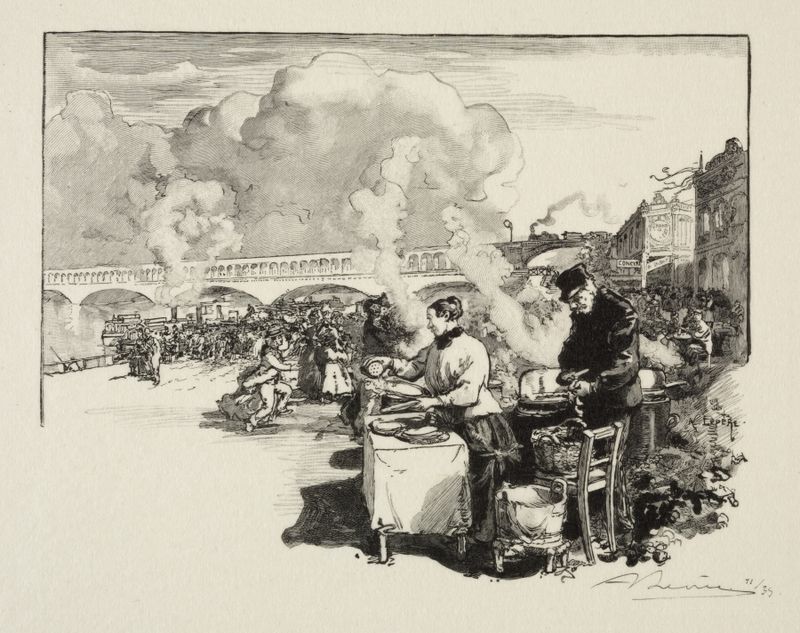
Debarcadère des bateaux-omnibus
Auguste Louis Lepère

La Seine, au quai de la Rapée
Auguste Louis Lepère
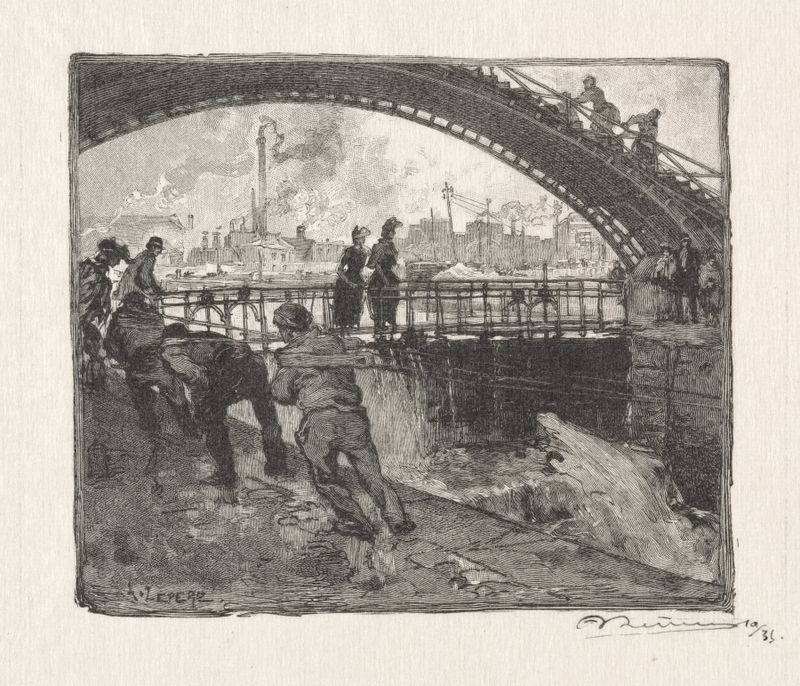
L’Ecluse du Canal St. Martin
Auguste Louis Lepère

Le Boulevard Montmartre, le Soir
Auguste Louis Lepère

Une Chasse au Mont Gérard
Auguste Louis Lepère
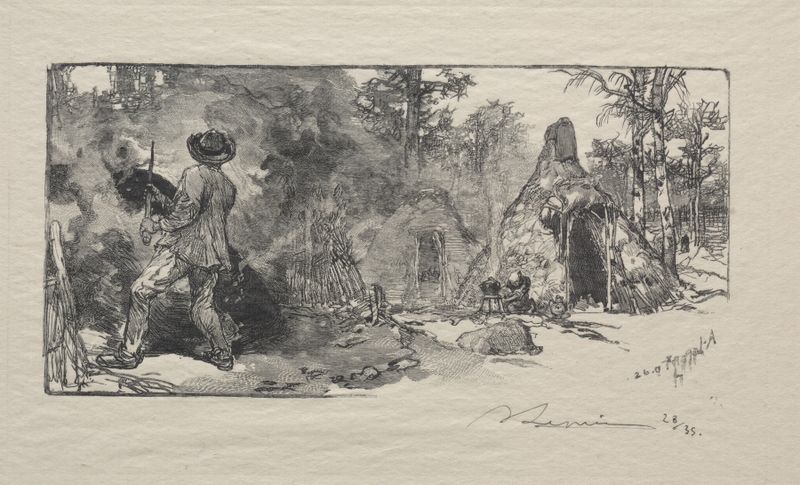
Les Charbonniere
Auguste Louis Lepère
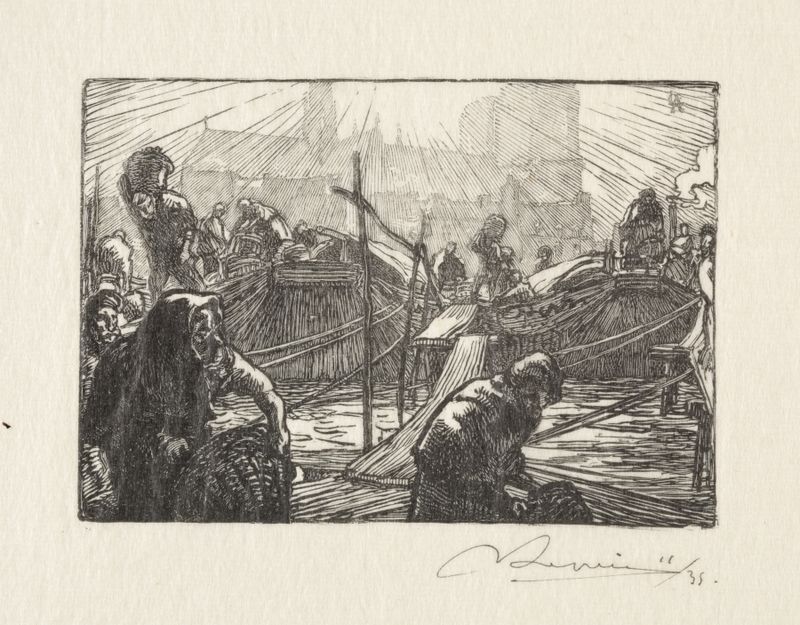
Notre Dame vue du Marché aux pommes
Auguste Louis Lepère

Le Palais des Arts Liberaux, Intèrieur
Auguste Louis Lepère





