
Johannes de Evangelist knielt voor Christus en het lam met de zeven hoorns en de zeven ogen — History & Facts
Who listens when art speaks of silence? In Johannes de Evangelist knielt voor Christus en het lam met de zeven hoorns en de zeven ogen, a profound stillness envelops the scene, inviting contemplation and reverence. Focus on the kneeling figure of John, positioned at the forefront, his hands delicately clasped in prayer. The luminous aura surrounding the lamb draws the eye upward, where the divine presence radiates an ethereal light, contrasting sharply with the somber earth tones of John's robes. Notice how the meticulous hatching and cross-hatching techniques bring texture to the wool of the lamb, creating a palpable softness that evokes both innocence and sacrifice. The interplay of light and shadow creates a profound sense of depth, emphasizing the emotional weight of John's submission.
The seven horns and seven eyes, emblematic of divine omnipotence and vision, surround the lamb, hinting at hidden truths and a cosmic significance that expands beyond the canvas. Each element—from John's profound reverence to the lamb's serene gaze—intertwines to explore themes of faith, revelation, and the quest for truth within the silence of the sacred. Created in 1511, this work emerged during Dürer's time in Nuremberg, where he was deeply engaged in exploring the intersection of art and spirituality. The early 16th century was a period of significant change, marked by the rise of humanism and the Reformation, influencing his exploration of religious themes.
This painting reflects both the artist's personal journey and the broader artistic movements of the era, embodying a search for deeper meaning in the divine.
More Artworks by Albrecht Dürer
Browse all →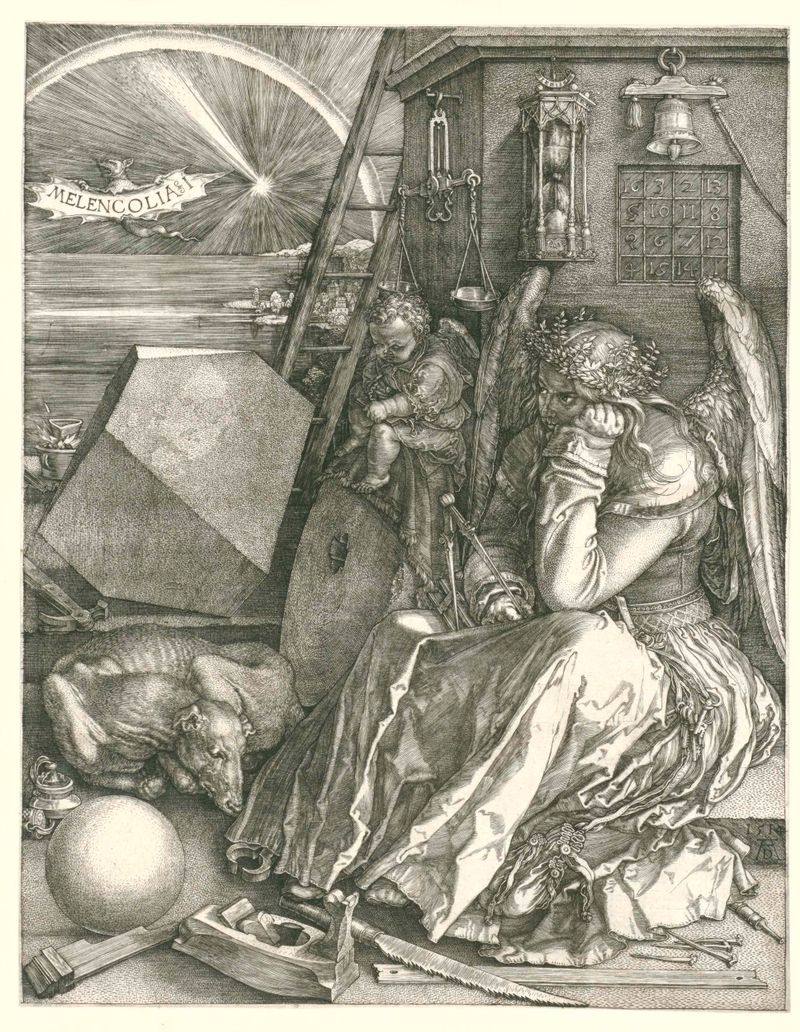
Melancholia
Albrecht Dürer
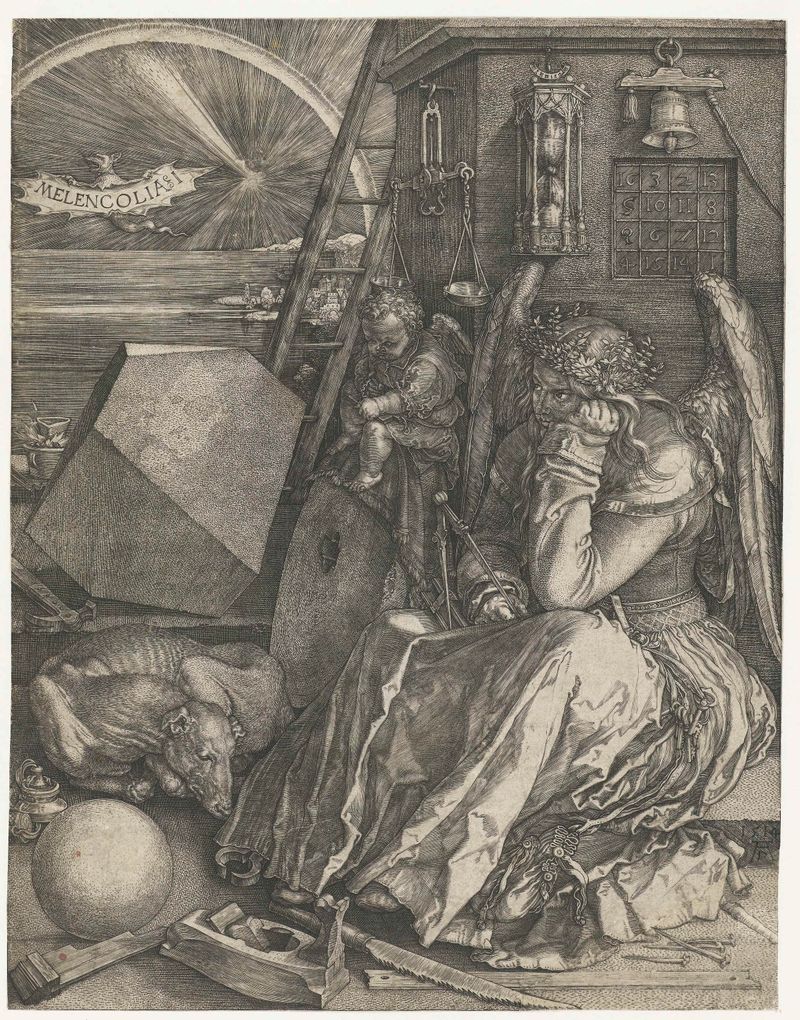
Melancholie
Albrecht Dürer
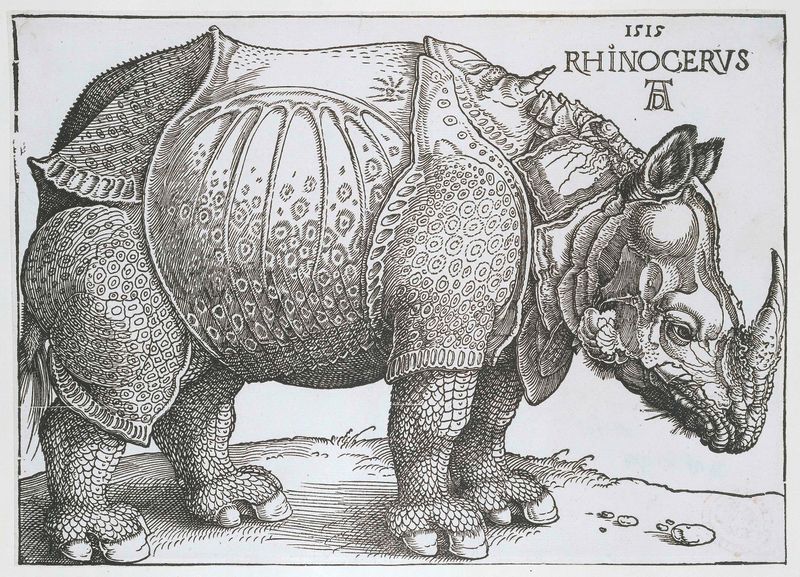
Neushoorn
Albrecht Dürer
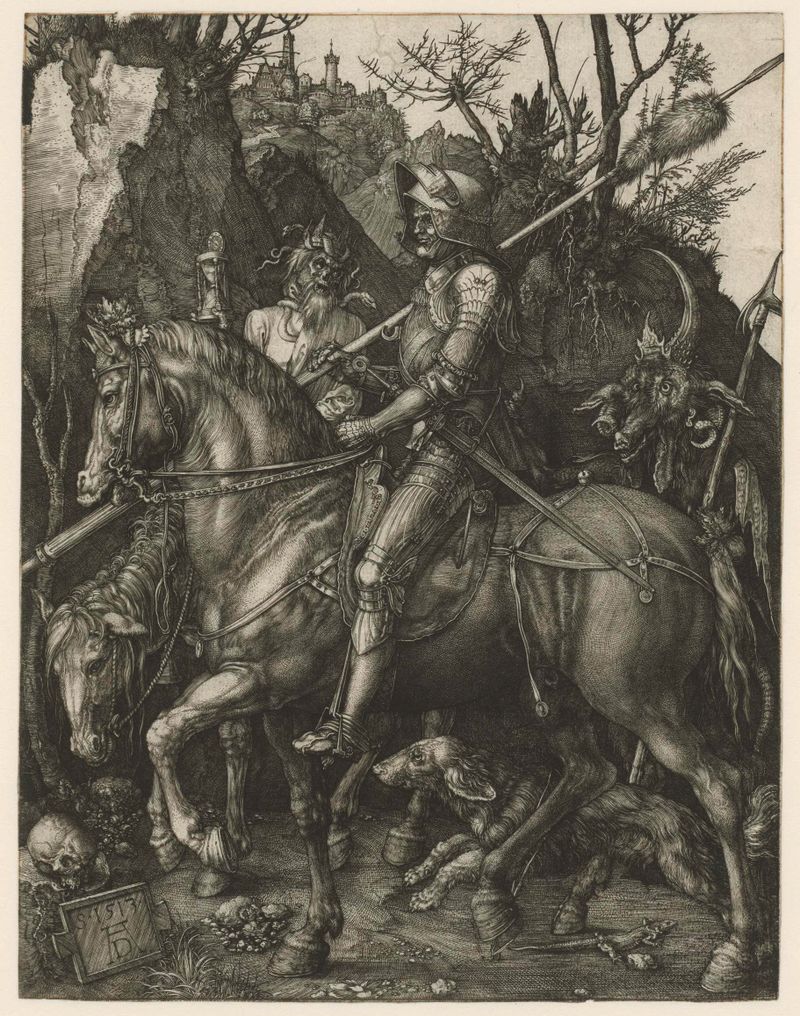
Knight, Death, and the Devil
Albrecht Dürer

De vier ruiters van de apocalyps
Albrecht Dürer

De vier ruiters van de apocalyps
Albrecht Dürer
De Heilige Hiëronymus in zijn studeervertrek
Albrecht Dürer
De Heilige Hiëronymus in zijn studeervertrek
Albrecht Dürer
De apocalyptische vrouw en de zevenkoppige draak
Albrecht Dürer
Adam en Eva
Albrecht Dürer
More Religious Art
Browse all →
The Return of the Prodigal Son
Rembrandt van Rijn

The Garden of Earthly Delights
El Bosco

Count Orgaz’ funeral
El Greco

The Hundred Guilder Print: the central piece with Christ preaching, the plate arched
Rembrandt van Rijn

The Descent from the Cross
Rogier van der Weyden

The return of the prodigal son
Rembrandt van Rijn