
Johannes de Evangelist knielt voor Christus temidden van zeven kandelaars — History & Facts
What secret hides in the quiet of the canvas? A profound yearning echoes through the stillness, inviting us to explore the depths of faith and devotion. Look to the center, where Johannes kneels, his humble posture striking a poignant contrast against the towering seven candlesticks illuminating the scene. The soft glow of the candles bathes the figure in warmth, while the intricate detail of Dürer’s line work draws the eye to the delicate folds of his garments. Pay close attention to the intensity in Johannes's expression, a mixture of reverence and vulnerability that encapsulates the essence of spiritual longing. Delve deeper into the symbolism embedded in the composition.
The candlesticks, representing the seven churches, stand not only as sources of light but also as guardians of divine truth, casting shadows that hint at the tension between the material and the ethereal. Notice how Johannes's gaze seems to both seek and submit, reflecting an inner struggle that resonates with anyone who has grappled with their faith. The interplay of light and shadow serves to amplify this emotional conflict, making the viewer acutely aware of the sacred tension at play. In 1498, Dürer was returning to Nuremberg after his travels in Italy, a time of artistic growth and exploration.
Surrounded by the burgeoning Renaissance, he sought to merge the human experience with the divine in his works. Johannes de Evangelist knielt voor Christus temidden van zeven kandelaars emerged from this fertile period, embodying the artist’s quest to portray not just the physical world, but also the profound emotional landscapes that lie beneath the surface.
More Artworks by Albrecht Dürer
Browse all →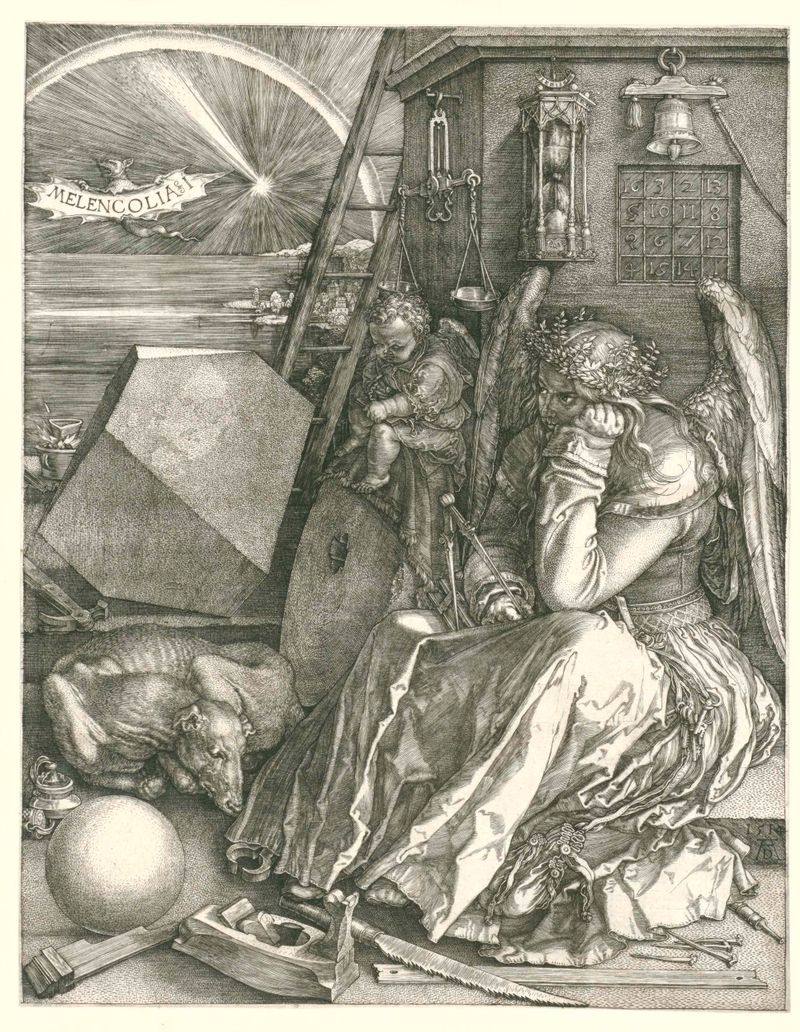
Melancholia
Albrecht Dürer
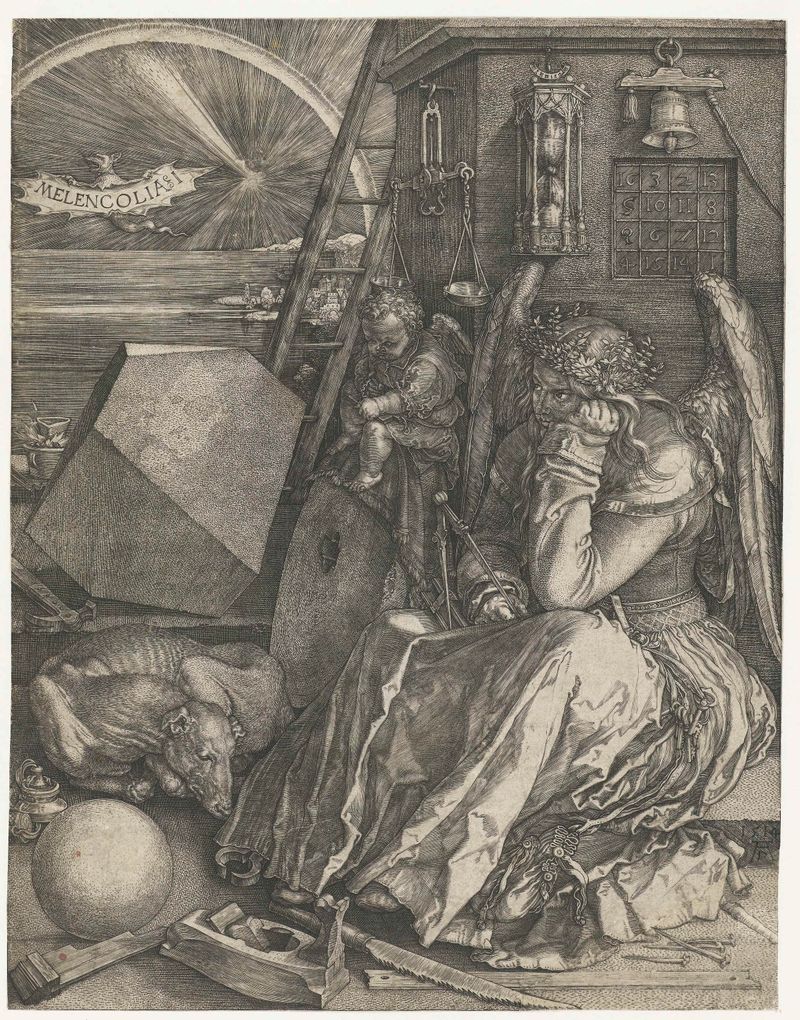
Melancholie
Albrecht Dürer

Neushoorn
Albrecht Dürer
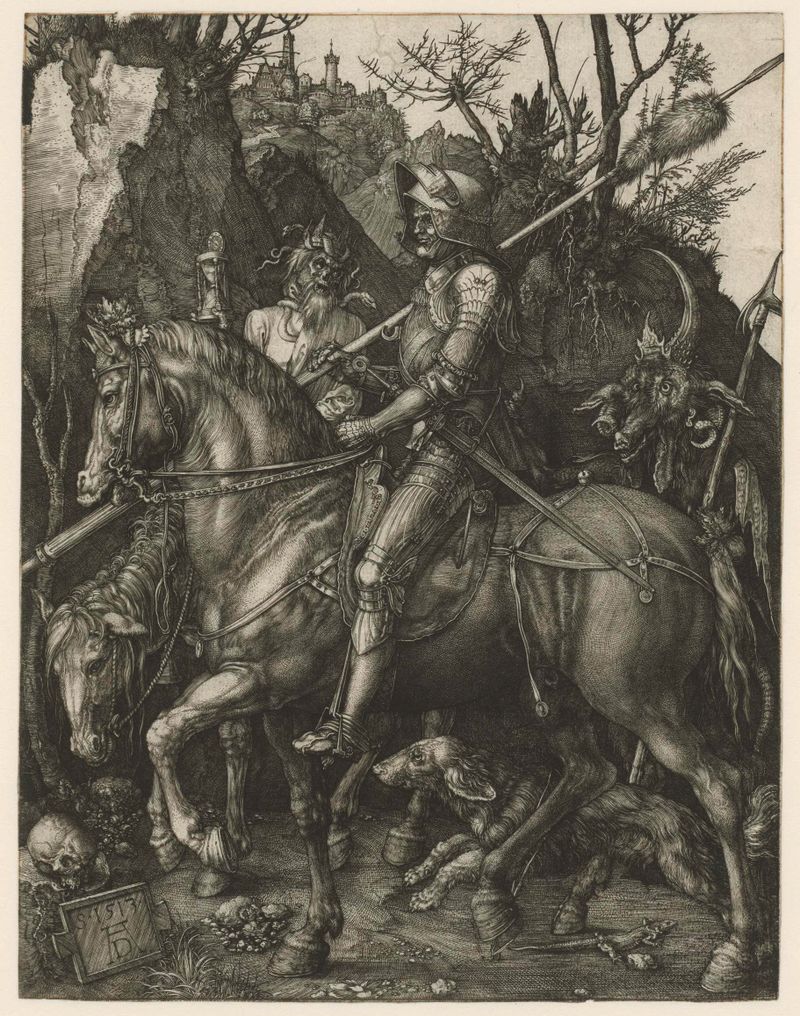
Knight, Death, and the Devil
Albrecht Dürer

De vier ruiters van de apocalyps
Albrecht Dürer

De vier ruiters van de apocalyps
Albrecht Dürer
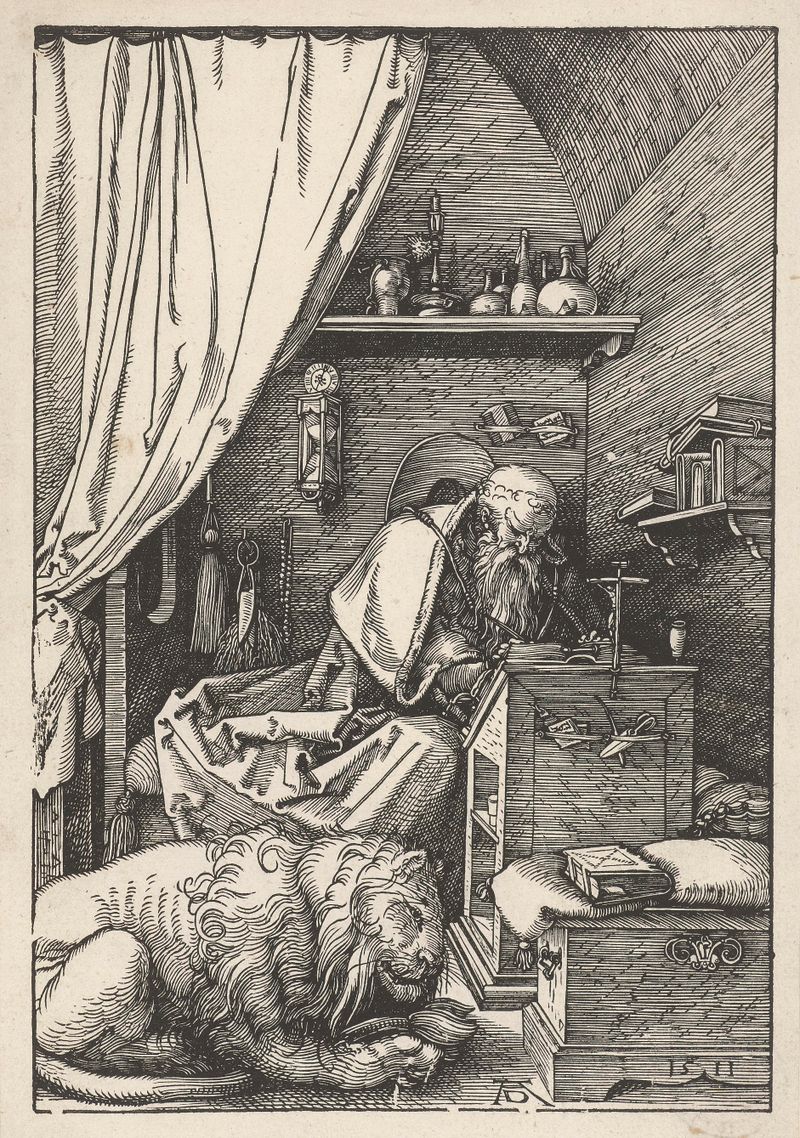
De Heilige Hiëronymus in zijn studeervertrek
Albrecht Dürer
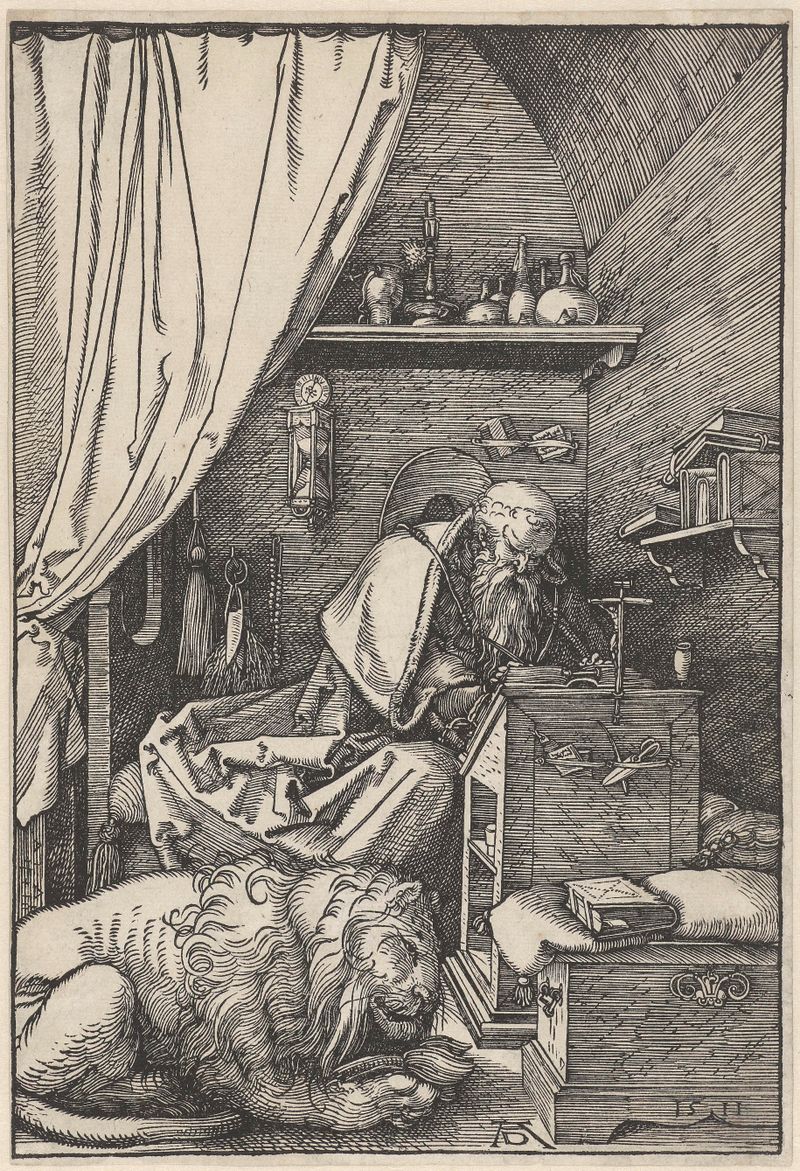
De Heilige Hiëronymus in zijn studeervertrek
Albrecht Dürer
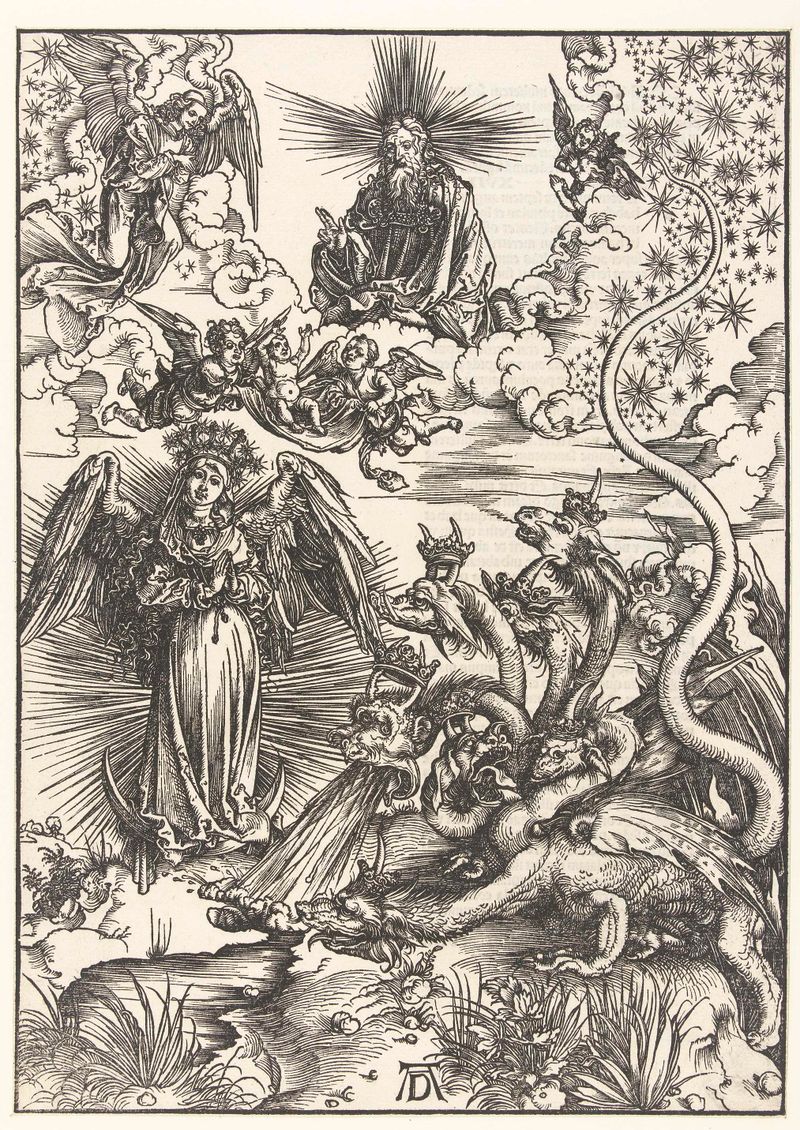
De apocalyptische vrouw en de zevenkoppige draak
Albrecht Dürer
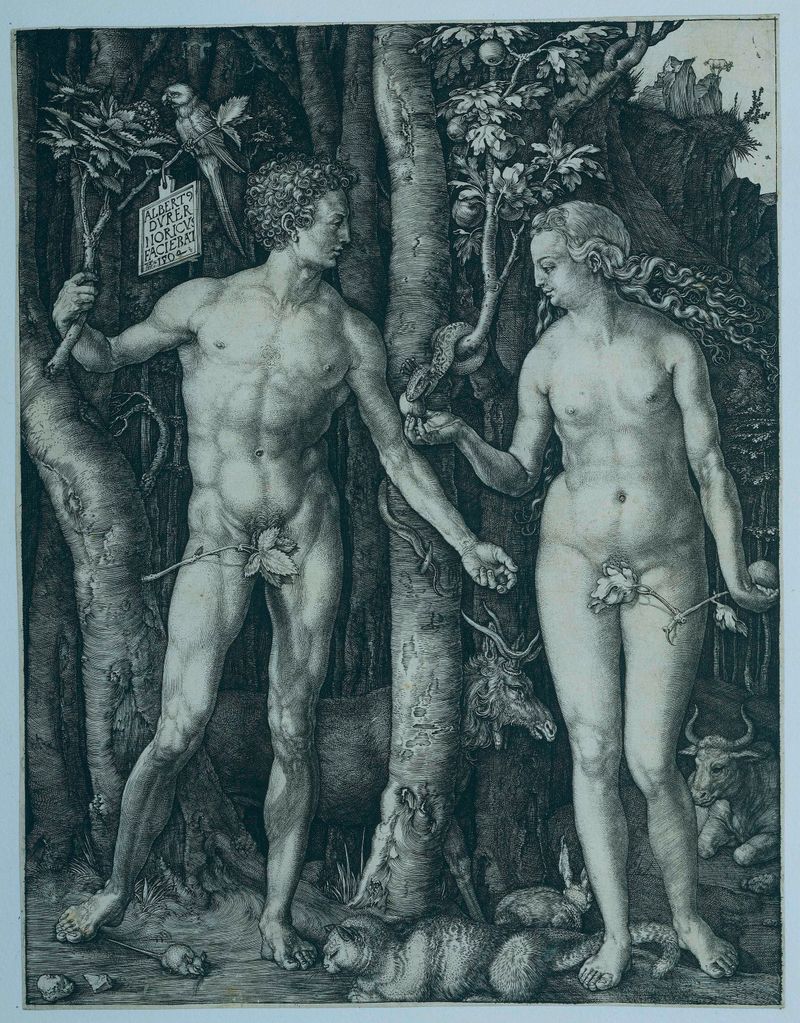
Adam en Eva
Albrecht Dürer
More Religious Art
Browse all →
The Return of the Prodigal Son
Rembrandt van Rijn

The Garden of Earthly Delights
El Bosco

Count Orgaz’ funeral
El Greco

The Hundred Guilder Print: the central piece with Christ preaching, the plate arched
Rembrandt van Rijn

The Descent from the Cross
Rogier van der Weyden

The return of the prodigal son
Rembrandt van Rijn