
John Manners, Marquess of Granby — History & Facts
What first catches the eye is the commanding figure at the center, his gaze set firmly beyond the frame, as if surveying the outcome of a distant battle. The sweep of his red and gold uniform, the glint of his armor, and the measured calm of his stance all signal authority and a readiness for action. His hand rests on the back of a powerful horse, whose head turns in the opposite direction, suggesting a world in motion just outside our view.
Behind him, a turbaned attendant, his head bandaged, looks on with a quieter intensity, adding a note of drama and complexity to the scene. The stormy sky above and the distant cavalry below create a charged atmosphere, while the careful play of light draws attention to the central figure’s face and chest, marking him as the focus of both the painter and the viewer. This painting belongs to the age of grand portraiture in eighteenth-century Britain, when military leaders and aristocrats commissioned artists like Sir Joshua Reynolds to immortalize them in moments of calm command, rather than the chaos of battle. Such works were not merely records of appearance, but public statements of status, virtue, and imperial reach—intended for halls and galleries where power was on display.
The presence of the attendant and the elaborate uniform speak to the global entanglements of the era, while the martial setting recalls the era’s wars and shifting alliances. Now housed in the John and Mable Ringling Museum of Art in Sarasota, Florida, this painting stands as a testament to the ambitions and anxieties of its time—inviting us to look again at the faces and gestures that shaped an age.
More Artworks by Sir Joshua Reynolds
Samuel Johnson (1709-1784)
Sir Joshua Reynolds
Mrs. Robert Brudenell
Sir Joshua Reynolds
Miss Elizabeth Beauclerc as Una with the Lion
Sir Joshua Reynolds

Lady Sarah Bunbury Sacrificing to the Graces
Sir Joshua Reynolds
Lady Louisa Conolly
Sir Joshua Reynolds
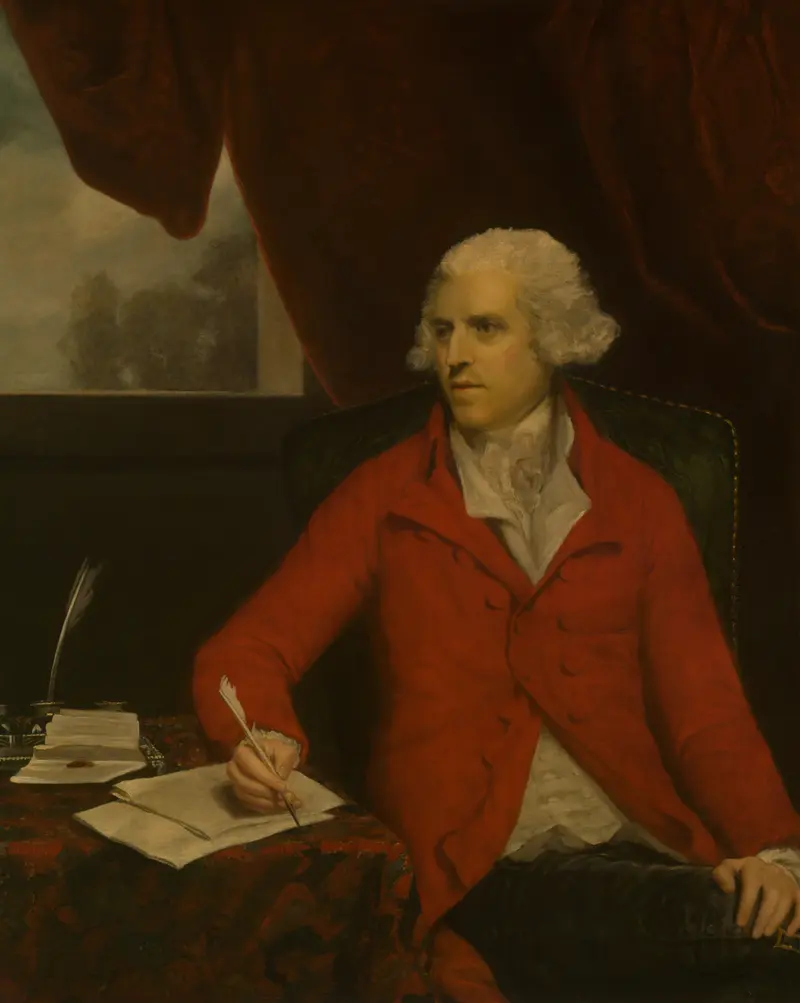
Sir Thomas Rumbold, Bt.
Sir Joshua Reynolds
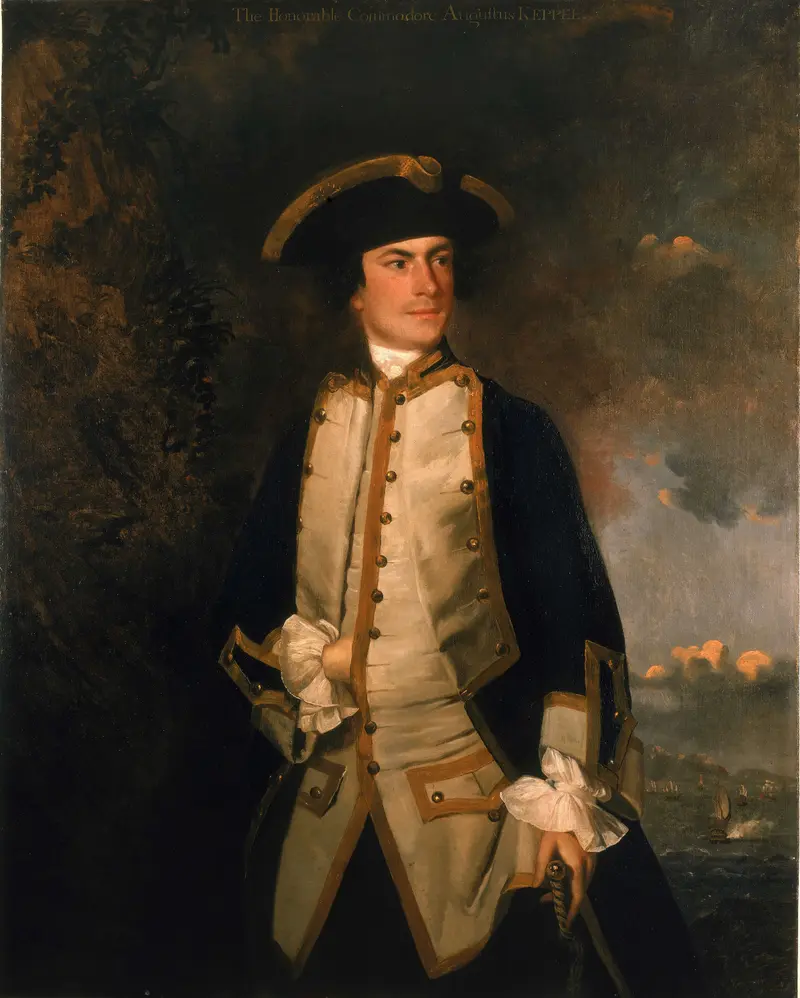
Commodore the Honourable Augustus Keppel
Sir Joshua Reynolds
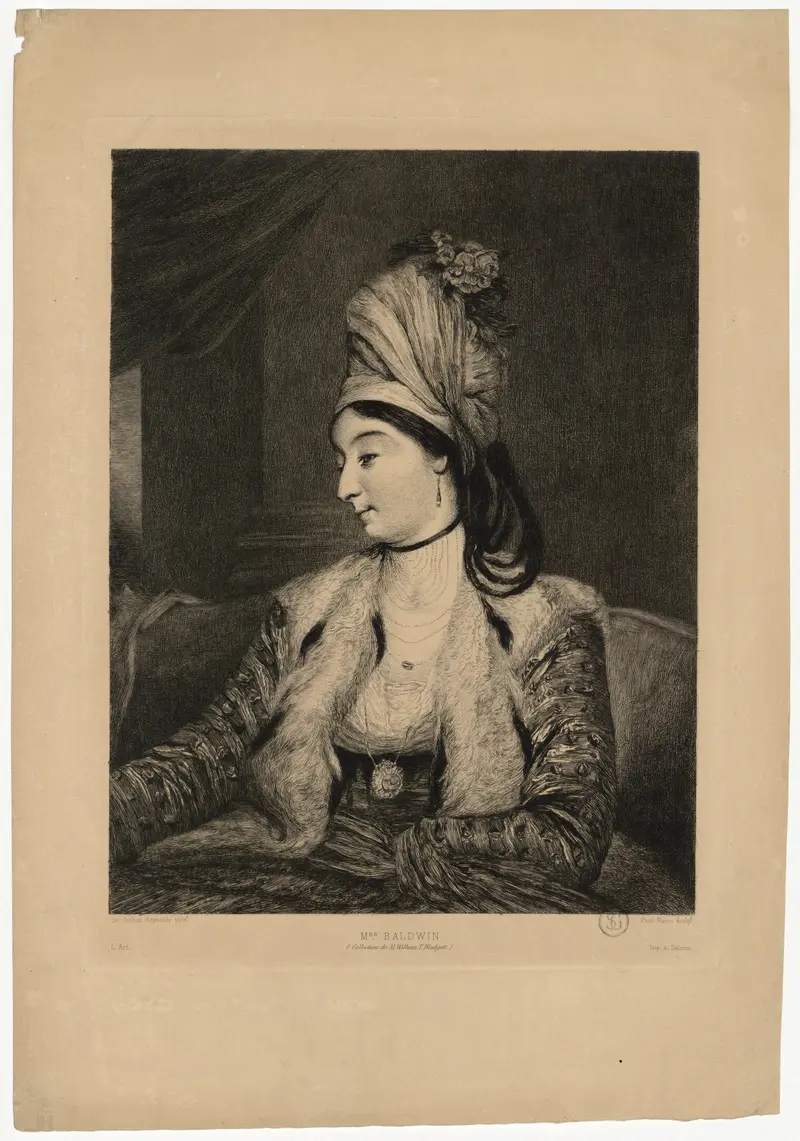
Mrs Baldwin. Sir Joshua Reynolds pinx.t Paul Rajon sculp.t
Sir Joshua Reynolds
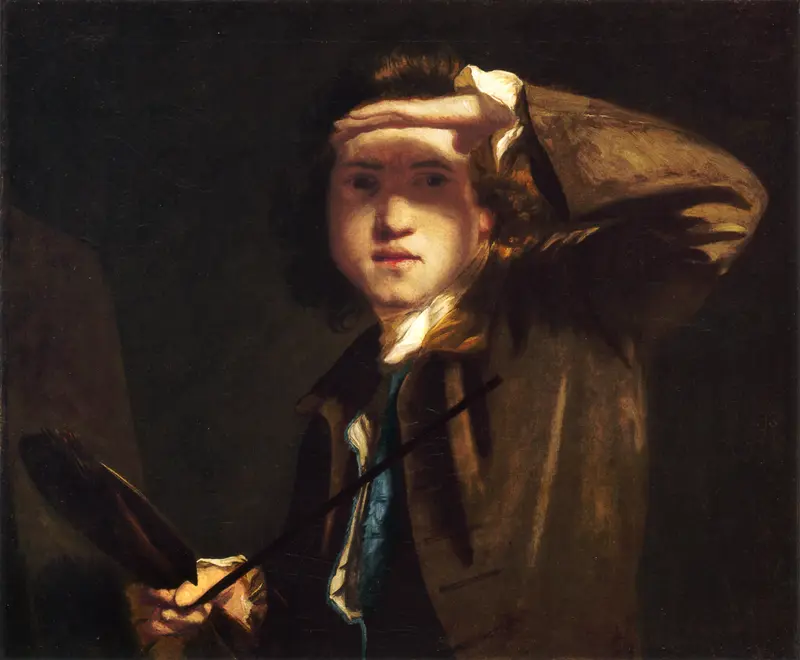
Sir Joshua Reynolds
Sir Joshua Reynolds
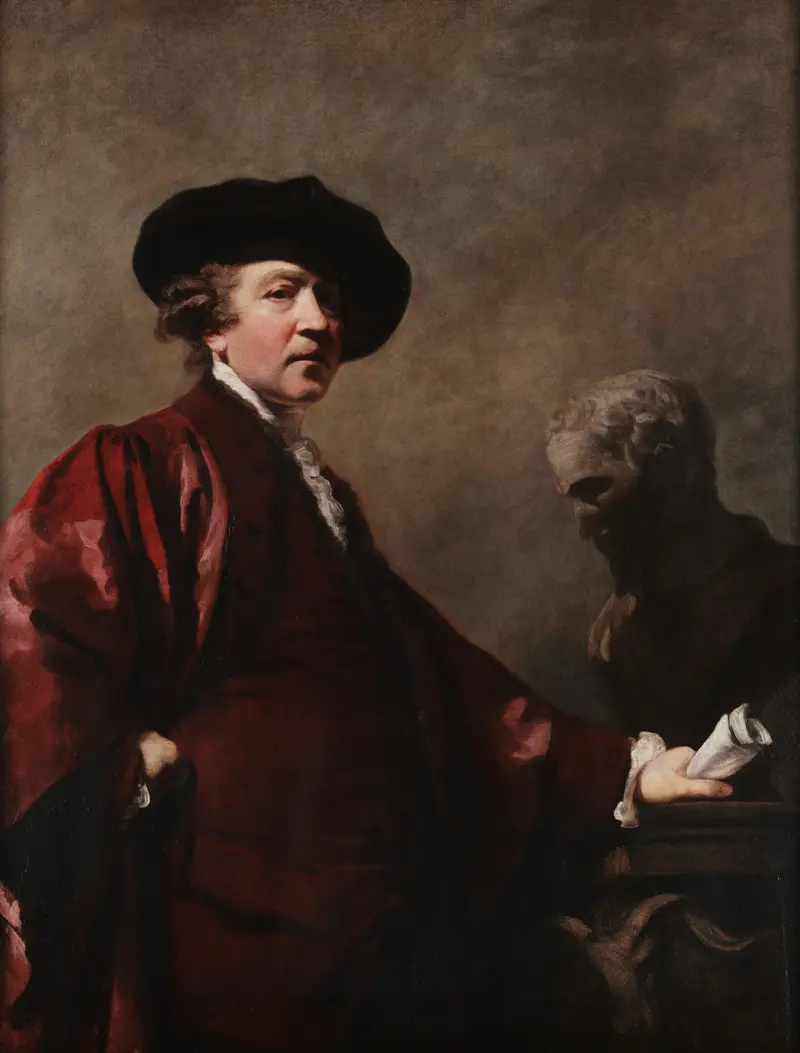
Self-Portrait
Sir Joshua Reynolds





