
Jongeman (Theagenes?), leunend tegen een tafel — History & Facts
What if silence could speak through light? In Jongeman (Theagenes?), leunend tegen een tafel, the hush of contemplation is palpable, inviting viewers to ponder the divine connection woven into the fabric of our existence. Look to the left at the figure, a young man leaning against a table, his posture relaxed yet imbued with an air of introspection. The soft interplay of light and shadow caresses his features, revealing a delicate palette of warm ochres and cool blues that enhances his serene demeanor. The subtle drapery of his clothing flows effortlessly, echoing the tranquility that envelops him, while the meticulously rendered objects on the table serve as both companions and distractions to his thoughts. Beneath the surface, a deeper narrative unfolds—the juxtaposition of the sacred and the mundane.
The young man's gaze, slightly averted, suggests an inner dialogue with a higher realm, prompting questions about identity and purpose. The table, a symbol of earthly existence, stands as a reminder of the divine waiting just beyond reach, while the gentle illumination hints at an otherworldly presence, bridging the gap between the two. Simon Vouet created this piece during a period of profound artistic evolution in the early 17th century, characterized by the transition from Mannerism to Baroque. Working in France after his time in Italy, Vouet was influenced by the burgeoning naturalism and emotive qualities of his contemporaries.
This painting, likely completed between 1600 and 1649, reflects his exploration of light and shadow, a hallmark of his approach, as he sought to capture the spirit of his subjects while forging a unique artistic voice.
More Artworks by Simon Vouet
Browse all →
Jonge vrouw (Chariclea?)
Simon Vouet

Engeltje bij het been van de H. Rochus
Simon Vouet

Zittende luitspelende engel
Simon Vouet
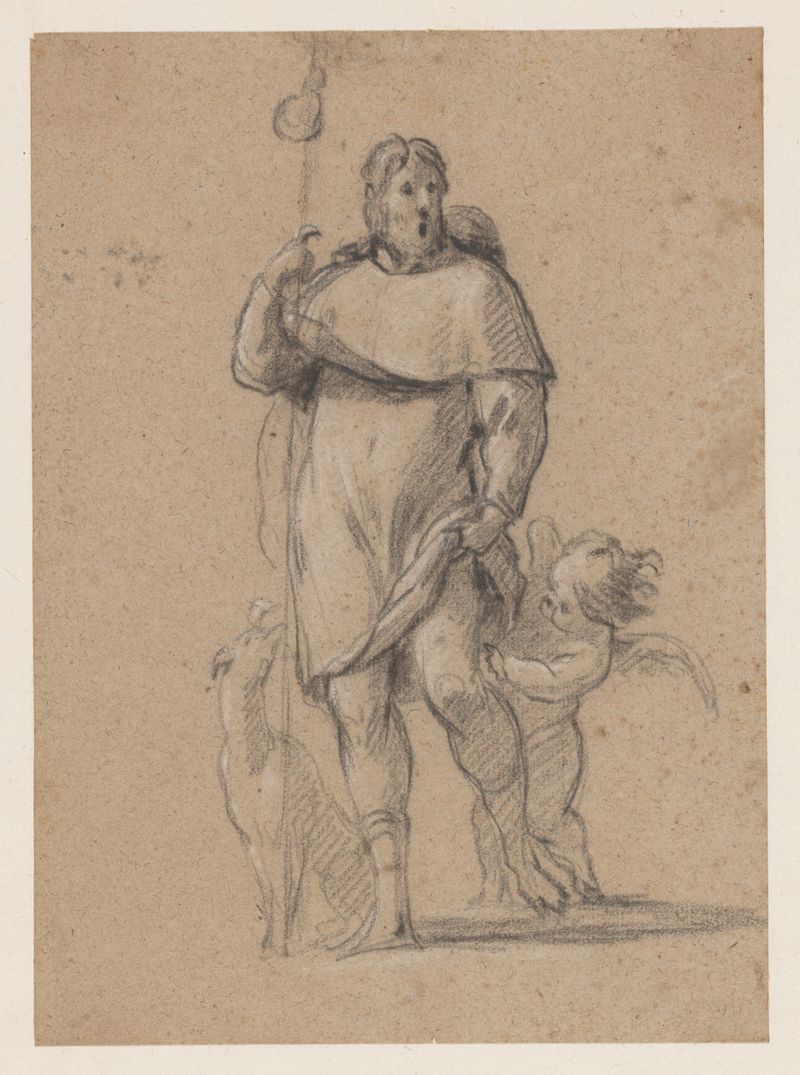
De H. Rochus met hond en engeltje
Simon Vouet

Vluchtige opzet voor een zittende faun
Simon Vouet

Studie van een buigende jonge vrouw
Simon Vouet

Twee vrouwenfiguren, zittend naar rechts
Simon Vouet

Faun of sater, zittend naar rechts
Simon Vouet

Aurora
Simon Vouet

Staand meisje dat haar rok optilt
Simon Vouet





