
Studie van een buigende jonge vrouw — History & Facts
In Studie van een buigende jonge vrouw, a profound silence envelops the figure, inviting us to contemplate the weight of her sorrow—an emotion that transcends the ages, yet remains achingly familiar. Focus on the graceful curve of her back, the way her head bows in an elegant yet poignant gesture. The soft play of light captures the delicate contours of her form, highlighting the subtle shifts in her posture that speak volumes about her inner turmoil. Rich, earthy tones ground her presence while hinting at the depth of her grief, contrasting with the ethereal quality of the surrounding atmosphere. Hidden within the folds of her clothing and the gentle tilt of her head are stories untold, the echoes of loss and longing that resonate deeply with the viewer.
The tension between her serene demeanor and the palpable weight of her emotion creates a haunting duality, inviting reflection on the nature of vulnerability. The fluidity of the brushwork and the harmonious composition serve as a reminder of the beauty that often accompanies heartache. Simon Vouet painted this work during the 17th century, a time of significant artistic transformation characterized by the rise of Baroque aesthetics. Working primarily in France after a formative period in Italy, he was influenced by the emotional depth of Caravaggio and the elegance of his contemporaries.
This painting, like many of his others, reflects the shifting tides of artistic expression, merging realism with a lyrical interpretation of the human experience.
More Artworks by Simon Vouet
Browse all →
Jonge vrouw (Chariclea?)
Simon Vouet

Engeltje bij het been van de H. Rochus
Simon Vouet

Zittende luitspelende engel
Simon Vouet
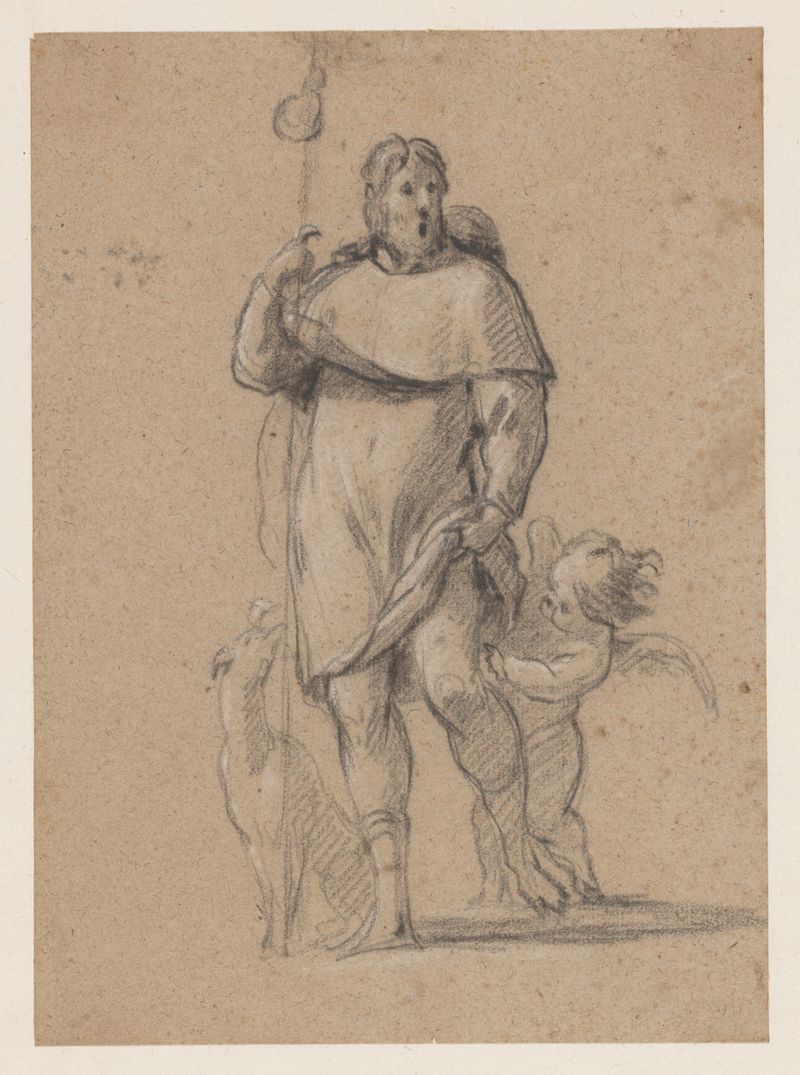
De H. Rochus met hond en engeltje
Simon Vouet

Vluchtige opzet voor een zittende faun
Simon Vouet

Twee vrouwenfiguren, zittend naar rechts
Simon Vouet

Faun of sater, zittend naar rechts
Simon Vouet

Aurora
Simon Vouet

Jongeman (Theagenes?), leunend tegen een tafel
Simon Vouet

Staand meisje dat haar rok optilt
Simon Vouet





