Aurora — History & Facts
Can beauty exist without sorrow? In Aurora, Simon Vouet presents a captivating interplay between the breathtaking dawn and the underlying melancholy that accompanies it. Look to the center of the canvas, where the ethereal figure of Aurora, draped in flowing robes, emerges from the horizon. Notice how the artist has used soft pastels blended masterfully to convey the delicate hues of morning light. The gentle strokes evoke the tranquility of dawn while accentuating the figure’s grace, inviting the viewer to linger on her serene expression.
Surrounding her, the landscape awakens in glowing warmth, yet shadows linger on the edges, hinting at the complexity of the transition from night to day. Delve deeper, and you’ll find the intricate details that reveal the painting's emotional tension. The clouds parting for the first light symbolize hope and renewal, yet the encroaching darkness remains, reminding us that beauty is often tempered by grief and loss. Aurora's uplifted arms, though joyful, suggest a yearning—perhaps for the fleeting nature of each day or the inevitable setting of the sun.
The duality of light and shadow speaks to a universal experience, urging us to confront our sorrows even in moments of beauty. During the early 17th century, Vouet resided in France, emerging as a significant figure in Baroque art. He painted Aurora amid a dynamic period marked by shifts in artistic influence and patronage, particularly as he navigated the aspirations of the French court. His work reflects not only the grandeur of the era but also an emerging interest in emotional depth, making his depictions resonate with the complexities of human experience.
More Artworks by Simon Vouet
Browse all →
Jonge vrouw (Chariclea?)
Simon Vouet

Engeltje bij het been van de H. Rochus
Simon Vouet

Zittende luitspelende engel
Simon Vouet
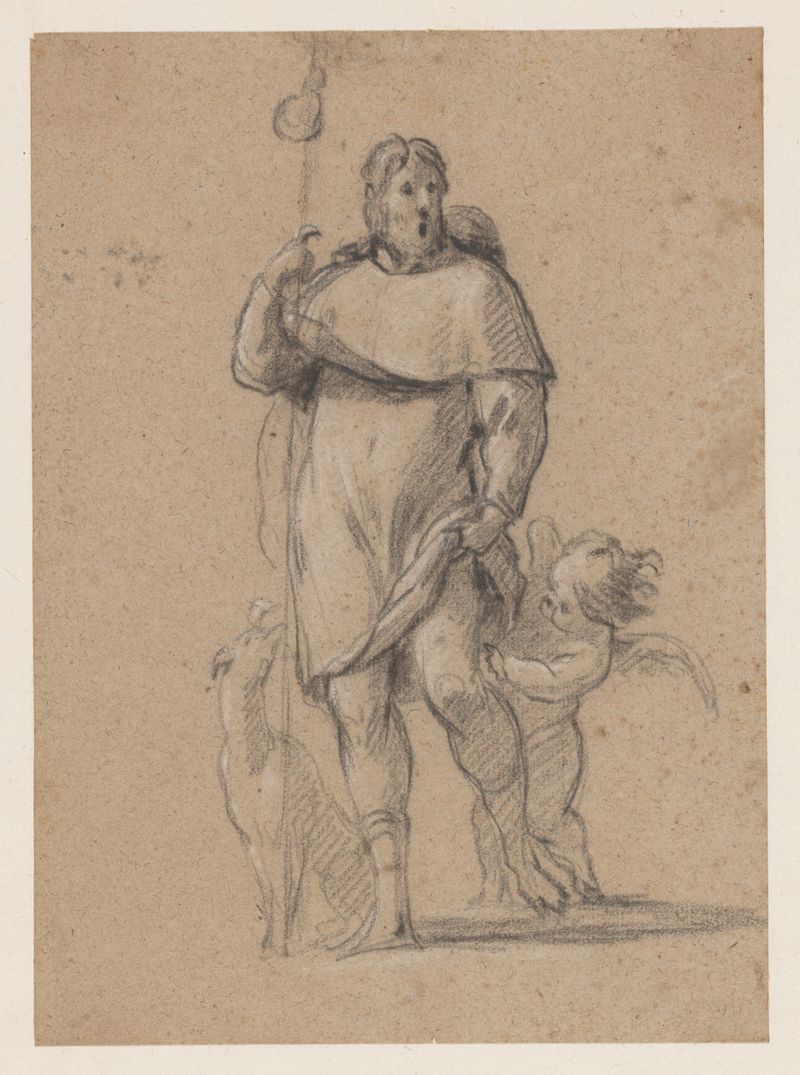
De H. Rochus met hond en engeltje
Simon Vouet

Vluchtige opzet voor een zittende faun
Simon Vouet

Studie van een buigende jonge vrouw
Simon Vouet

Twee vrouwenfiguren, zittend naar rechts
Simon Vouet

Faun of sater, zittend naar rechts
Simon Vouet

Jongeman (Theagenes?), leunend tegen een tafel
Simon Vouet

Staand meisje dat haar rok optilt
Simon Vouet