
Kalundborg Church — History & Facts
This longing to capture fleeting moments is palpable in the undulating lines and rich colors of a landscape where desire and memory intertwine. Focus your gaze on the foreground, where patches of vibrant green grass serve as a soft carpet, leading your eye toward the imposing silhouette of Kalundborg Church. Notice how the artist employs delicate brush strokes to evoke the textures of the weathered stones, their earthy tones contrasting with the bright sky. The light filters through the clouds above, casting a divine glow that envelops the church and imbues the scene with a sense of reverence and nostalgia. In the shadows, the winding path suggests a journey yet to be taken, mirroring the artist's own yearning for connection beyond the frame.
The interplay between the church and the landscape hints at a dialogue between the spiritual and the earthly, suggesting a desire for sanctuary. Look closely, and you’ll see the subtle hints of human presence — a distant figure walking along the path, embodying the striving spirit that lingers in the air. In 1837, Johan Thomas Lundbye painted this celebrated piece in Denmark during a time of burgeoning Romanticism in the art world. At this period, artists sought to evoke emotions and personal experiences, often reflecting on themes of nature and spirituality.
Lundbye’s work captures this essence as he navigated his own complex feelings towards identity and place, evoking a landscape where desire, memory, and the sacred converge.
More Artworks by Johan Thomas Lundbye
Browse all →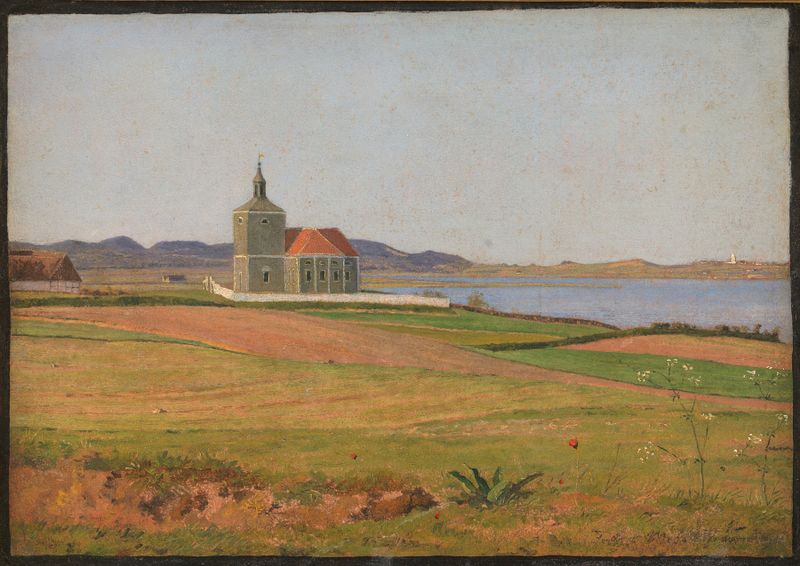
Vinderød Church near Frederiksværk
Johan Thomas Lundbye

Zealand Landscape. View from Bjerresø Mark towards Vejrhøj and Dragsholm Manor
Johan Thomas Lundbye
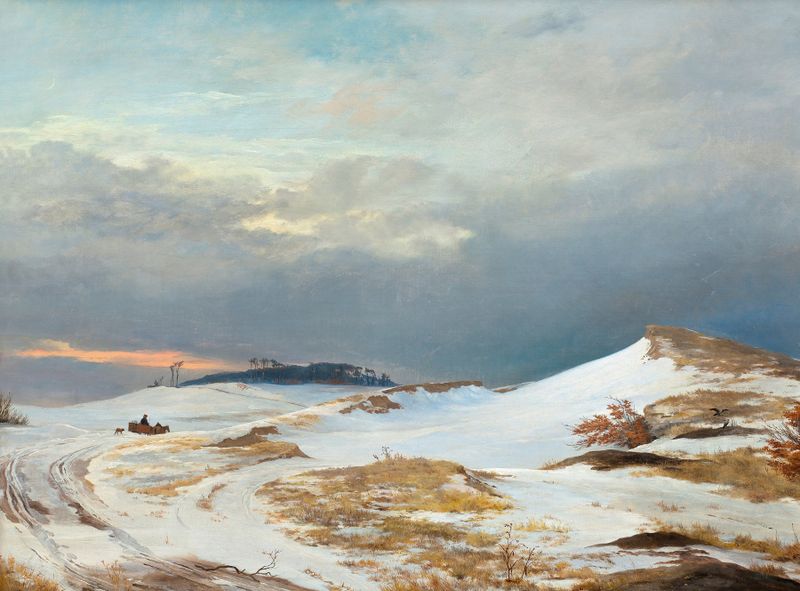
Winter landscape with Northern Zealand character
Johan Thomas Lundbye
Udsigt over marker mod skove
Johan Thomas Lundbye
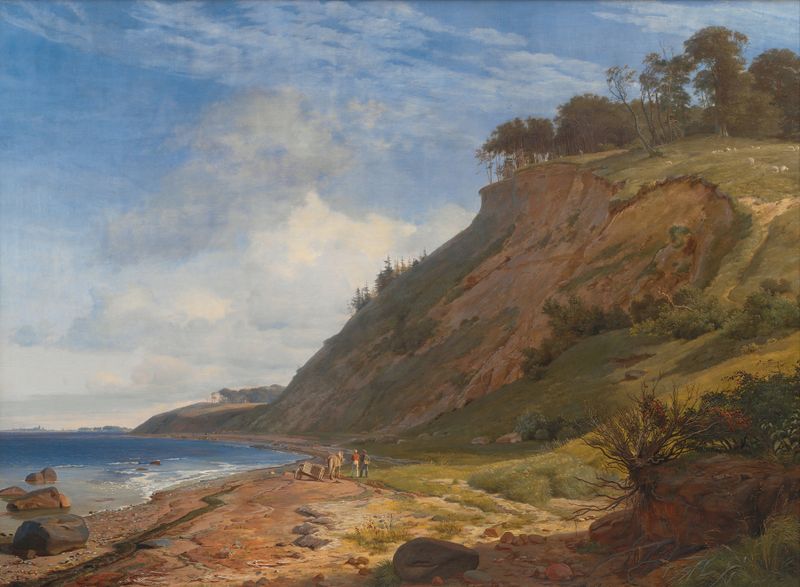
A Danish Coast. View from Kitnæs on Roskilde Fjord. Zealand
Johan Thomas Lundbye

Dolmen At Raklev, Røsnæs
Johan Thomas Lundbye

An Evening beside Lake Arresø
Johan Thomas Lundbye
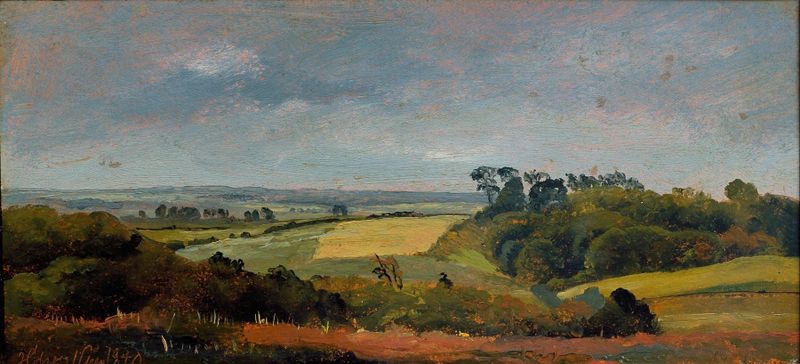
Near Høbjerg. Frederiksværk. Study
Johan Thomas Lundbye

Zealand Landscape. Open Country in North Zealand
Johan Thomas Lundbye
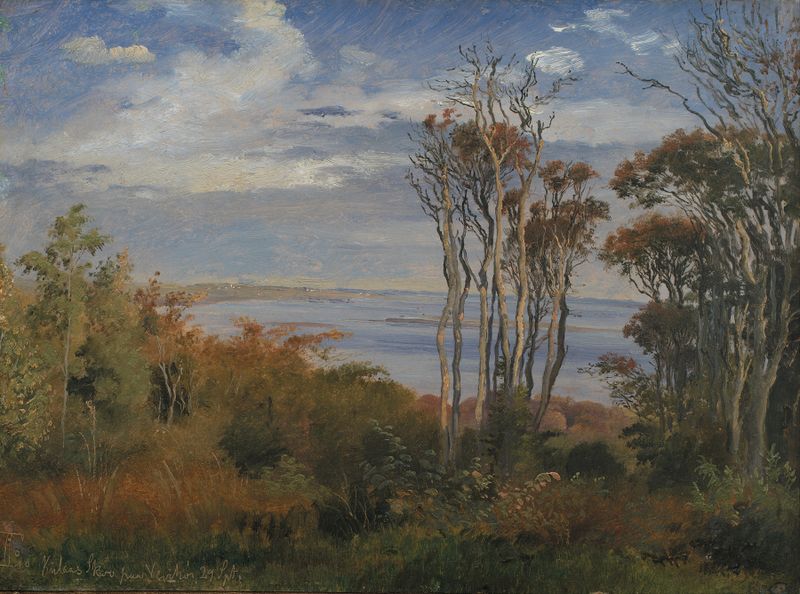
Kolås Wood, Vejrhøj
Johan Thomas Lundbye
More Architecture Art
Browse all →
The statue of Liberty
Frédéric Auguste Bartholdi

View of Houses in Delft, Known as ‘The Little Street’
Johannes Vermeer

View of Houses in Delft, Known as ‘The Little Street’
Johannes Vermeer

The Cathedral in Rouen. The portal, Grey Weather
Claude Monet

The yellow house
Vincent van Gogh

The Church in Auvers-sur-Oise, View from the Chevet
Vincent van Gogh