
Karasaki no yau — History & Facts
Who listens when art speaks of silence? In Karasaki no yau, the stillness captures a transient yet profound moment, whispering secrets of nature and the human experience. Here, revelation unfolds not in grand gestures, but in the delicate interplay of color, line, and form. Look closely at the serene waters that draw your gaze to the foreground. The gentle waves rhythmically lap against the shore, each stroke a masterful blend of blues and greens.
Notice the intricate details of the willows bending gracefully along the banks, their muted tones contrasting with the vibrant blossoms of the cherry trees in the background. The composition offers a harmonious balance, inviting you into the tranquility that defines this scene. In this artwork, the contrast between the robust life of nature and the quiet solitude of the viewer’s perspective reveals deeper emotional tensions. The cherry blossoms, often symbols of fleeting beauty and mortality, remind us of the impermanence of life, while the placid water reflects a sense of tranquility amidst the chaos of existence.
Each element, from the soft hues of dusk to the overall symmetry, speaks to the yearning for connection with the natural world. Painted between 1804 and 1818, this piece emerged during a pivotal period in Katsushika Hokusai's life, as he explored the nuances of landscape and emotion in his art. Residing in Edo, he was deeply influenced by the evolving Ukiyo-e movement, which celebrated the ephemeral beauty of life. At this time, Japan was experiencing a rich cultural exchange, and Hokusai’s work reflected the harmonious balance between nature and humanity, establishing him as a significant figure in the art world.
More Artworks by Katsushika Hokusai
Browse all →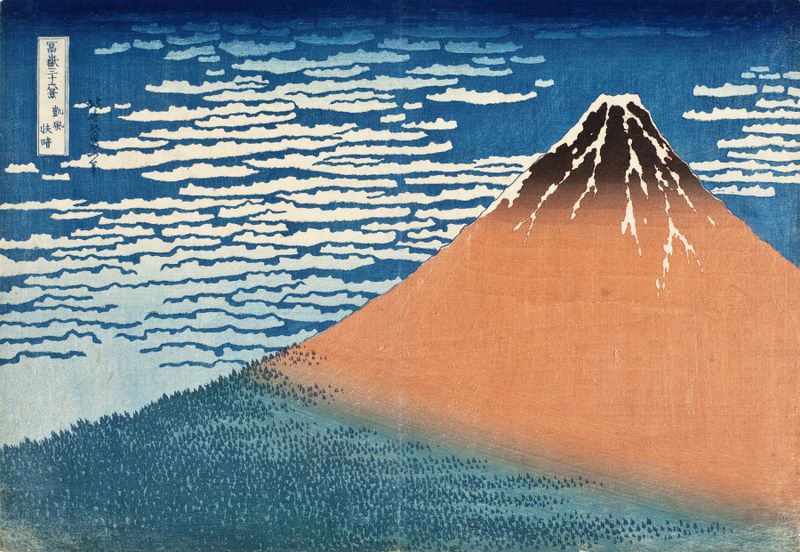
South Wind, Clear Dawn
Katsushika Hokusai

South Wind, Clear Weather
Katsushika Hokusai

Clear Weather with a Southerly Wind
Katsushika Hokusai
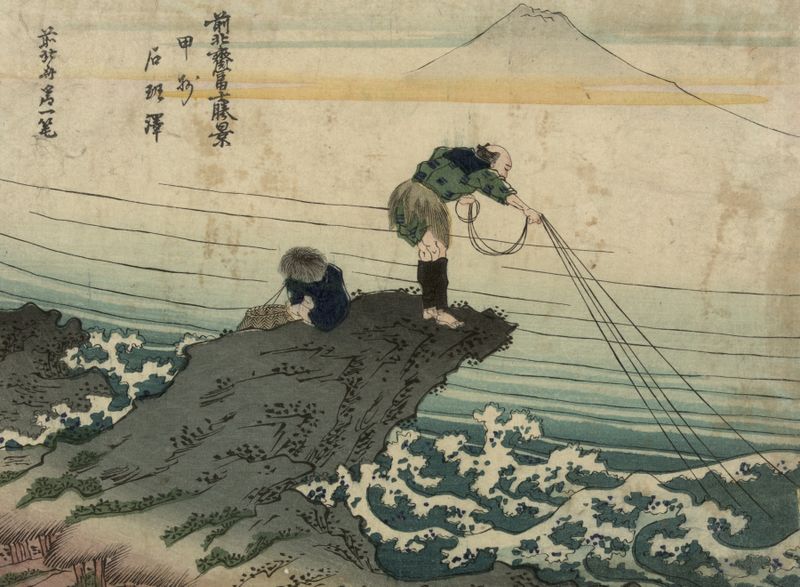
Kōshū kajikazawa
Katsushika Hokusai

Rainstorm beneath the Summit (Sanka Haku-u)
Katsushika Hokusai

Kōshū kajikazawa 2
Katsushika Hokusai
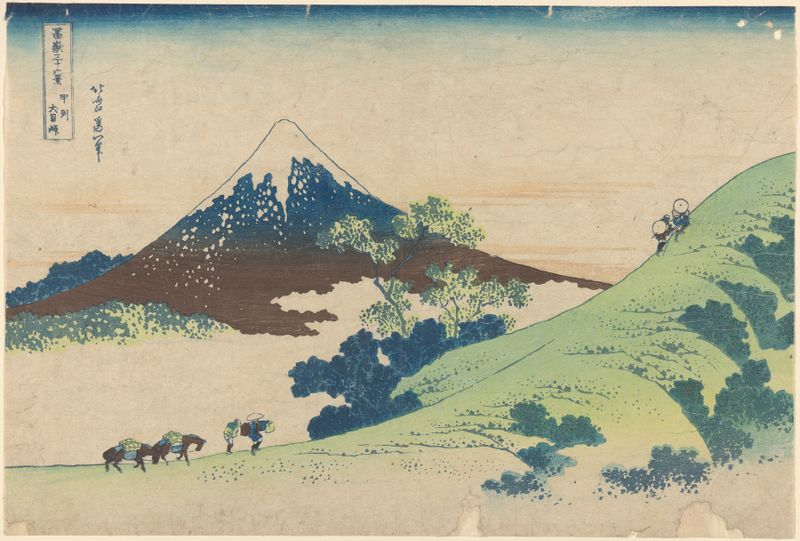
Inume Pass in Kai Province (Kôshû inume-tôge)
Katsushika Hokusai

Yoro Falls in Mino Province (Mino no Yoro no taki), from the series "A Tour of Waterfalls in Various Provinces (Shokoku taki meguri)"
Katsushika Hokusai
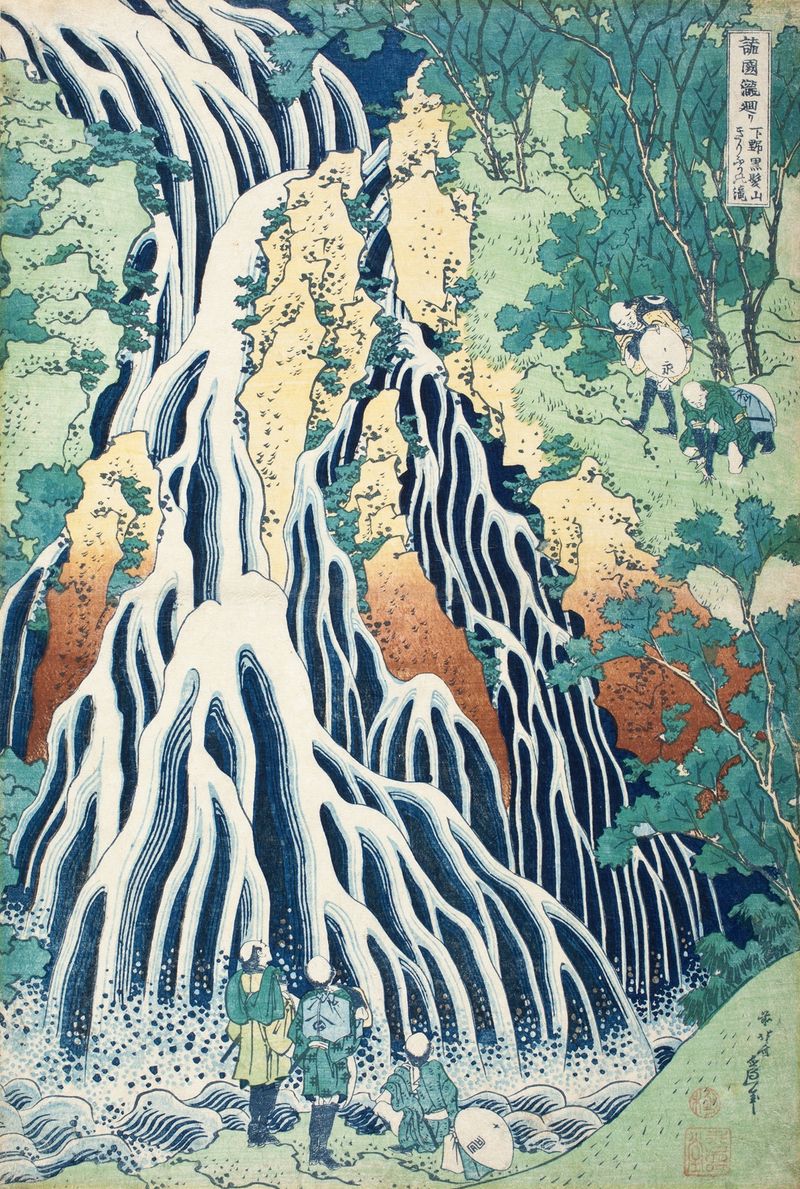
Falls of Kirifuri at Mt. Kurokami, Shimotsuke Province
Katsushika Hokusai
Onden no suisha
Katsushika Hokusai





