
karikierendes Selbstbildnis — History & Facts
What first catches the eye in karikierendes Selbstbildnis is the direct, almost confrontational gaze of the artist, rendered with broad, confident strokes that verge on parody. The face, seen from slightly below, dominates the canvas, the features exaggerated just enough to hint at self-mockery. The pipe, held at a rakish angle, becomes a prop in this performance—a sly nod to the conventions of the self-portrait, but also a challenge to them.
The palette is limited but bold, with creamy ochres, cool greens, and sudden flashes of pink and yellow that animate the flesh. Every brushstroke seems to declare its independence, yet together they capture a fleeting, playful moment of self-examination. Painted between 1909 and 1910, this work belongs to a period when artists like August Macke and his contemporaries were breaking away from academic restraint, searching for new ways to express the inner life. The loose, expressive handling and the almost unfinished quality of the background speak to the era’s fascination with immediacy and authenticity.
Self-portraits of this kind were not always meant for public display; they were often exercises in self-discovery or private jokes, sometimes shared only with close friends or fellow artists. History has kept few traces of this particular painting’s journey, but its raw energy and humor invite us to look again, to see the artist not as a distant genius, but as a young man experimenting with his own image—pipe in hand, eyebrow raised, daring us to laugh with him.
More Artworks by August Macke
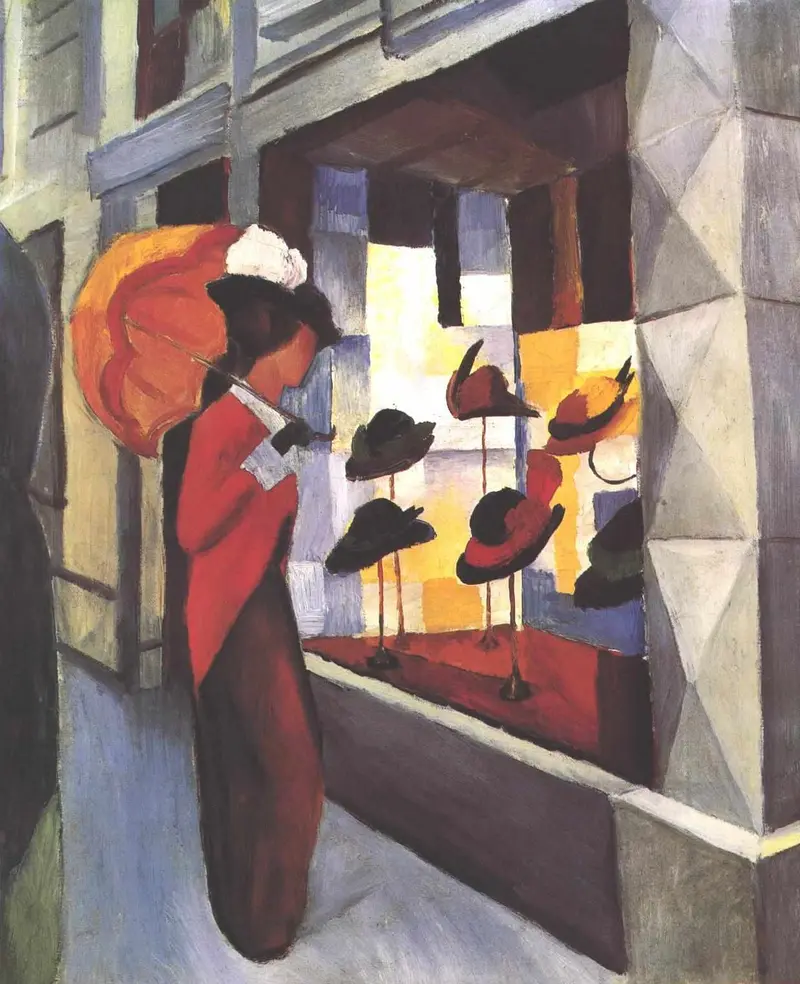
Woman with a Parasol in Front of a Hat Shop
August Macke

Street with Church in Kandern
August Macke
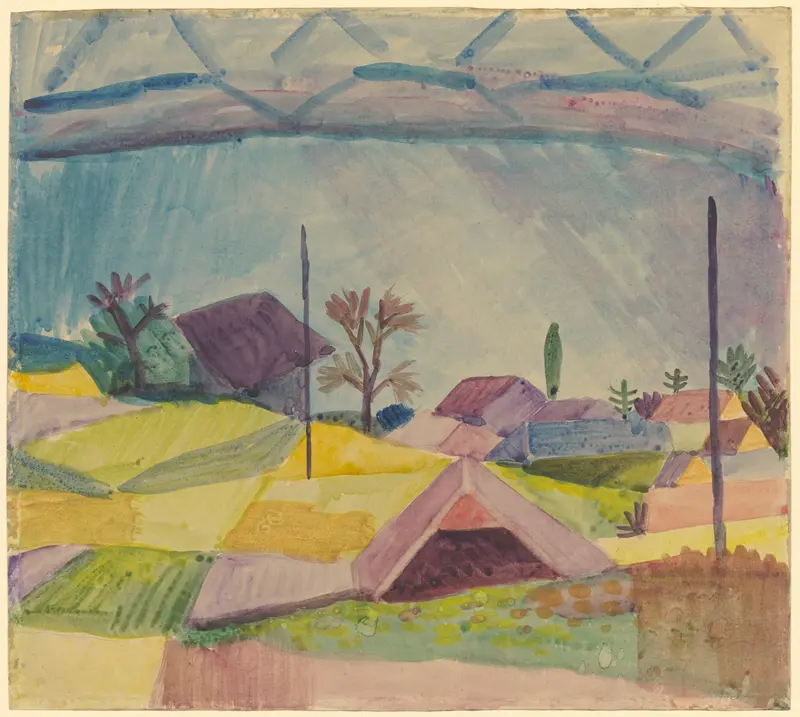
View of Hilterfingen
August Macke

Paar im Nachen
August Macke
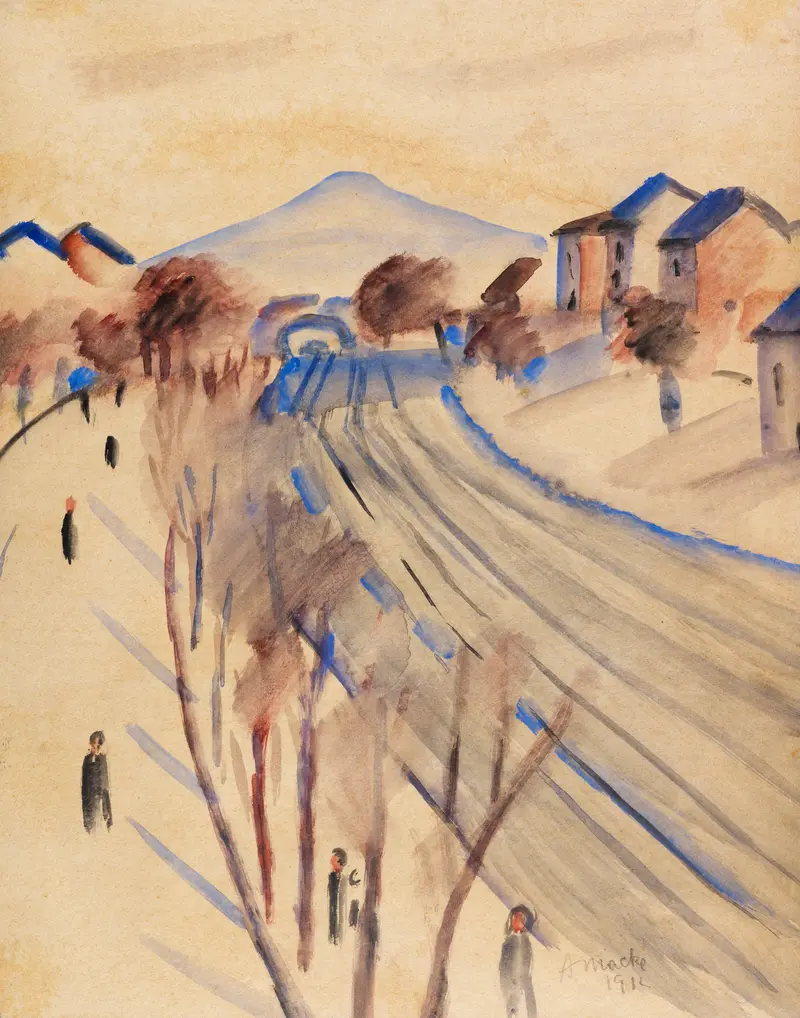
Ölberg mit Bahngleisen II
August Macke
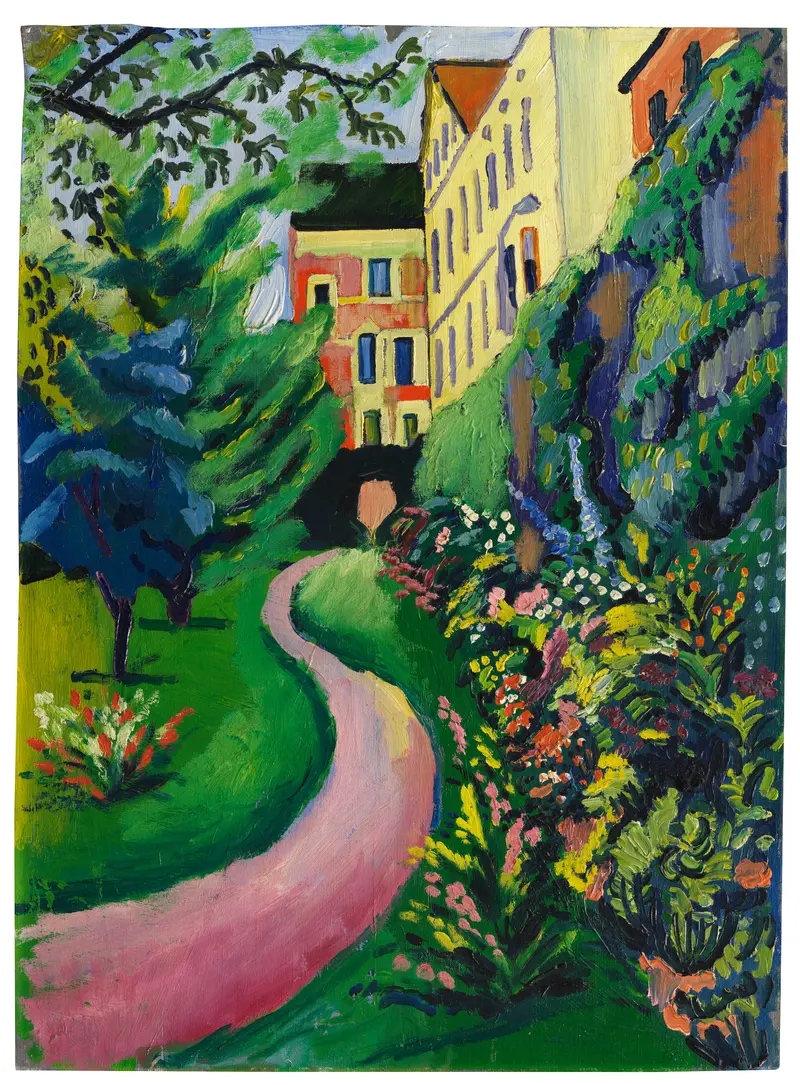
Unser Garten mit blühenden Rabatten
August Macke
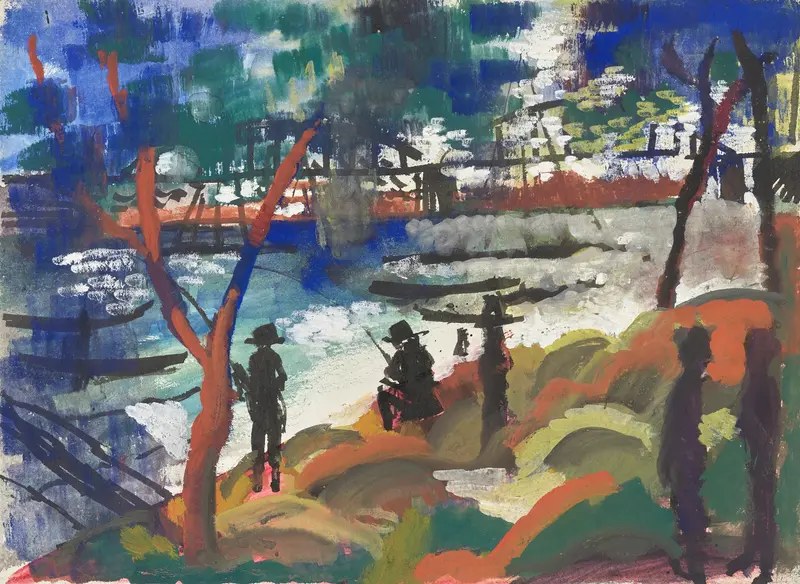
Angler am Fluss
August Macke
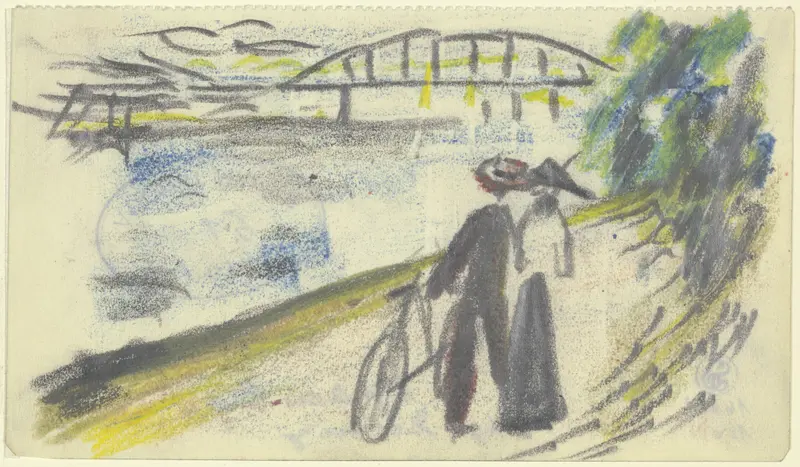
Path at the Rhine
August Macke
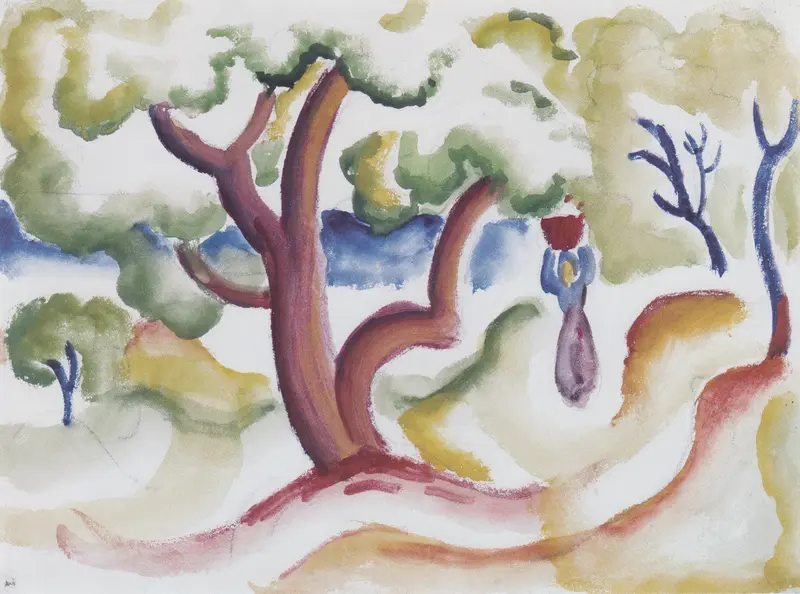
Frau mit Krug unter Bäumen
August Macke
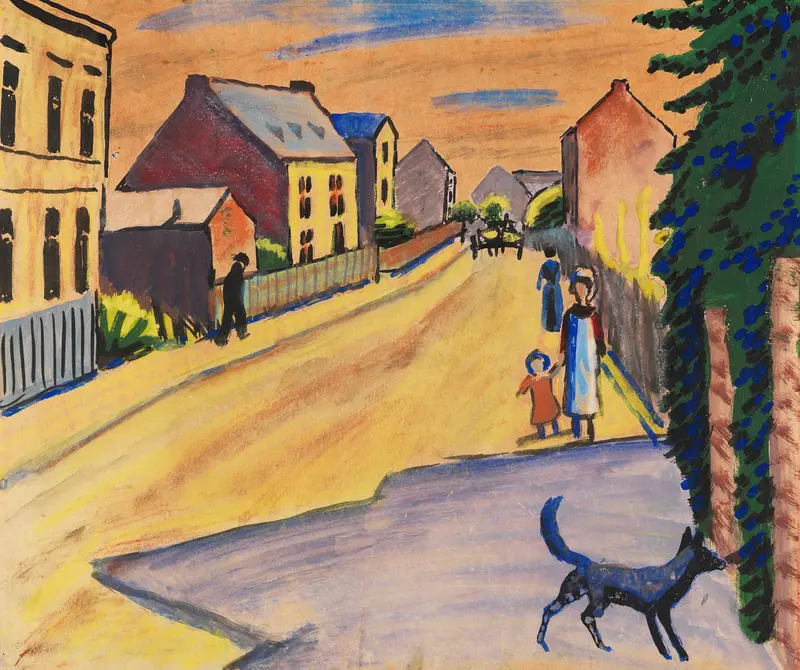
Sonnige Straße mit Hund
August Macke





