Ketting van ivoren kralen — History & Analysis
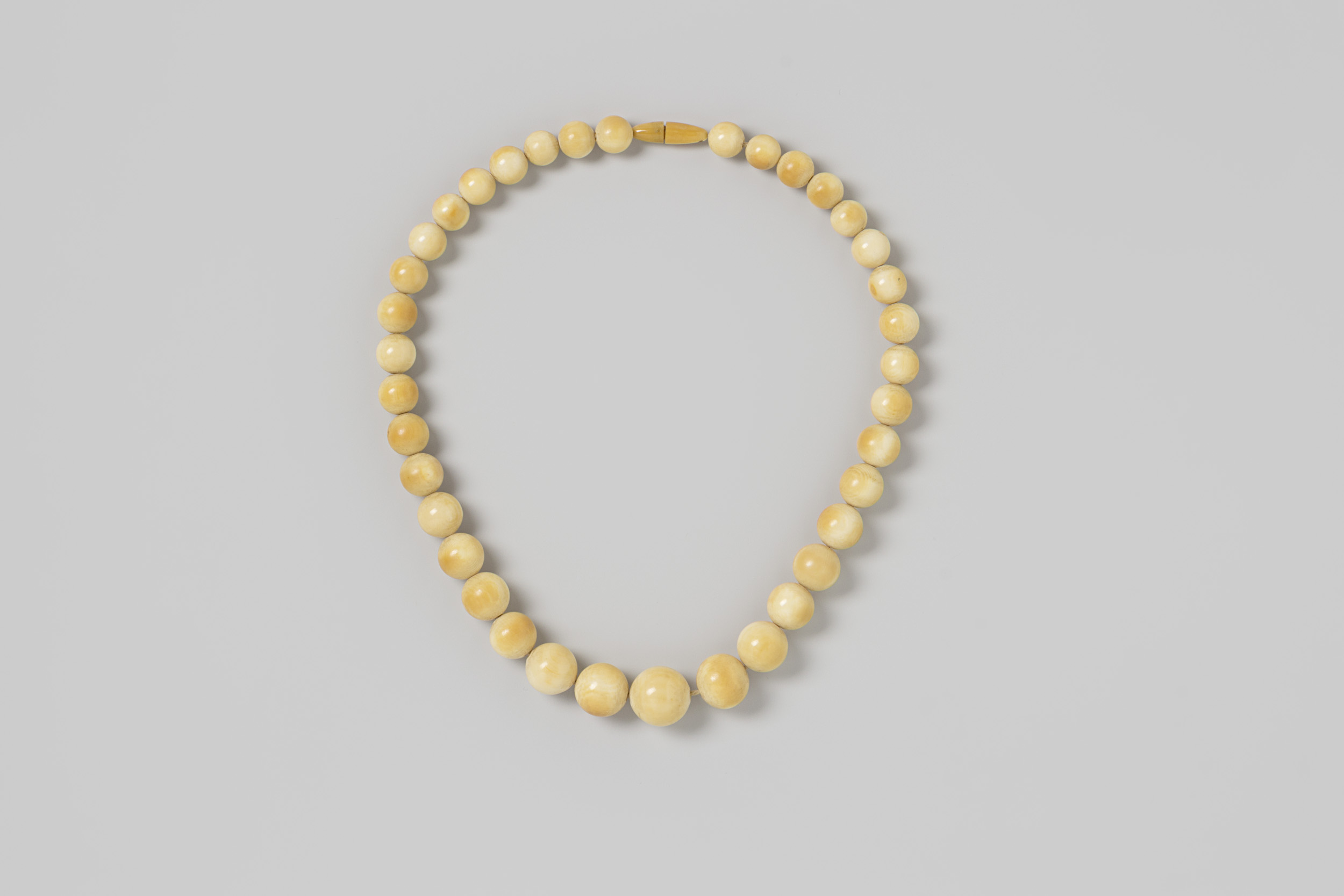
What secret hides in the quiet of the canvas? A whisper of grief lingers in the delicate interplay between form and absence, beckoning viewers to delve into the depths of a shared sorrow. Look to the center, where a strand of ivory beads lies suspended in muted tones. Each bead reflects a soft sheen, inviting the eye to trace its smooth contours. The subtle variations in color reveal the craftsmanship behind this piece, a testament to the artist’s meticulous hand.
Notice how the negative space around the necklace amplifies its presence, creating a stark contrast that elevates the object from mere adornment to an emblem of memory. Beneath the surface, the necklace can be seen as more than an ornament; it embodies loss and remembrance. Each bead symbolizes a moment or a memory, strung together in a poignant narrative that threads through time. The emptiness surrounding the piece speaks to the absence of a loved one, transforming the necklace into a vessel of unspoken emotions.
The stillness of the artwork resonates with a profound sense of longing, urging the viewer to confront their own experiences of loss. Created around 1920, this piece emerges from an era marked by post-war intimacy and the collective mourning of a society grappling with change. The artist, whose identity remains shrouded in mystery, likely channeled prevailing feelings of grief and nostalgia into this work. The use of ivory, once a prized material, suggests a connection to both beauty and the loss of life, reflecting a time when artisans sought solace in craftsmanship amid an uncertain world.