Kilden — History & Facts
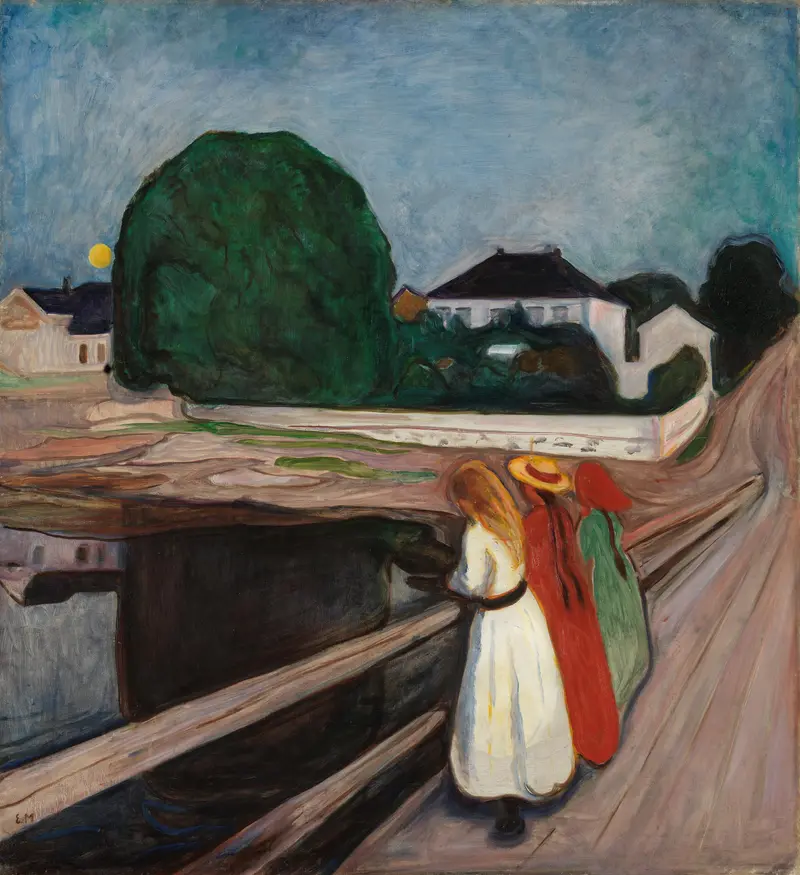
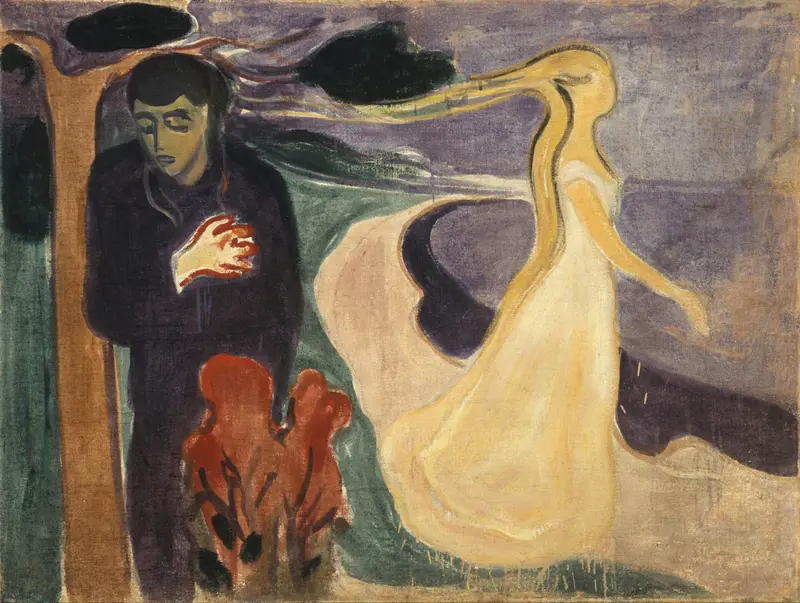
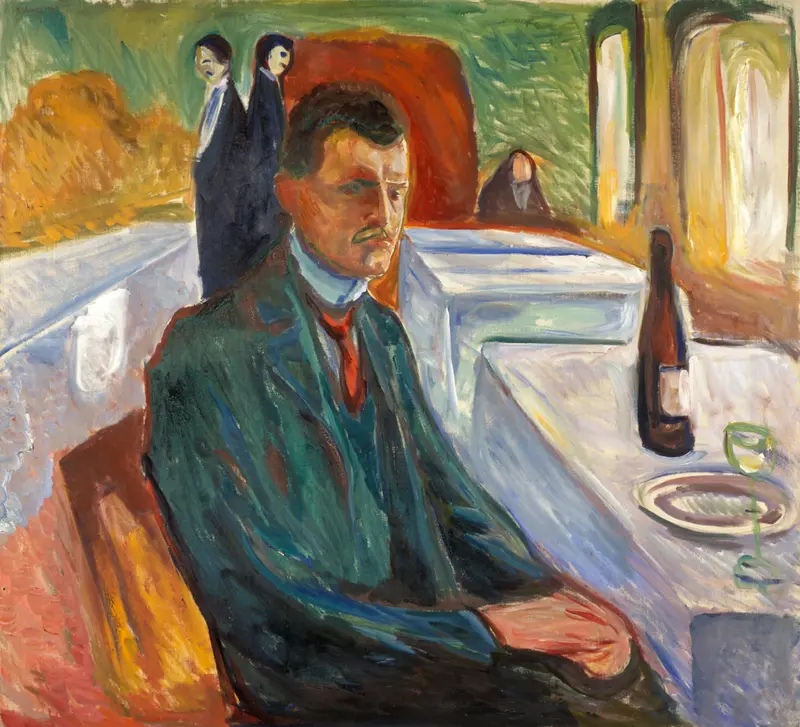
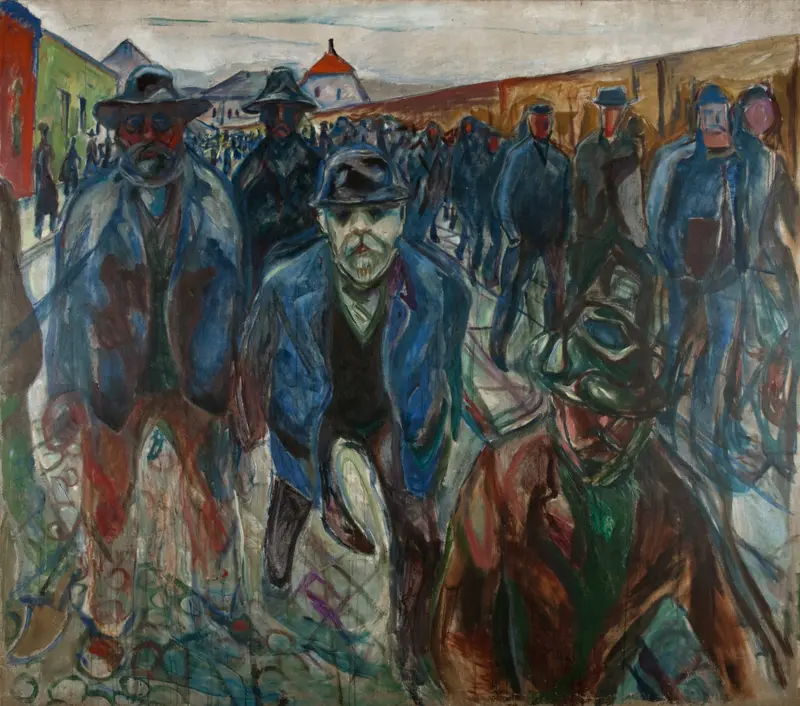
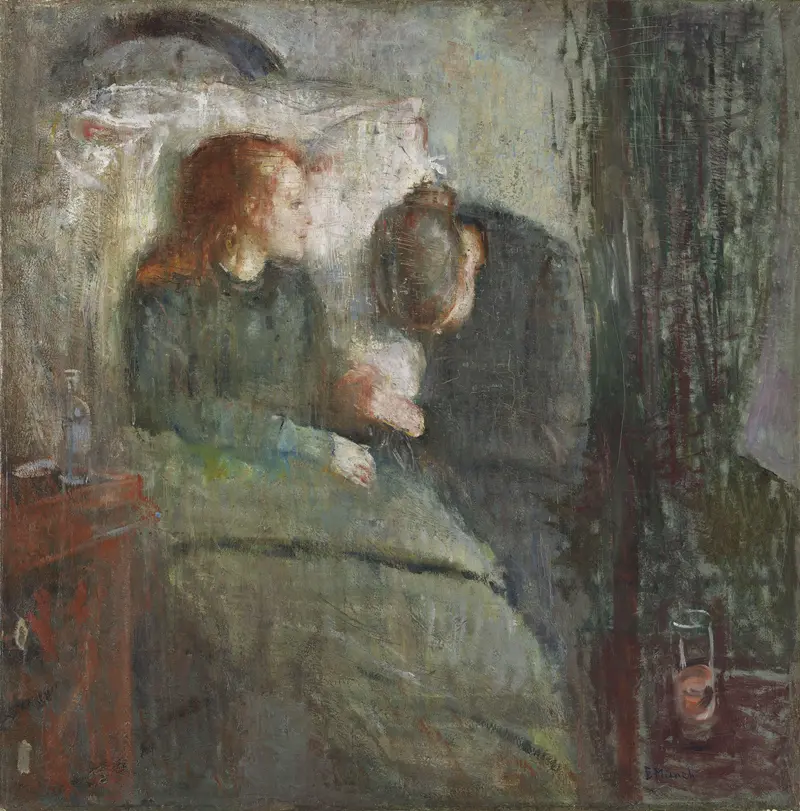
In Kilden, Edvard Munch presents a vibrant scene filled with deep greens and blues. The painting features a figure, possibly a woman, standing near a water source, surrounded by lush vegetation. The colors are rich and saturated, creating a sense of life and vitality.
Munch's brushwork adds a dynamic quality, suggesting movement and emotion within the natural setting. The painting is executed in oil on canvas, showcasing Munch's characteristic style of expressive color and form. The dimensions are approximately 80 x 100 cm, making it a substantial work that draws the viewer in. The use of light and shadow enhances the three-dimensionality of the figure and the surrounding landscape.
Munch's technique emphasizes the emotional resonance of the scene. Edvard Munch, known for his exploration of psychological themes, created Kilden during the 1890s, a period marked by his interest in nature and human emotion. This work reflects his Symbolist approach, where nature becomes a mirror for inner feelings. Interestingly, Kilden is part of a private collection, which makes it less accessible to the public compared to his more famous pieces.
Munch's ability to convey complex emotions through simple subjects is a hallmark of his artistry.