
Kinderkruistocht — History & Facts
Is this a mirror — or a memory? In Kinderkruistocht, light weaves through the composition, heralding an emotional journey that transcends mere visual representation. The interplay of illumination and shadow evokes a haunting resonance, inviting viewers to reflect on the nature of innocence and the passage of time. Look first to the vivid central figures, where children, adorned in simple garb, are caught at different moments of movement. Notice how the light softly bathes their faces, casting tender reflections that hint at their thoughts.
The artist's use of muted colors juxtaposed with bursts of brightness not only guides the viewer’s gaze but also amplifies the sense of fragility inherent in childhood, while the textured brushwork subtly captures both the richness and transience of these fleeting moments. Delve deeper into the painting, and you will find layers of meaning embedded in the children's expressions. Some faces beam with hope, while others bear traces of uncertainty, suggesting a poignant commentary on the trials and tribulations of youth. The scattered elements around them — a broken toy, a faded banner — serve as metaphors for lost ideals, contrasting innocence lost against a backdrop of dreams unfulfilled. The artist, a monogrammist known only as LIW, created this piece between 1700 and 1800 during a time when the Baroque style was in transition.
Emerging from the shadows of religious and historical themes, they sought to capture the essence of everyday life through a child’s perspective, reflecting a world that was shifting towards enlightenment and introspection. This work stands as a testament to that era's exploration of light, memory, and emotion.
More Artworks by Monogrammist LIW
Browse all →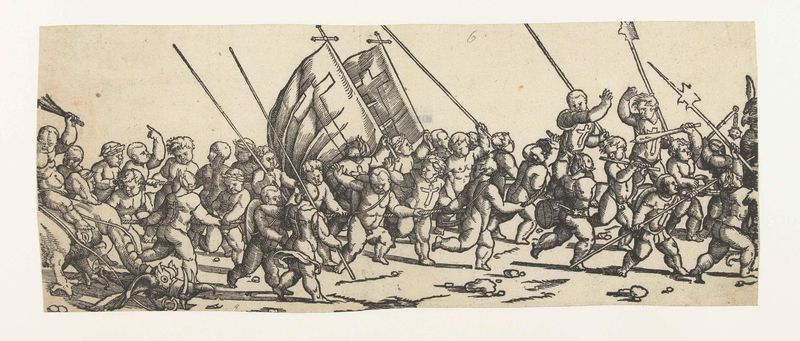


More Religious Art
Browse all →
The Return of the Prodigal Son
Rembrandt van Rijn

The Garden of Earthly Delights
El Bosco

Count Orgaz’ funeral
El Greco

The Hundred Guilder Print: the central piece with Christ preaching, the plate arched
Rembrandt van Rijn

The Descent from the Cross
Rogier van der Weyden

The return of the prodigal son
Rembrandt van Rijn