Kinderkruistocht — History & Facts
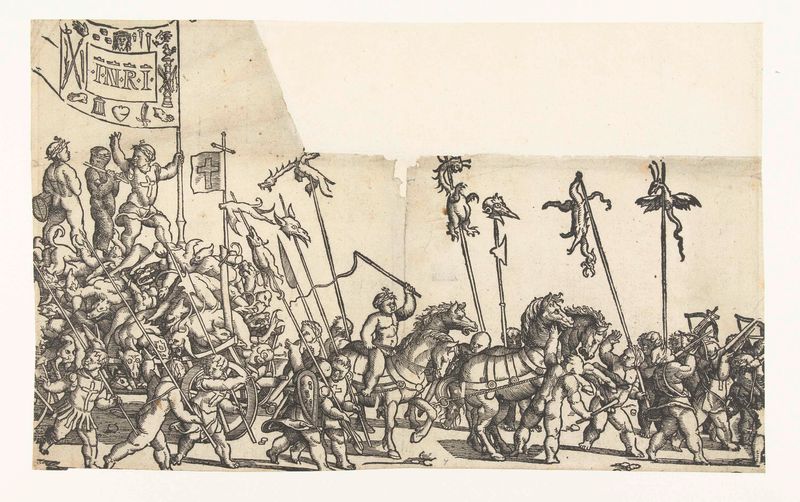
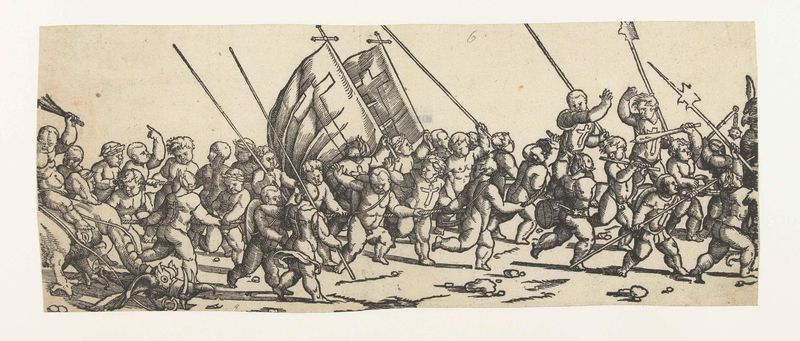
Who listens when art speaks of silence? In the stillness of Kinderkruistocht, a haunting narrative unfolds, whispering the profound loneliness of childhood amidst the chaos of history. Focus your gaze on the central figures, where a group of children, lost in contemplation, congregates with solemnity. Notice how the muted palette of browns and greys envelops them, enhancing the sense of isolation. The artist employs delicate brushwork to render their expressions, capturing a fleeting moment of innocence juxtaposed against the weight of their surroundings.
The light subtly illuminates their faces, a tender reminder of hope even in desolation, while the background recedes into shadow, mirroring their emotional distance. Delve deeper into the painting's emotional landscape. The children’s downcast eyes suggest an unvoiced longing for connection, while their clasped hands hint at shared resilience in the face of adversity. Each child, though physically together, embodies a different facet of solitude, from yearning to confusion, revealing the collective experience of loneliness.
This contrast is a powerful commentary on the intersection of childhood purity and the burdens of the adult world that encroaches upon it. Created between 1700 and 1800, this work emerged during a time of societal upheaval and religious turbulence in Europe. The artist, a monogrammist known only as LIW, remains shrouded in mystery, yet Kinderkruistocht reflects an era when children were often caught in the crossfire of adult conflicts. This poignant piece invites viewers to consider not only the plight of the innocent but also the silence that often surrounds their struggles, resonating through the centuries.