
Kirche bei einer Brücke, ein lahmer Bettler bei einer Dame — History & Facts
Did the painter know this moment would outlive them? An ordinary encounter, captured forever—a testament to the fragility of time and connection. Look to the left at the prominent figure of the lady, her elegant posture contrasting starkly with the slouched form of the beggar nearby. The soft light of the setting sun bathes the scene in a warm, golden hue, casting long shadows that draw your eyes toward the rich colors of the woman’s attire and the muted tones of the beggar's ragged clothing. Notice how the delicate brushstrokes blend the vibrant greens of the landscape with the serene blues of the sky, creating a harmonious backdrop that enhances the emotional weight of their interaction. In this composition lies a poignant interplay between hope and despair.
The lady’s gaze downwards, filled with compassion or perhaps pity, meets the beggar’s downturned head, suggesting a wealth of untold stories and unfulfilled dreams. The bridge in the distance serves as a metaphor for transition—a passage that is both physical and emotional—implying a journey that may never be completed for the beggar. This stark contrast invites introspection about social divides and the fleeting nature of our moments together. Johannes Huibert Prins painted this work in 1797 during a period of significant social change in Europe, marked by the aftermath of the French Revolution.
Living in the Netherlands, Prins was influenced by emerging Romantic ideals, which emphasized emotion and individual experience. This artwork reflects a growing awareness of societal issues, capturing a moment that speaks to the timeless struggle between the privileged and the marginalized, a theme that resonates even today.
More Artworks by Johannes Huibert Prins
Browse all →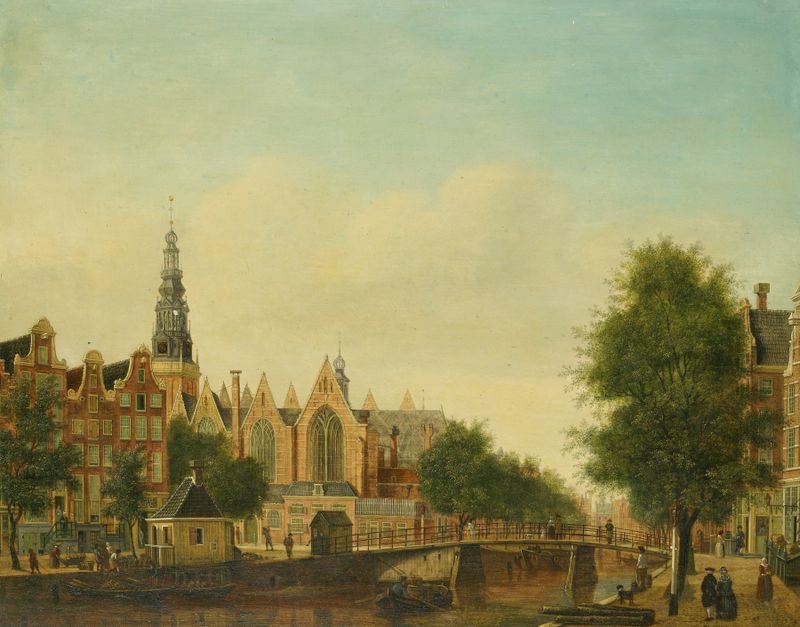
The Oude Kerk seen from the Oudezijds Voorburgwal
Johannes Huibert Prins

View of a Netherlandish City
Johannes Huibert Prins
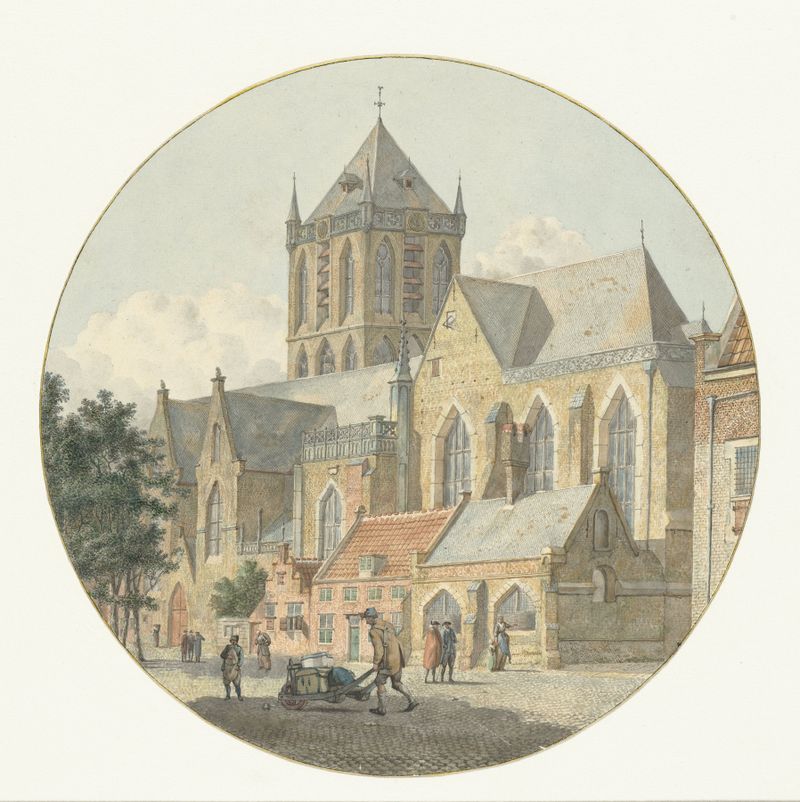
De St.-Jacobskerk te Utrecht
Johannes Huibert Prins

A View of the Nieuwe Kerk, Delft
Johannes Huibert Prins
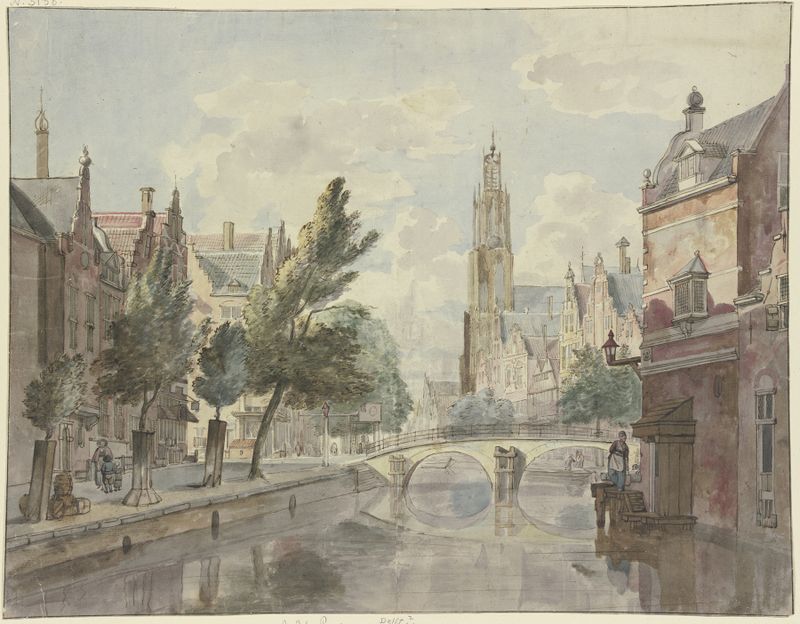
Steinbrücke über einen Kanal, im Hintergrund eine Kathedrale, rechts am Haus eine Laterne
Johannes Huibert Prins
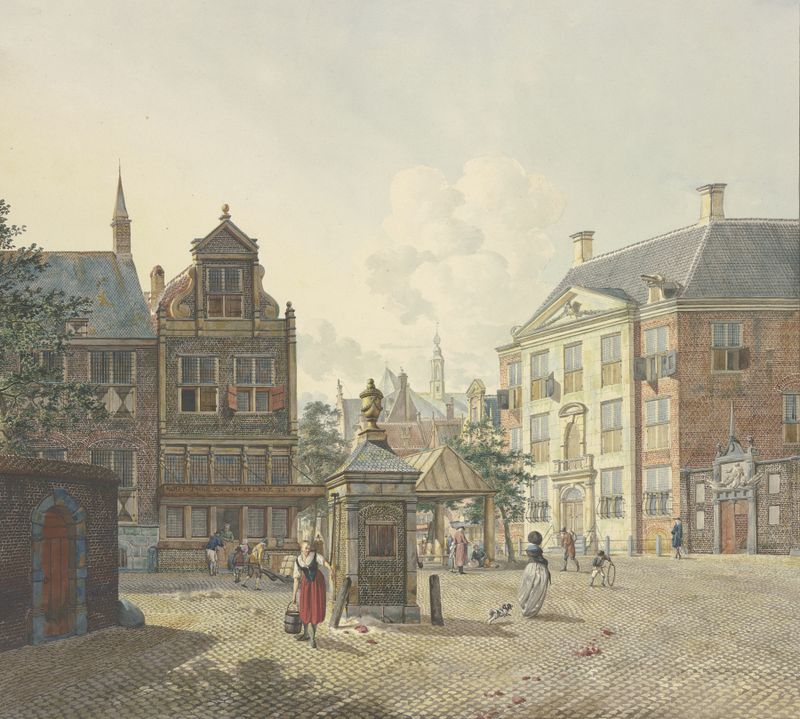
Auf einem freien Platz ein Brunnenhaus, dabei eine Magd in rotem Rock und mit einem Eimer
Johannes Huibert Prins
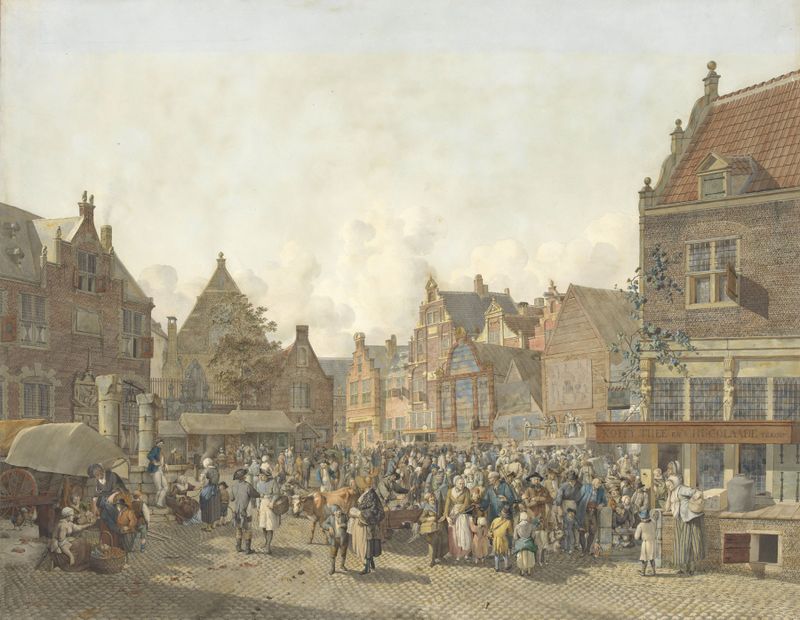
Town Square with Fair
Johannes Huibert Prins
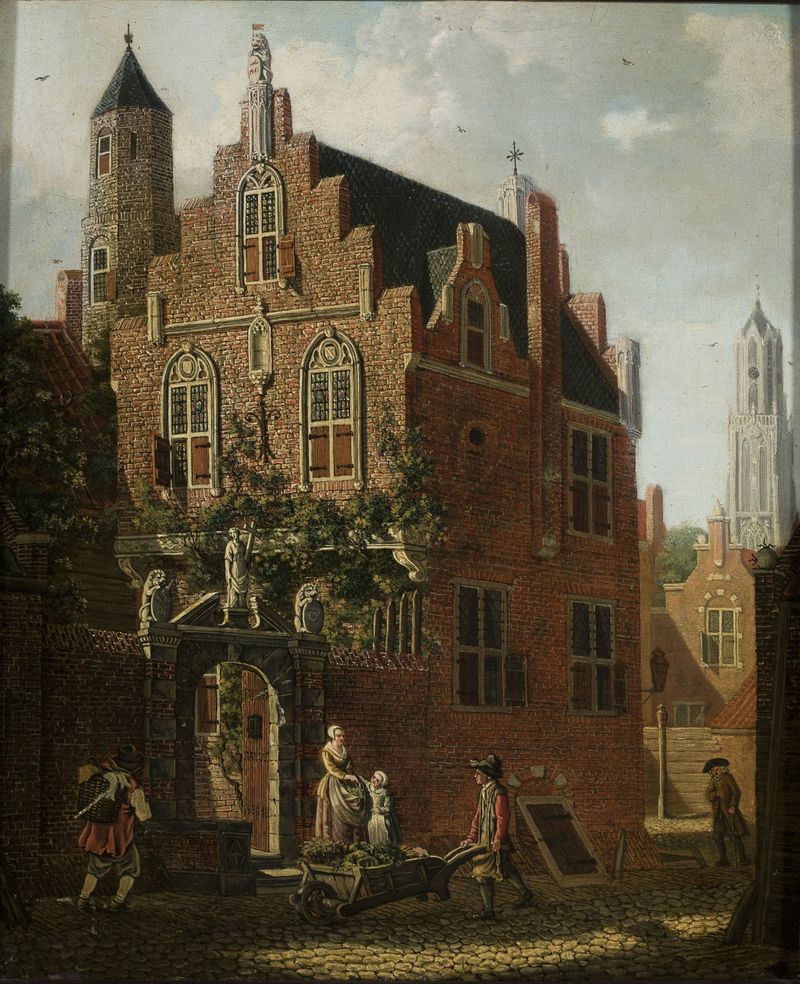
View of the city
Johannes Huibert Prins
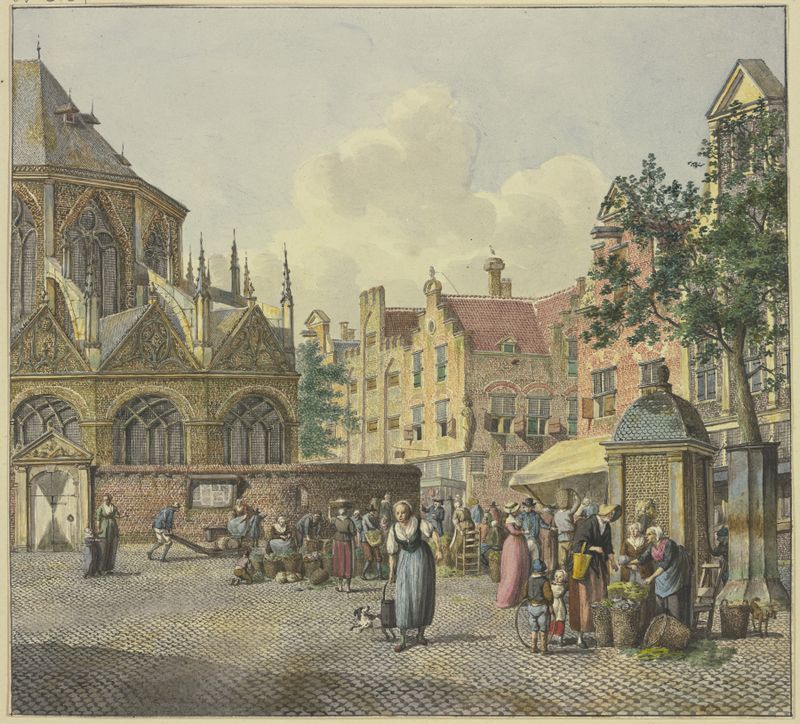
Links der Chor einer Kirche, rechts ein Brunnenhaus, mit Gemüseverkäuferinnen
Johannes Huibert Prins

Kanal mit Schleusentor, links kehrt eine Magd die Straße
Johannes Huibert Prins





