
Kluizenaarshut met heiligenbeeld — History & Facts
In the quietude of existence lies a profound truth, waiting to be uncovered. The stillness of solitude often births the most honest reflections, echoing the whispers of an unseen world. Focus on the tranquil hut nestled within the landscape. Look closely at the modest structure, its earthy tones harmonizing with the surrounding greenery.
The light gently washes over the scene, highlighting the subtle details—the texture of the wooden walls, the delicate features of the saintly figure nearby. Notice how the artist employs soft brush strokes, creating an atmosphere that feels both intimate and sacred, inviting contemplation. The painting contrasts the sanctuary of solitude with the looming presence of the saint, suggesting a dialogue between the divine and the earthly. The serene expression on the saint’s face hints at the inner peace that can be found in isolation, while the rustic hut symbolizes a retreat from the chaos of the outside world.
This interplay evokes a sense of yearning for truth, as if the scene captures a moment where time stands still and the spirit is laid bare. Created during a transformative period in the early 19th century, the artist worked on this piece in the Netherlands. Amidst a backdrop of growing romanticism and a renewed interest in nature, Barbiers sought to reflect the spiritual journey of individuals through the lens of their surroundings. The world of art was evolving, and this work stands as a testament to the enduring quest for truth through the simplicity of everyday life.
More Artworks by Pieter Bartholomeusz. Barbiers
Browse all →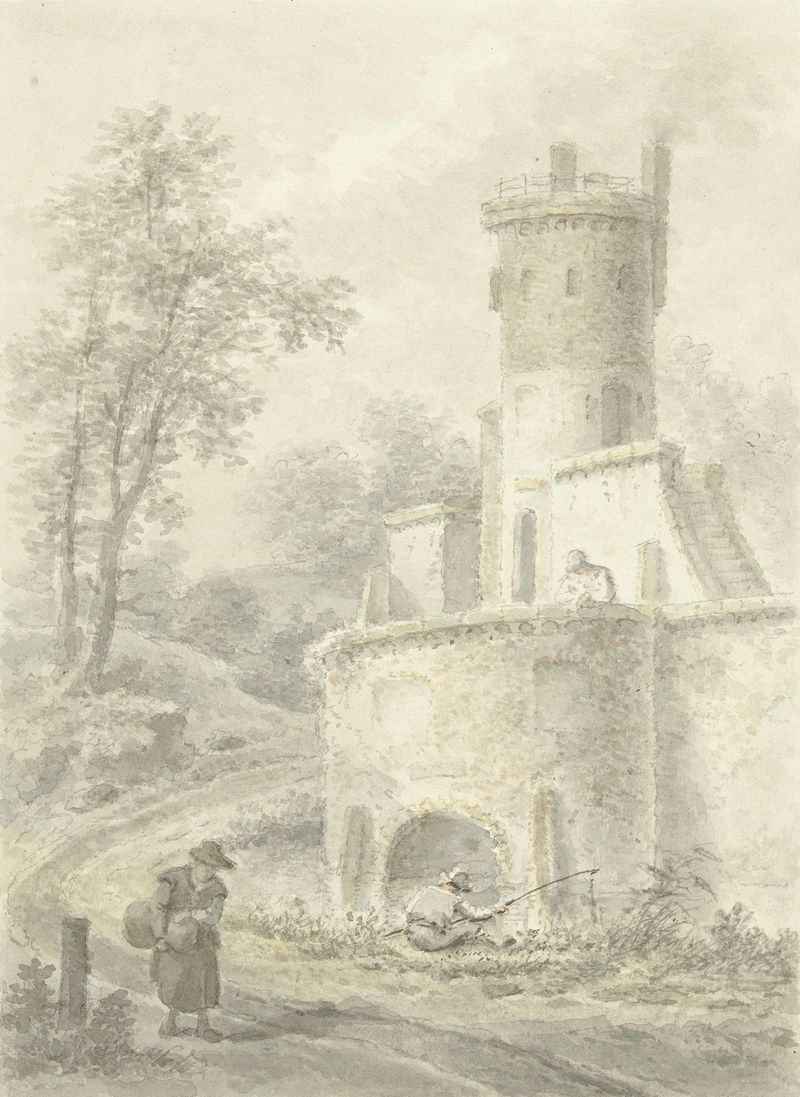
Landschap met hengelaar en wandelende vrouw bij een vestingtoren
Pieter Bartholomeusz. Barbiers
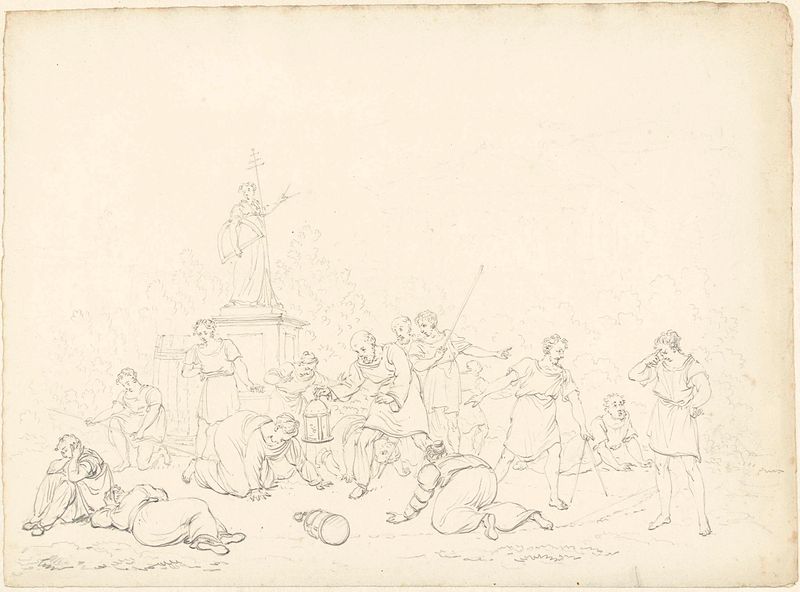
Diogenes met een lantaren een mens zoekend
Pieter Bartholomeusz. Barbiers
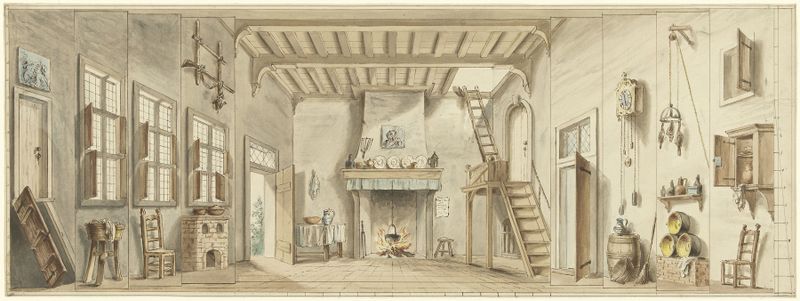
Ontwerp voor een toneeldecor voor de Vlaamse opera Het Kapertje
Pieter Bartholomeusz. Barbiers
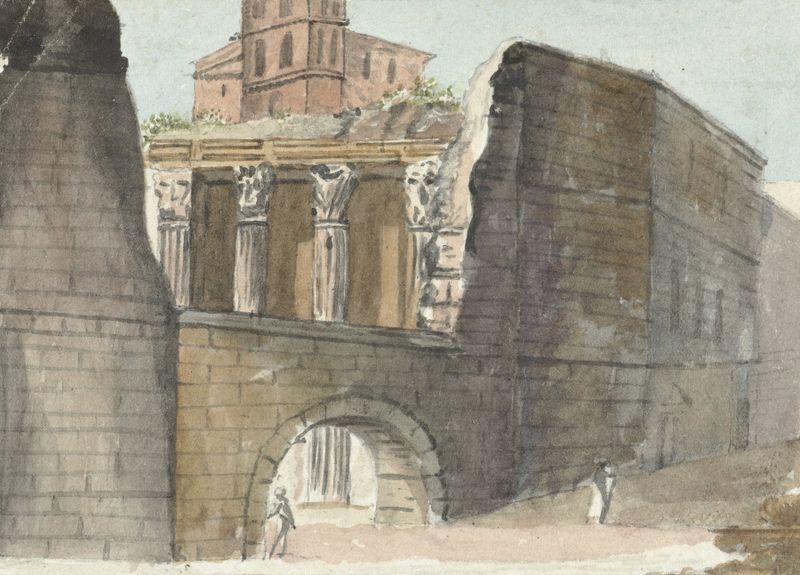
Romeinse ruïnes
Pieter Bartholomeusz. Barbiers
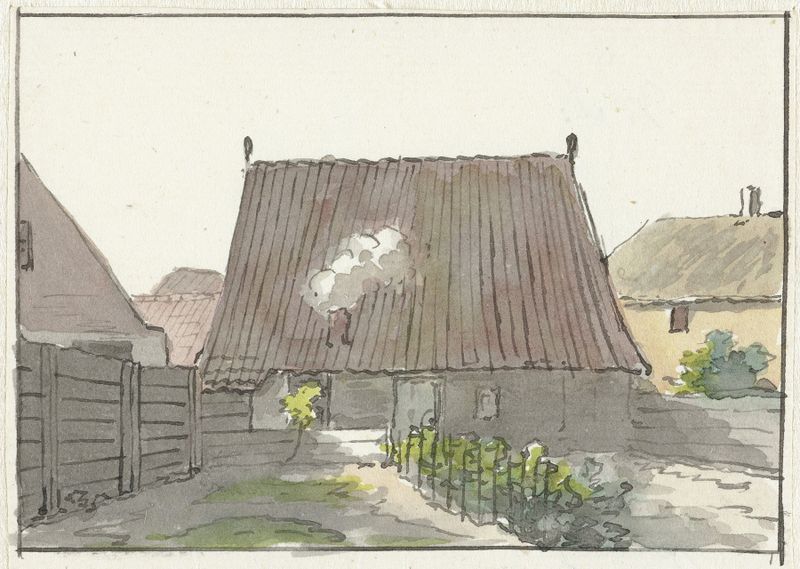
Huis met achtertuin
Pieter Bartholomeusz. Barbiers
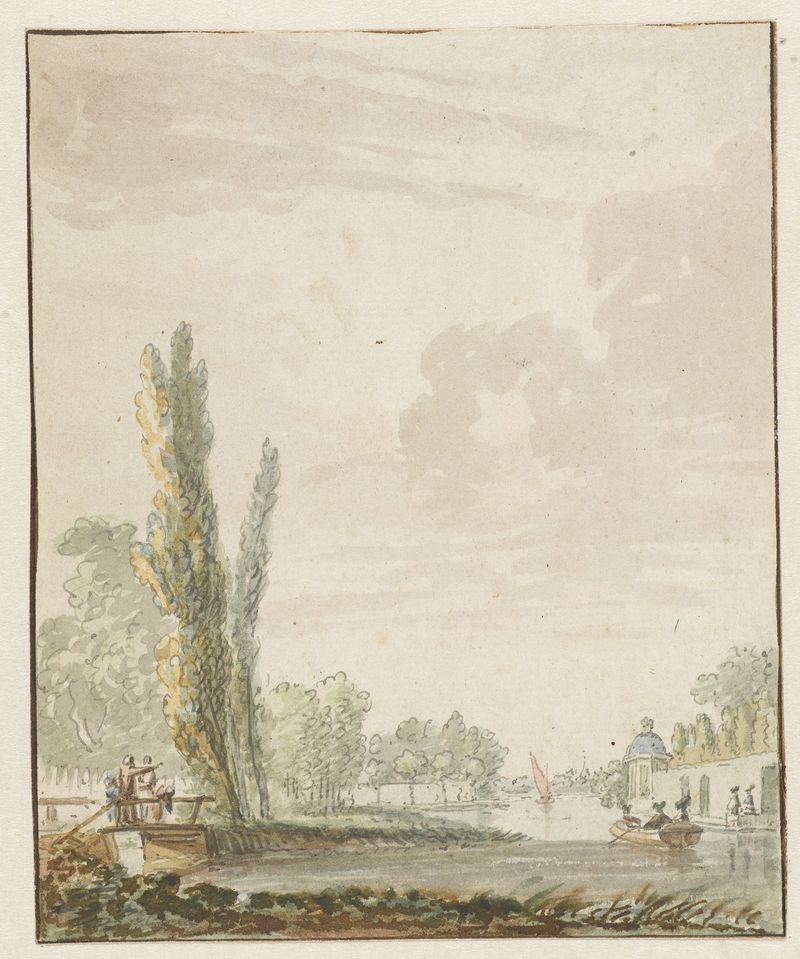
Gezicht langs een rivier met rechts een theekoepelje
Pieter Bartholomeusz. Barbiers
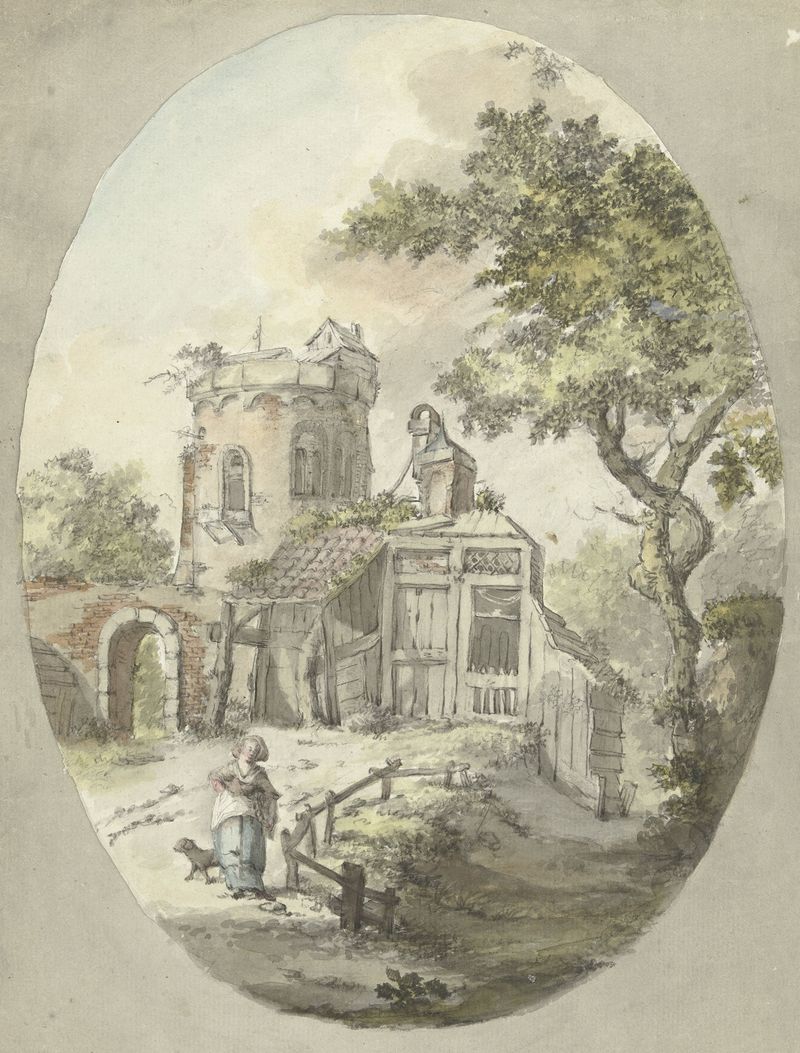
Vrouw met hond voor bouwval aan een toren
Pieter Bartholomeusz. Barbiers
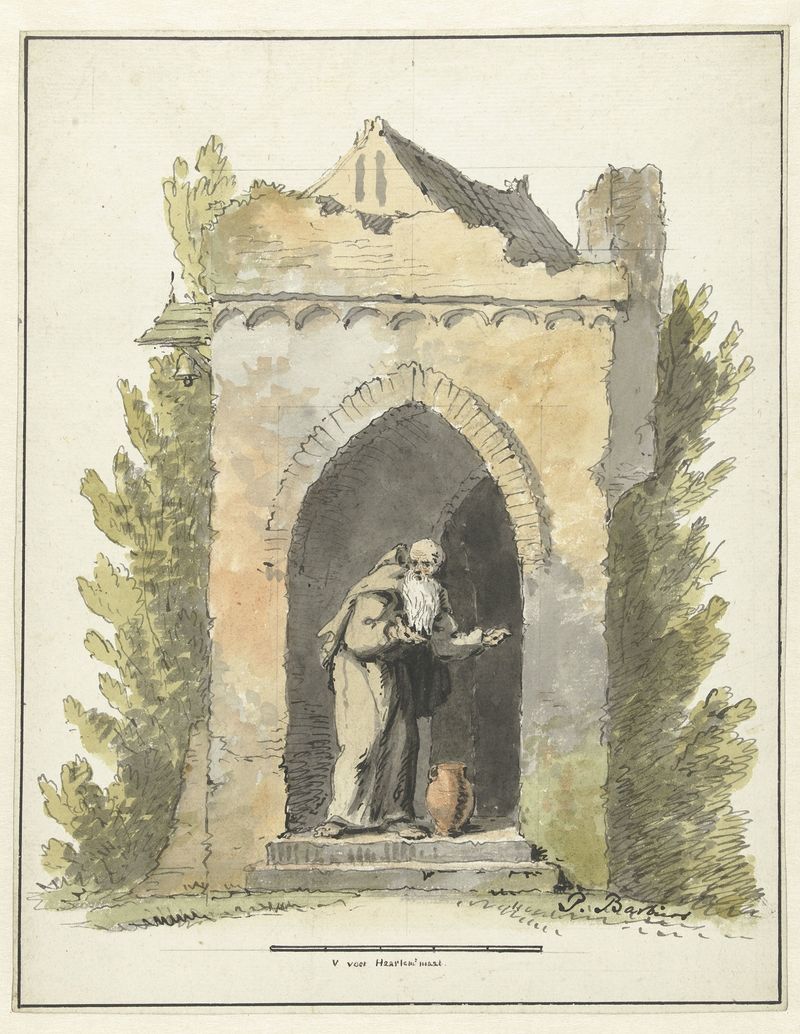
Kluizenaar voor een stenen kapel
Pieter Bartholomeusz. Barbiers
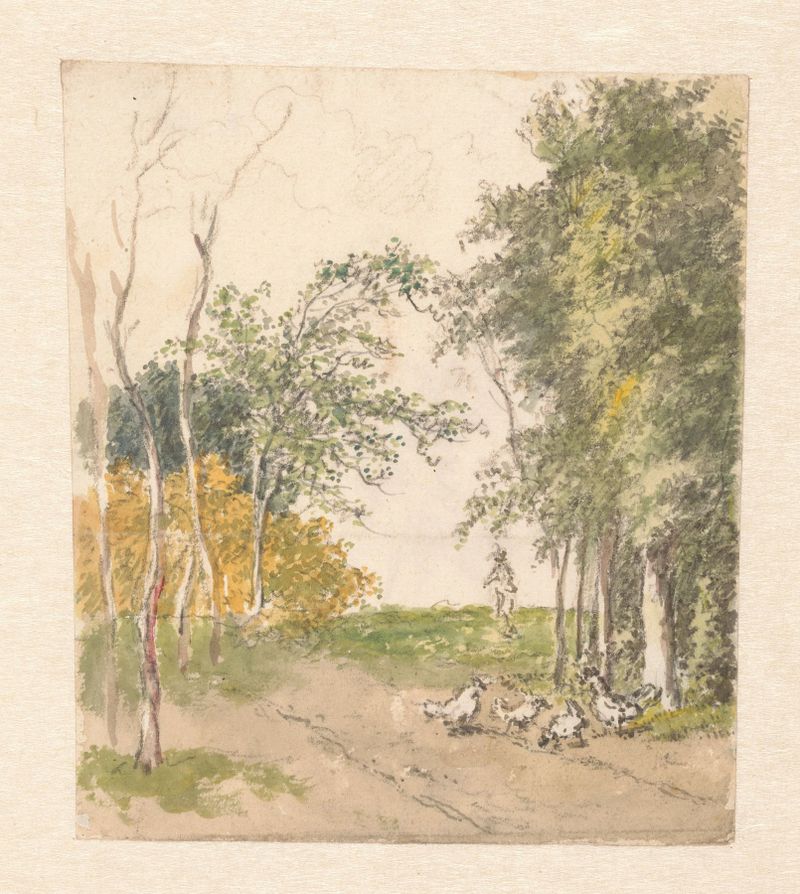
Landschap met kippen langs de weg
Pieter Bartholomeusz. Barbiers
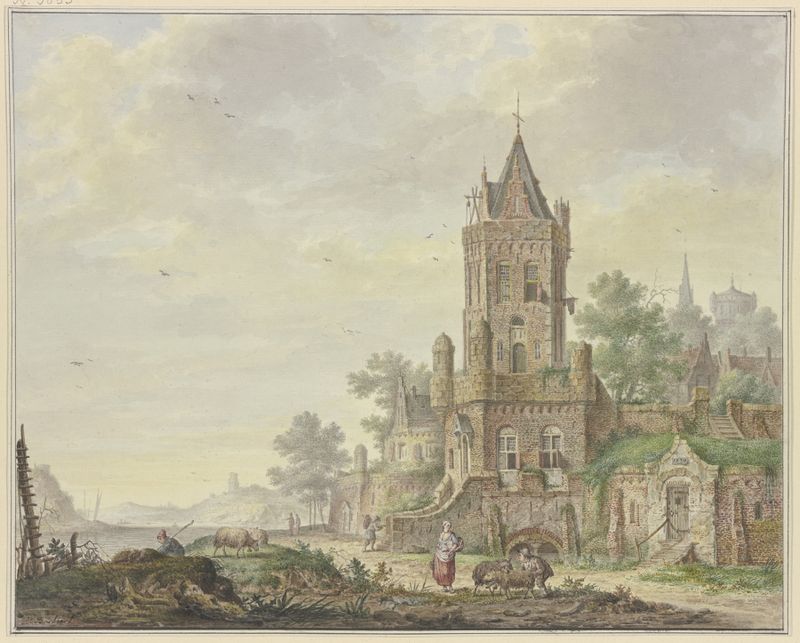
Stadt mit einem alten Turm am Wasser, vorne eine Frau bei einem Knaben mit zwei Schafen
Pieter Bartholomeusz. Barbiers





