
Gezicht langs een rivier met rechts een theekoepelje — History & Facts
Where does light end, and longing begin? In the gentle embrace of a riverside scene, the boundaries between the earthly and the ethereal blur, inviting contemplation of a deeper existence. Look to the left at the winding river, where its reflective surface captures a soft gradient of blues and greens. Notice how the light dances across the water, casting a luminous sheen that draws the viewer into its depths. To the right, the delicate structure of the tea pavilion, adorned with intricate details, stands as a quiet sentinel.
The painter’s brushstrokes create a harmonious palette, balancing the cool serenity of nature with the warm, inviting tones of human architecture. Amidst this tranquil landscape, emotional tensions arise. The juxtaposition of the river's fluidity against the rigidity of the pavilion suggests a conversation between nature and human creation—a reminder of our longing to connect with the sublime. The shadows cast by trees evoke a sense of mystery, hinting at the stories hidden within this serene tableau.
Each element, from the rippling water to the carefully placed clouds, reinforces a sense of transcendence, bridging our here and now with something ineffably greater. Created between 1782 and 1837, the artist painted this work during a time of significant transformation in the art world—when Romanticism began to flourish, emphasizing emotion and individual perception. Situated in the Netherlands, where Bartholomeusz Barbiers was active, the painting reflects the era's growing fascination with nature and its capacity to inspire awe and introspection in the viewer.
More Artworks by Pieter Bartholomeusz. Barbiers
Browse all →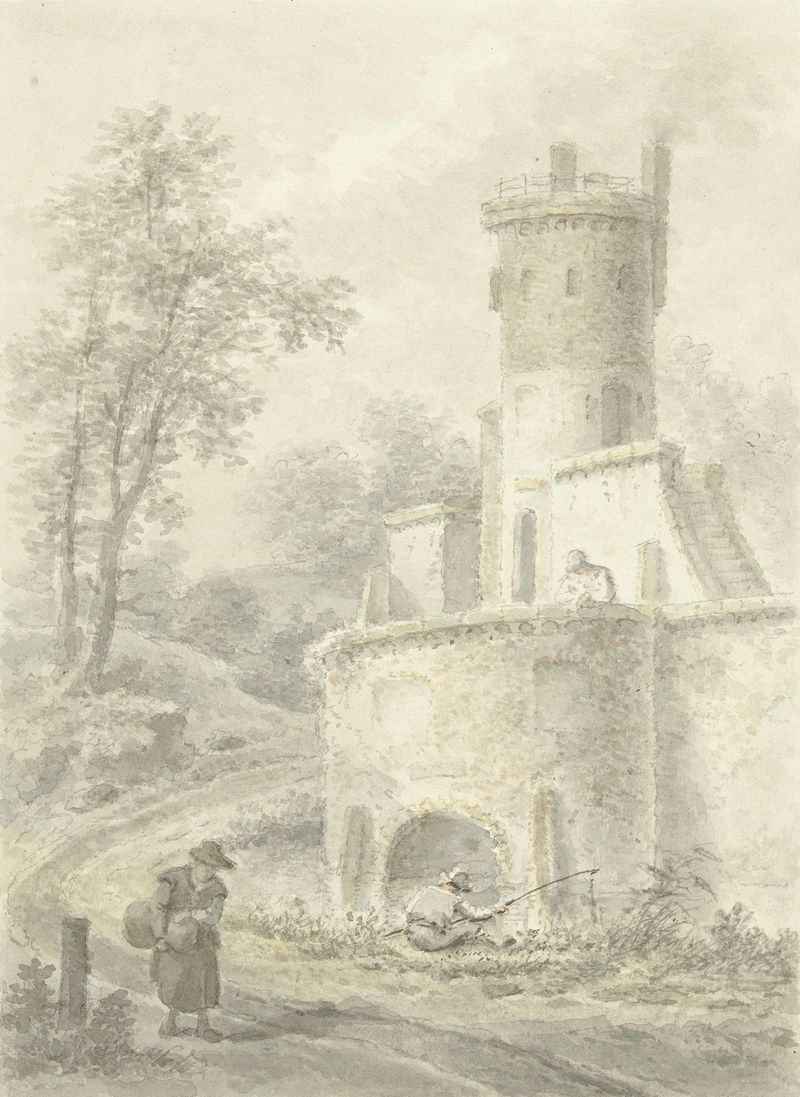
Landschap met hengelaar en wandelende vrouw bij een vestingtoren
Pieter Bartholomeusz. Barbiers
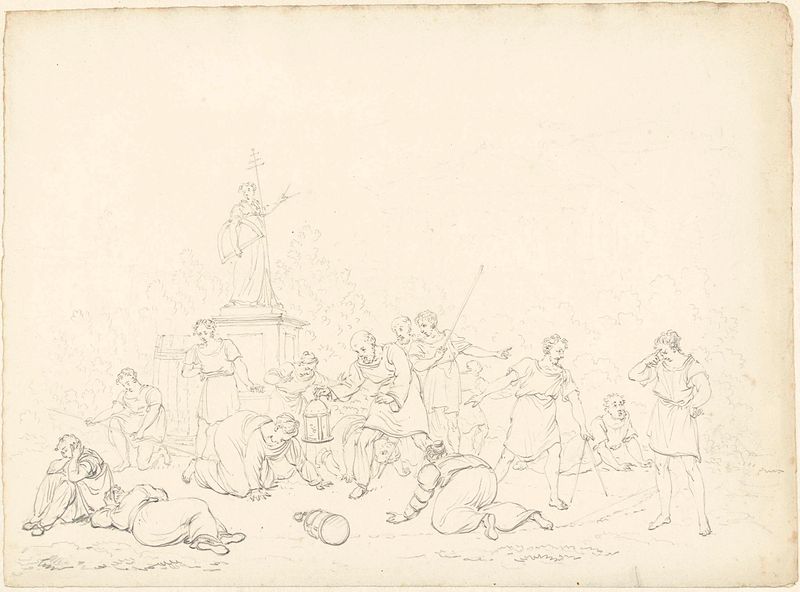
Diogenes met een lantaren een mens zoekend
Pieter Bartholomeusz. Barbiers
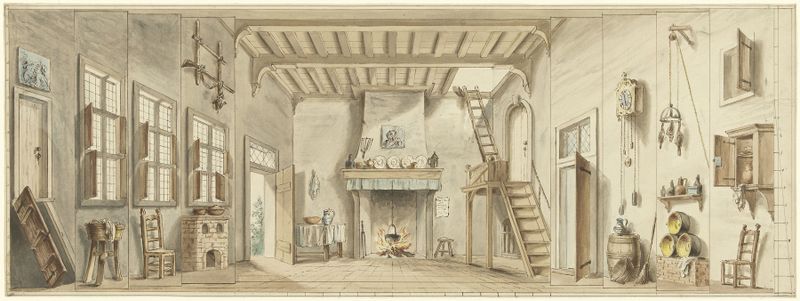
Ontwerp voor een toneeldecor voor de Vlaamse opera Het Kapertje
Pieter Bartholomeusz. Barbiers
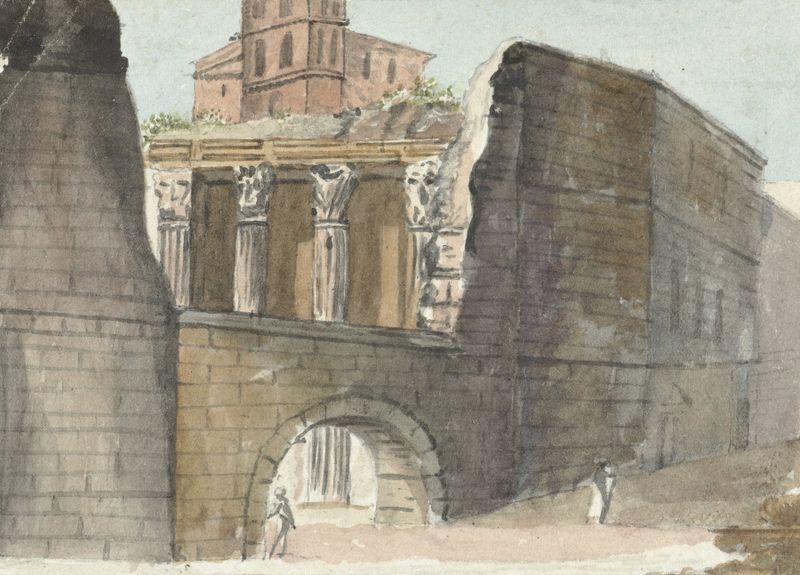
Romeinse ruïnes
Pieter Bartholomeusz. Barbiers
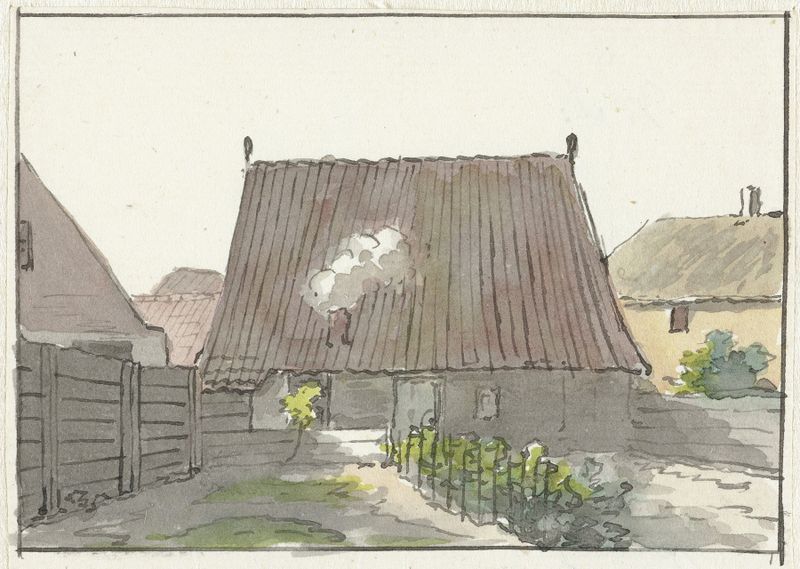
Huis met achtertuin
Pieter Bartholomeusz. Barbiers
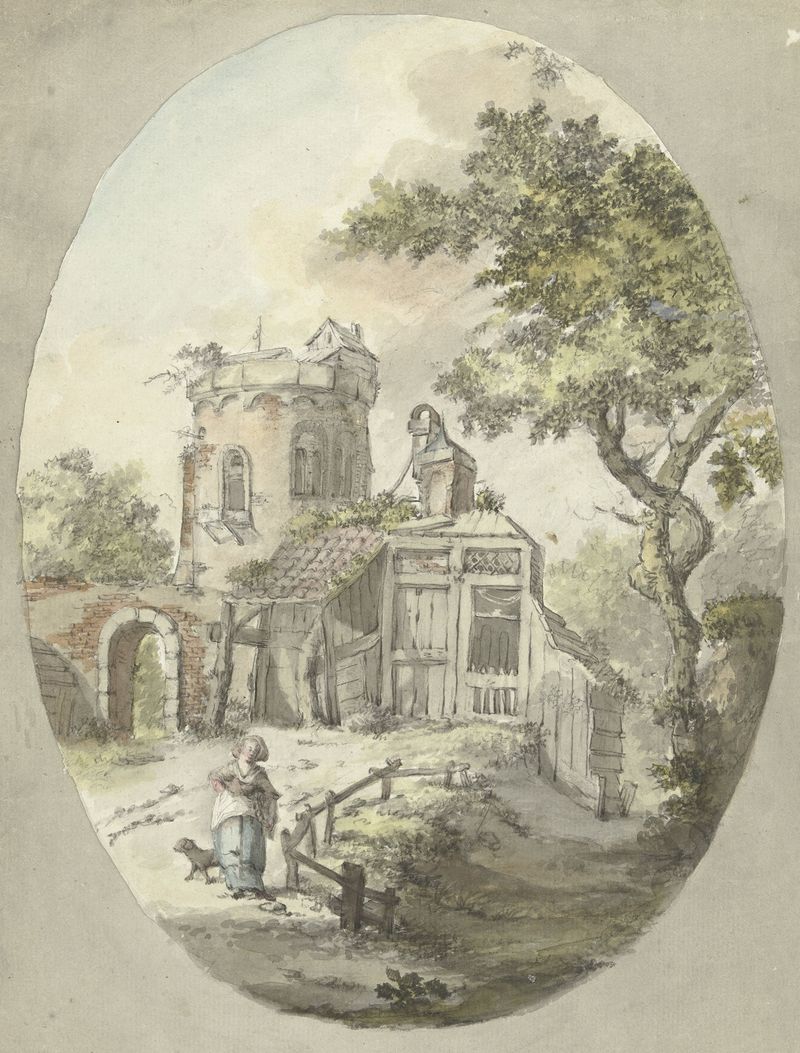
Vrouw met hond voor bouwval aan een toren
Pieter Bartholomeusz. Barbiers
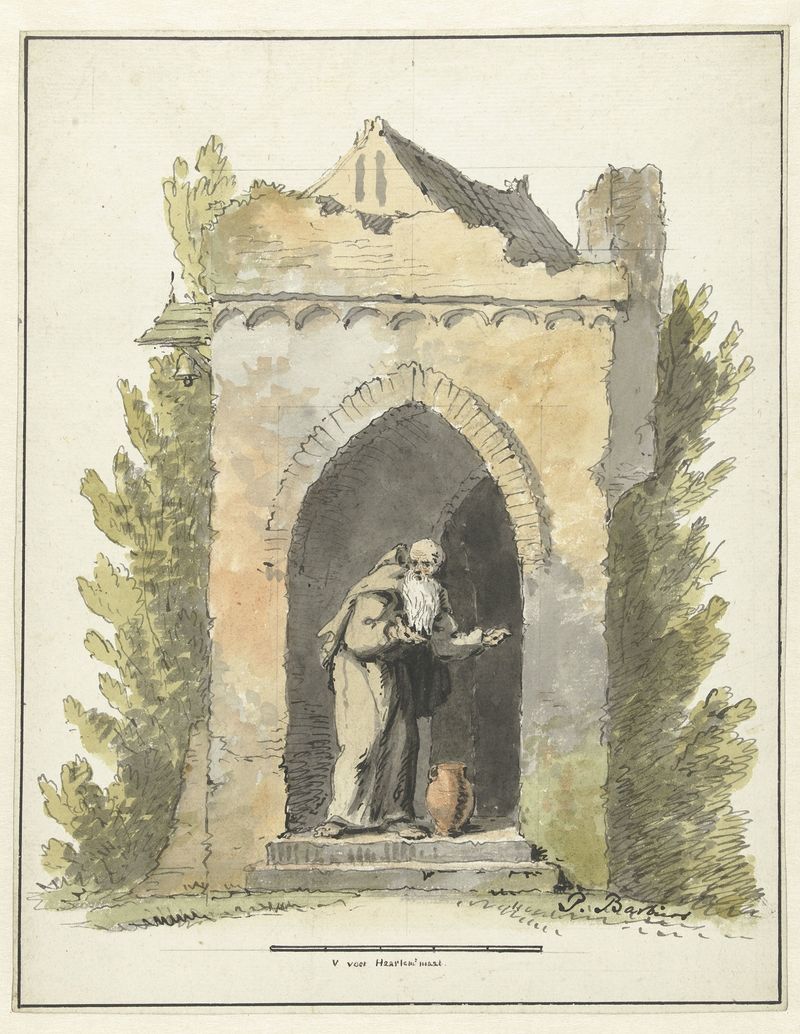
Kluizenaar voor een stenen kapel
Pieter Bartholomeusz. Barbiers
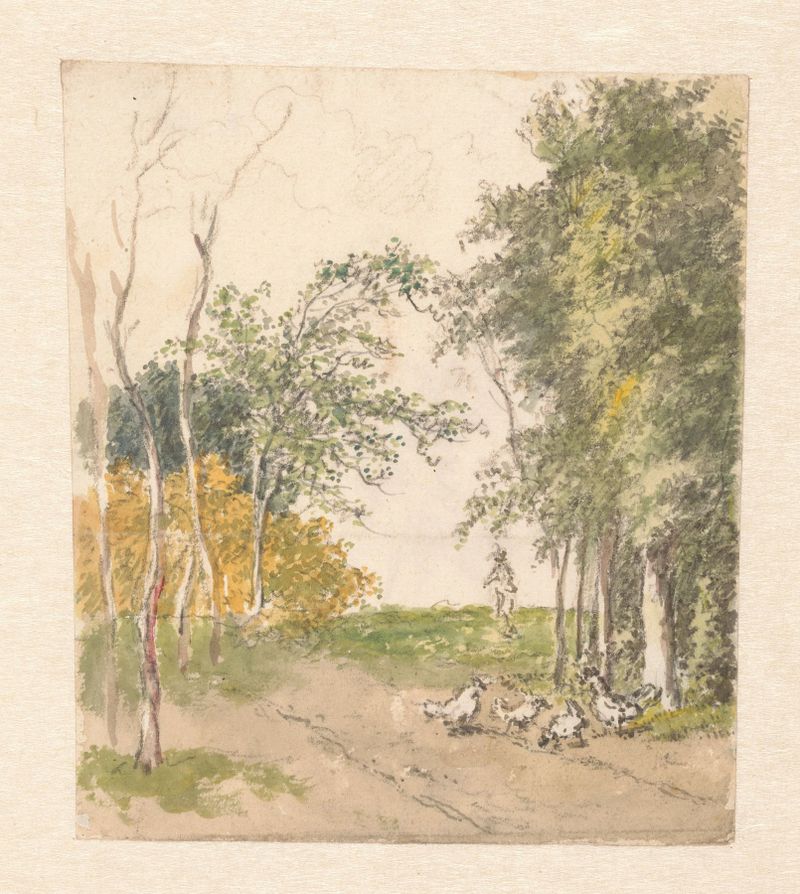
Landschap met kippen langs de weg
Pieter Bartholomeusz. Barbiers
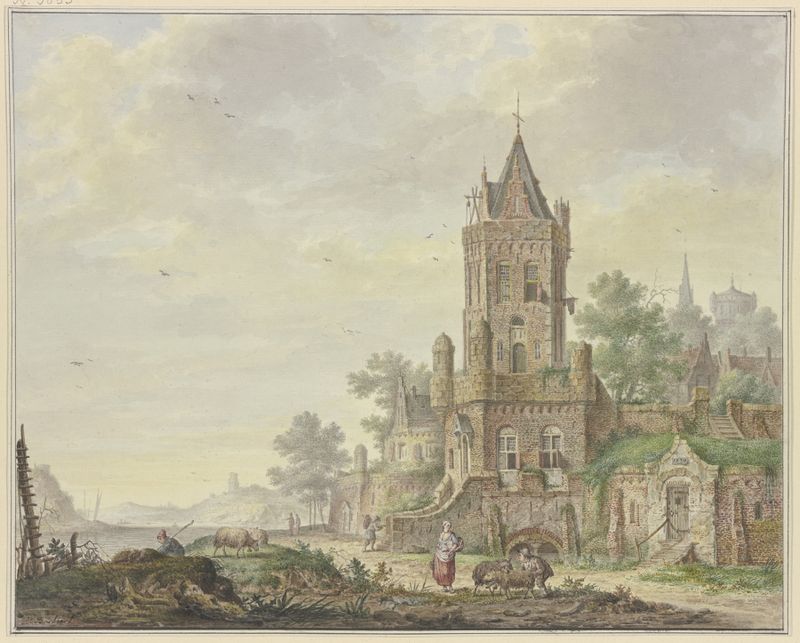
Stadt mit einem alten Turm am Wasser, vorne eine Frau bei einem Knaben mit zwei Schafen
Pieter Bartholomeusz. Barbiers
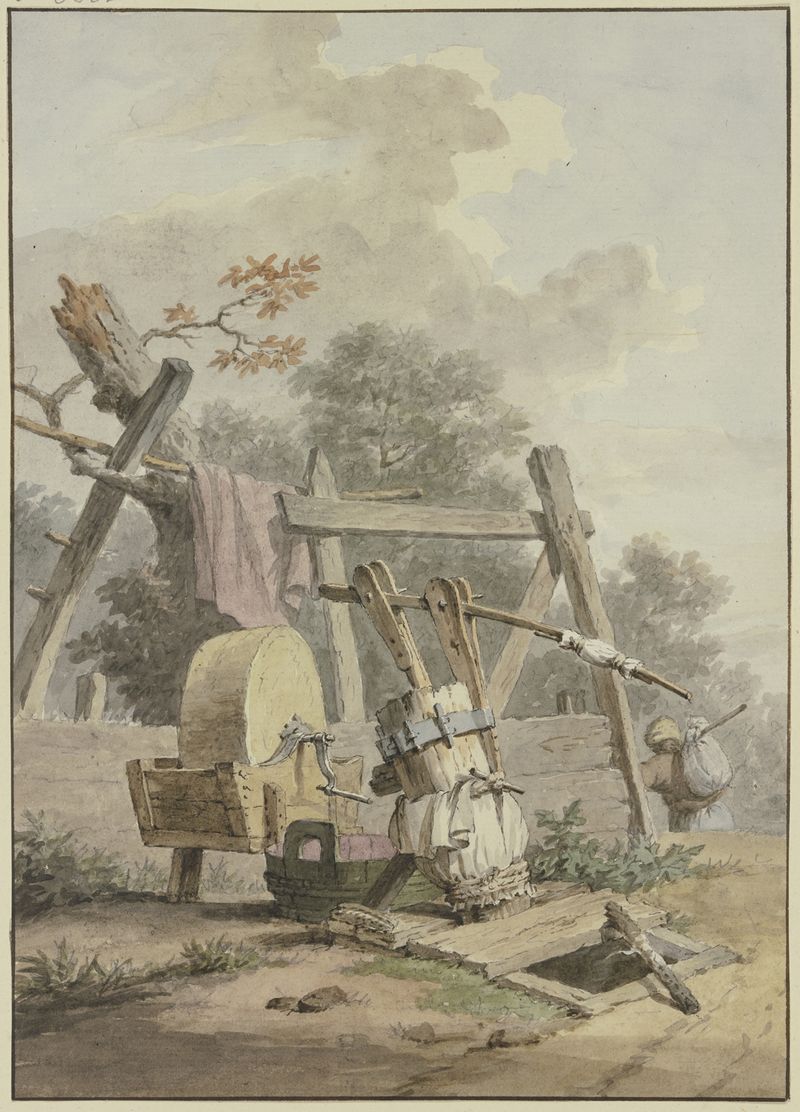
Ein Schleifstein bei einem Brunnen
Pieter Bartholomeusz. Barbiers





