
Knabe beim Znüni (ca.1897) — History & Facts
What draws the eye first in Knabe beim Znüni is the utter absorption of the boy in his simple meal, a moment so ordinary it becomes quietly monumental. The painter, Albert Anker, chooses a close, almost intimate vantage, letting us watch as the boy, dressed in a worn blue jacket, lifts a thick slice of bread to his mouth. The knife in his right hand, poised but resting, hints at the ritual of eating—careful, methodical, and, for this instant, the center of his world.
Light falls softly across his face and hands, carving out the golden tones of the bread and the pale, almost luminous skin, while the background recedes into shadow, ensuring nothing distracts from the act itself. Even the glass of what might be milk or cider sits quietly, its clarity echoing the boy’s own unguarded focus. Painted around 1897, this work belongs to a tradition of late 19th-century genre painting, when artists across Europe turned their attention to the everyday lives of rural and working-class families. In Switzerland, where Anker worked, such images often carried a gentle pride in ordinary life and the rituals that knit communities together.
Knabe beim Znüni—its title referring to the Swiss German term for a mid-morning snack—captures not just a meal, but a way of life, shaped by routine and modesty. The painting’s journey through time is only partly documented: it appeared in a Christie's sale in Zürich in 2013, a reminder that many such works, though celebrated in their own day, now move quietly through private hands. Yet the boy’s focused gaze invites us back, again and again, to the quiet dignity of a single, unremarkable moment.
More Artworks by Albert Anker

Portrait Of A Girl
Albert Anker
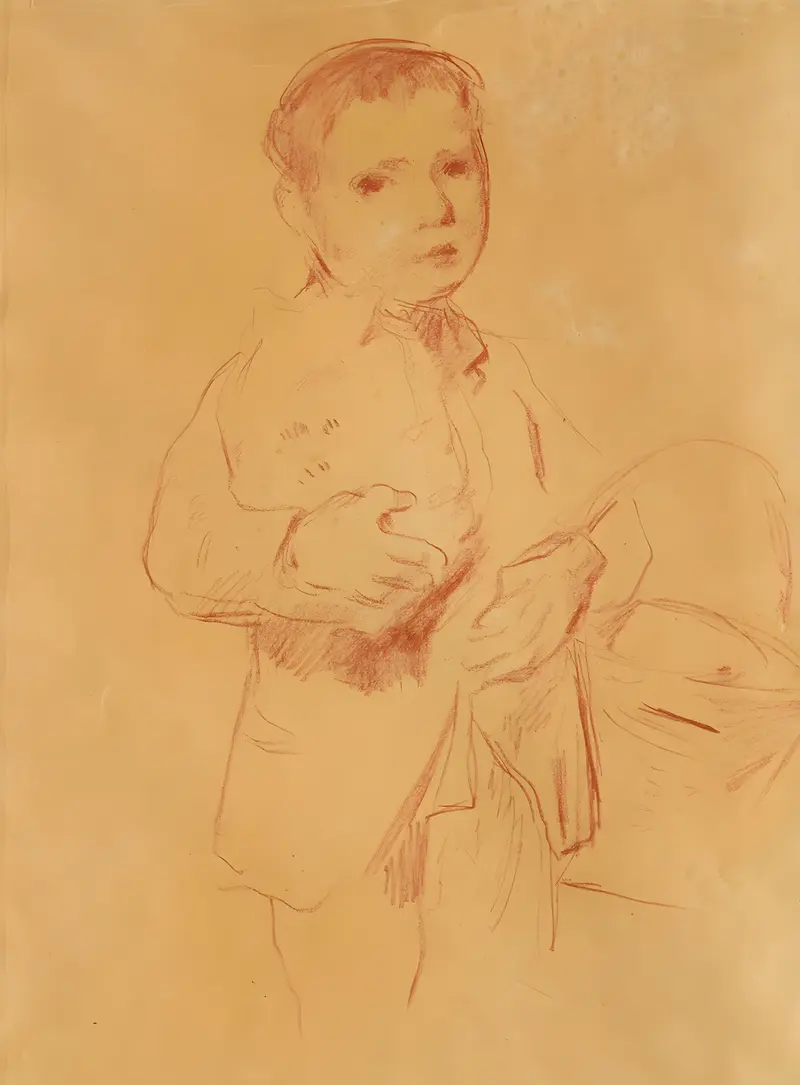
Boy with a basket
Albert Anker
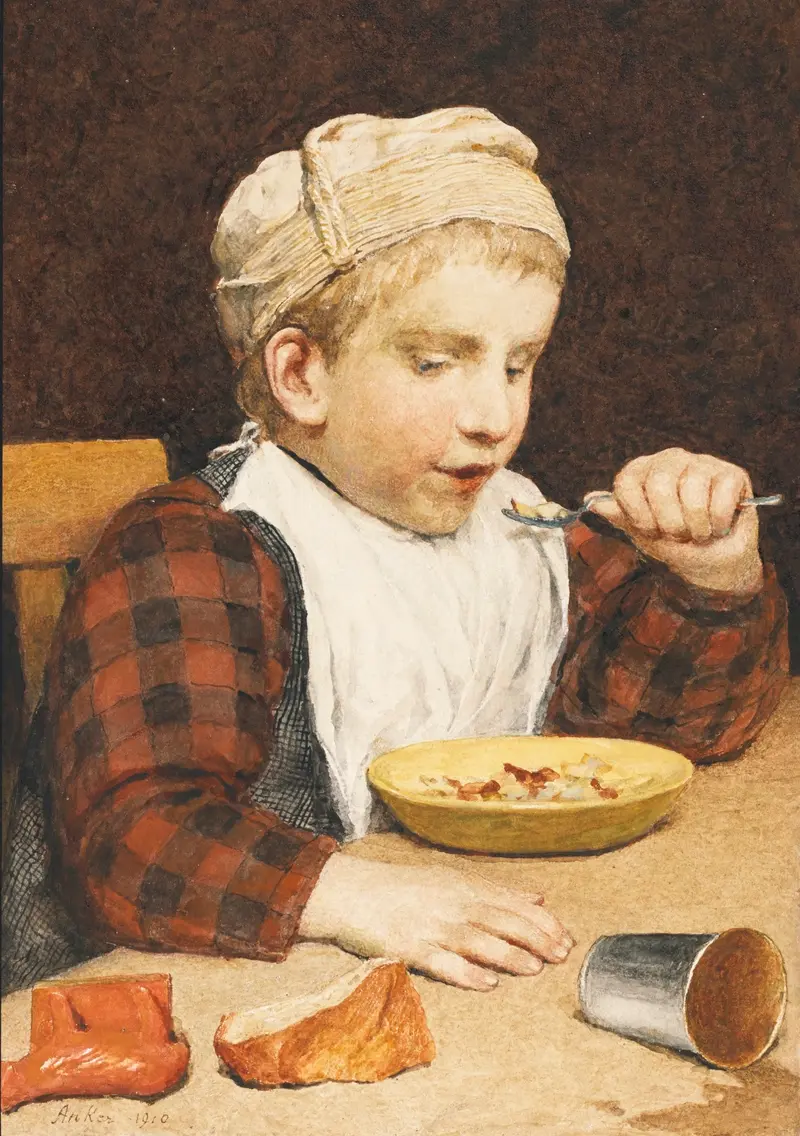
Knabe Mit Mütze Beim Essen
Albert Anker
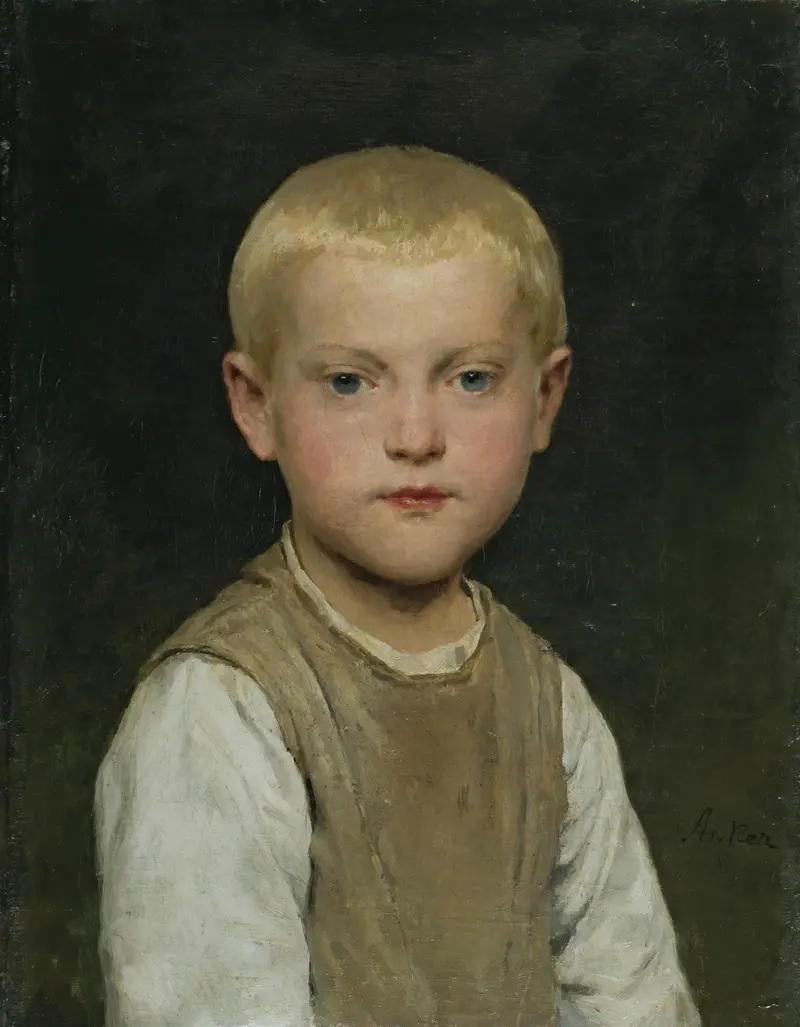
Knabenbildnis (Dr Heiri)
Albert Anker
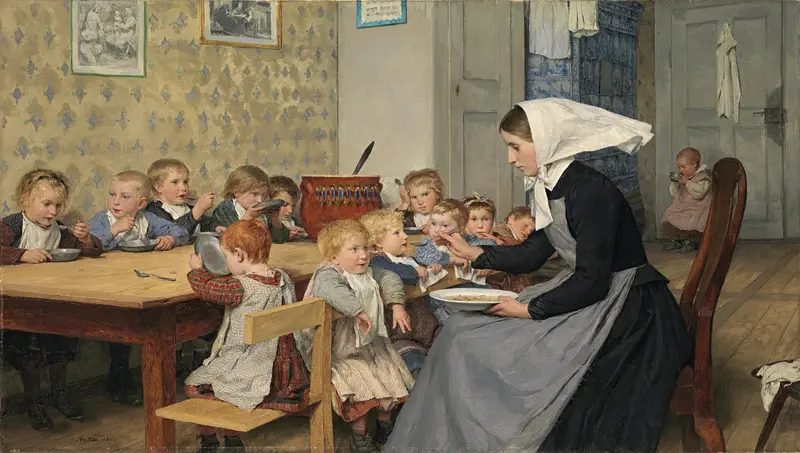
Die Kinderkrippe I
Albert Anker

L’instituteur et le pasteur
Albert Anker
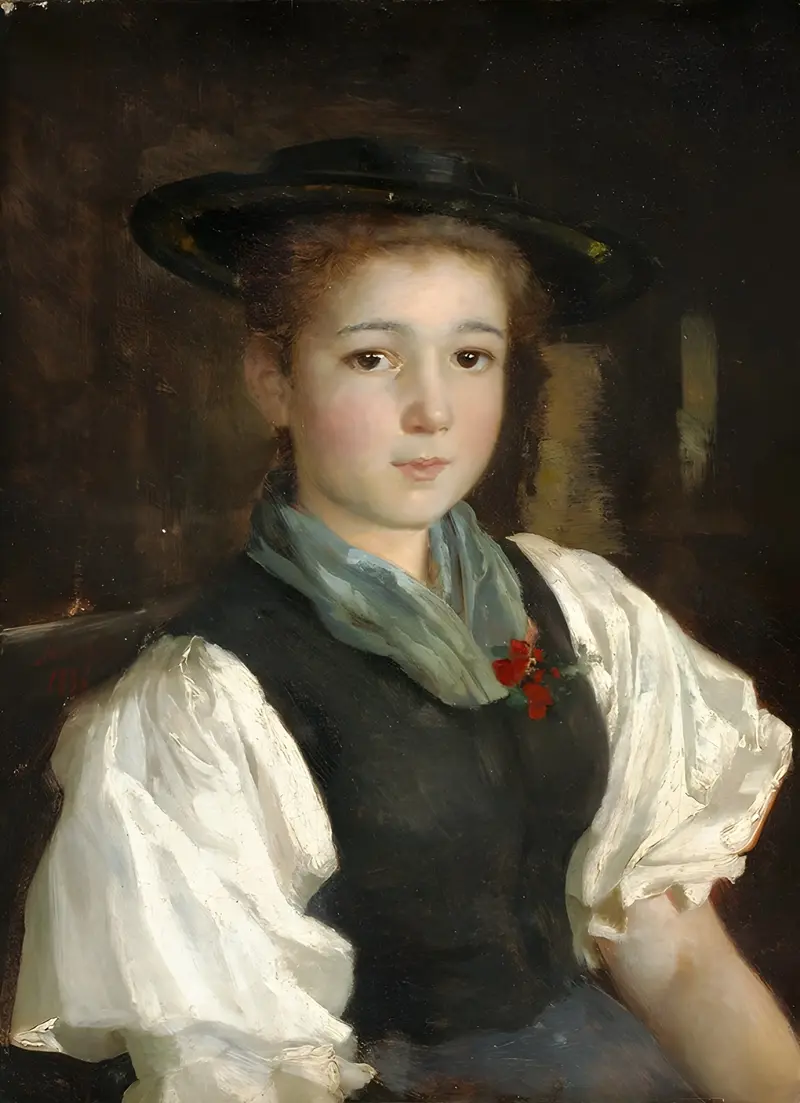
Bauernmädchen (Farm Girl)
Albert Anker
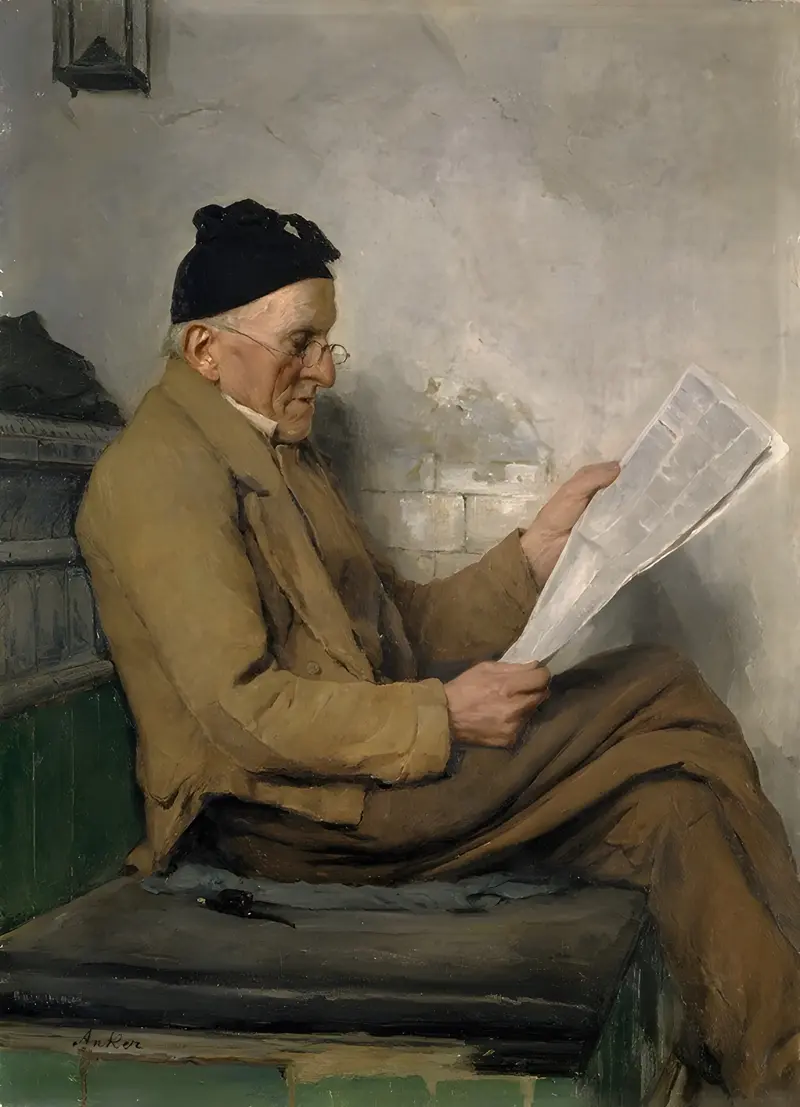
Farmer Reading on the Stove Bench
Albert Anker
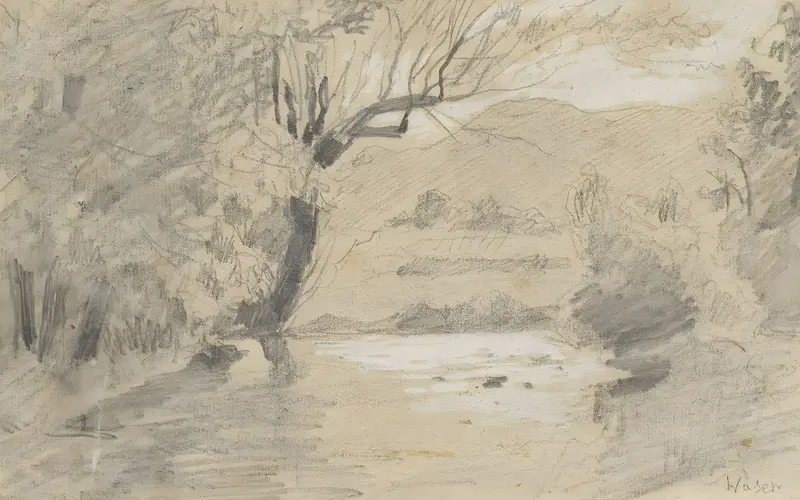
Flusslandschaft in Wasen (Emmental)
Albert Anker
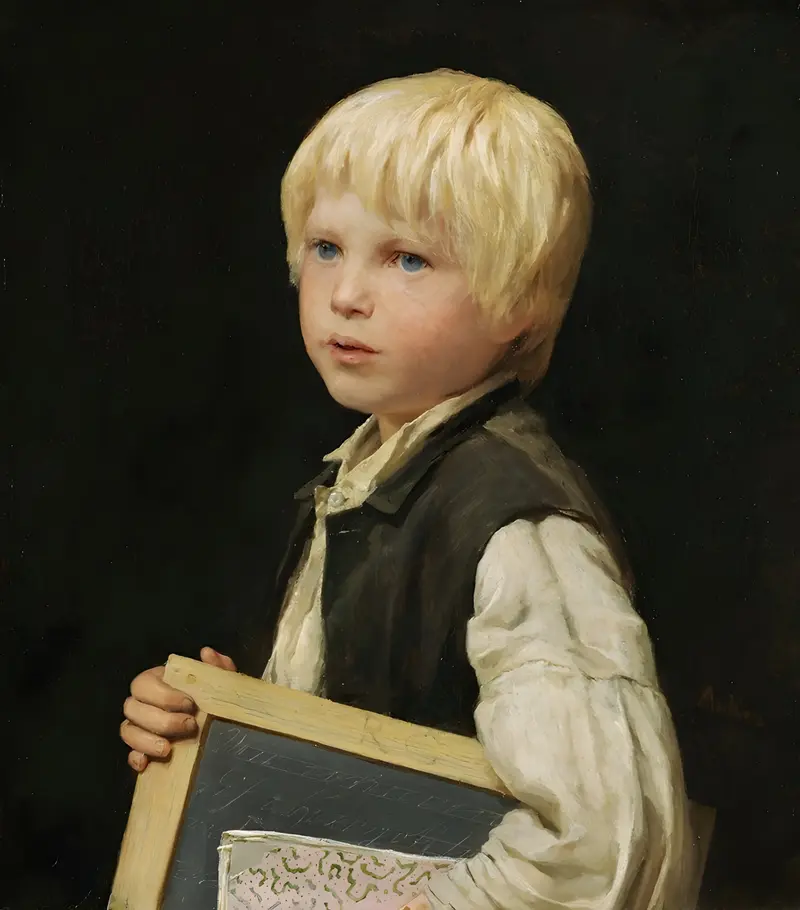
School Boy
Albert Anker
More Genre Scene Art

Banquet of the Officers of the St George Civic Guard
Frans Hals

Rembrandt and Saskia in the Scene of the Prodigal Son
Rembrandt van Rijn

Bal du moulin de la Galette
Pierre-Auguste Renoir

Quadrille at the Moulin Rouge
Henri de Toulouse-Lautrec

A Burial at Ornans
Gustave Courbet

When Will You Marry?
Paul Gauguin