
Knitting Girl Reading — History & Facts
Knitting Girl Reading by Albert Anker depicts a young girl sitting comfortably, deeply engrossed in a book while knitting. The warm color palette features soft browns and gentle greens, creating a cozy atmosphere. The girl's expression is one of concentration, highlighting her engagement with the text.
The setting is simple yet inviting, suggesting a peaceful domestic space where leisure and creativity intertwine. The painting is executed in oil on canvas, a medium that allows for rich texture and depth. Anker's attention to detail is evident in the girl's clothing and the intricate patterns of her knitting. The light source appears to come from the left, casting soft shadows that enhance the three-dimensionality of the scene.
This realistic portrayal is characteristic of Anker's style, which often focuses on everyday life and intimate moments. Albert Anker was a Swiss painter known for his depictions of rural life and children. This work, created in the Realism style, captures a serene moment that reflects the artist's interest in the simplicity of daily activities. Anker often painted scenes that celebrated childhood and domesticity, making him a significant figure in Swiss art.
Interestingly, he was also a skilled illustrator, contributing to children's literature during his lifetime.
More Artworks by Albert Anker

Portrait Of A Girl
Albert Anker
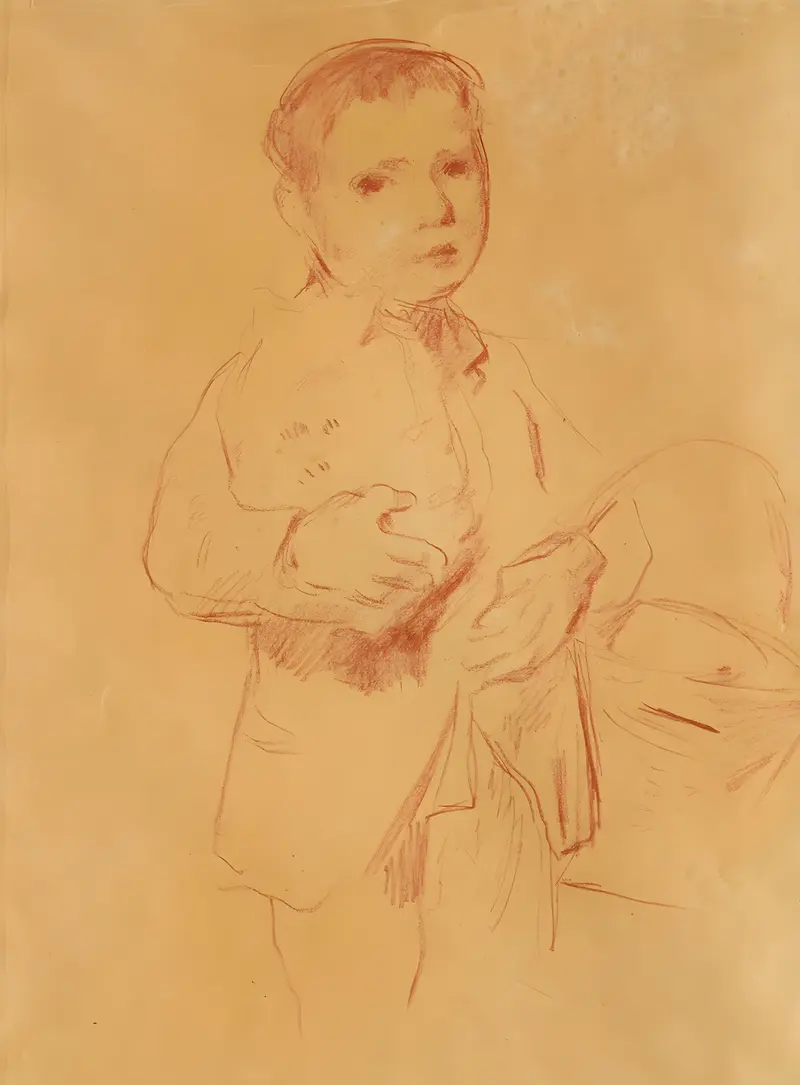
Boy with a basket
Albert Anker
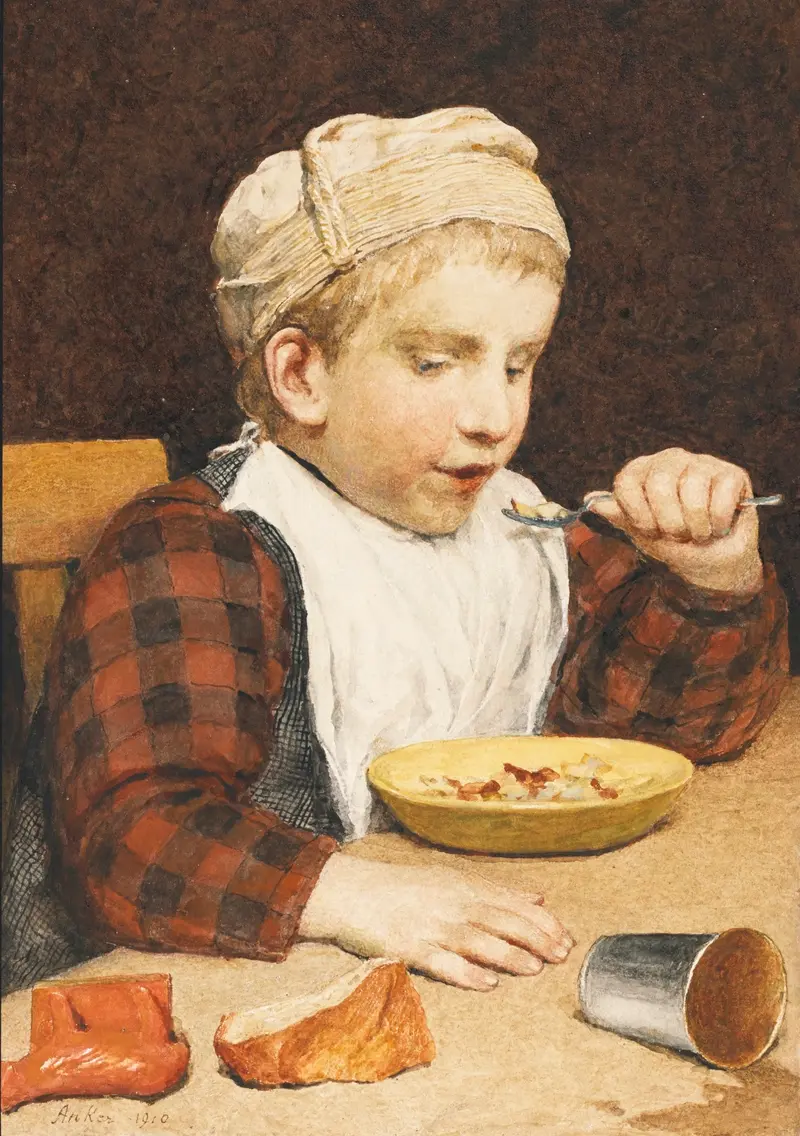
Knabe Mit Mütze Beim Essen
Albert Anker
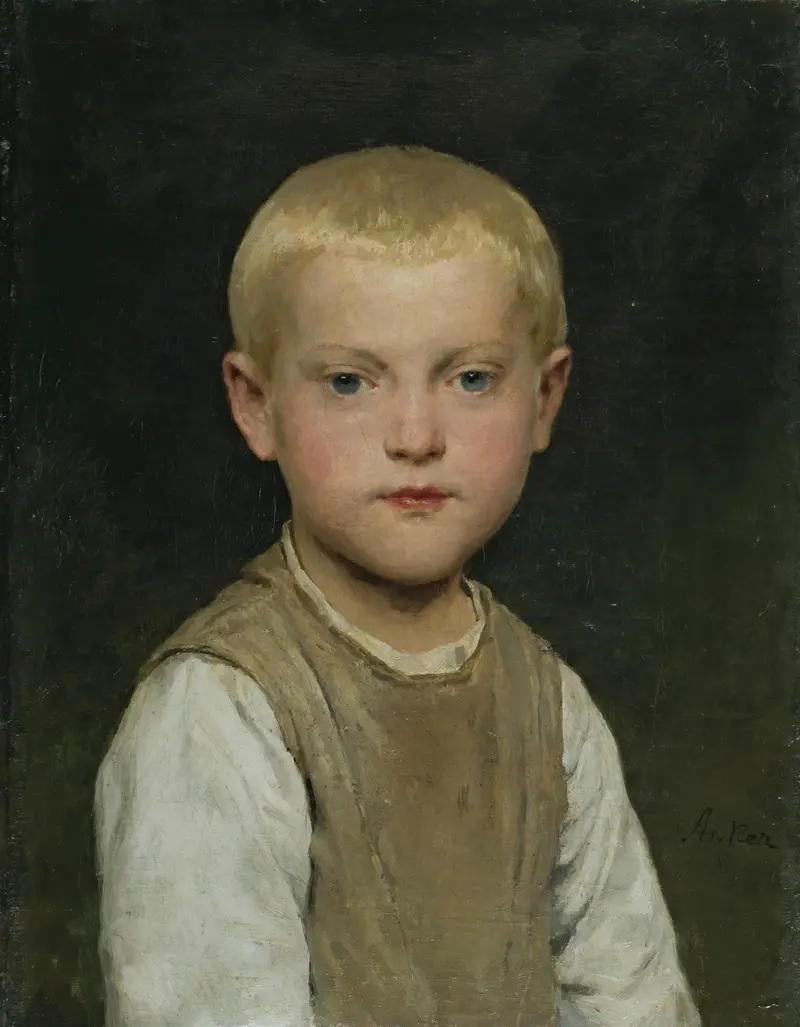
Knabenbildnis (Dr Heiri)
Albert Anker

L’instituteur et le pasteur
Albert Anker
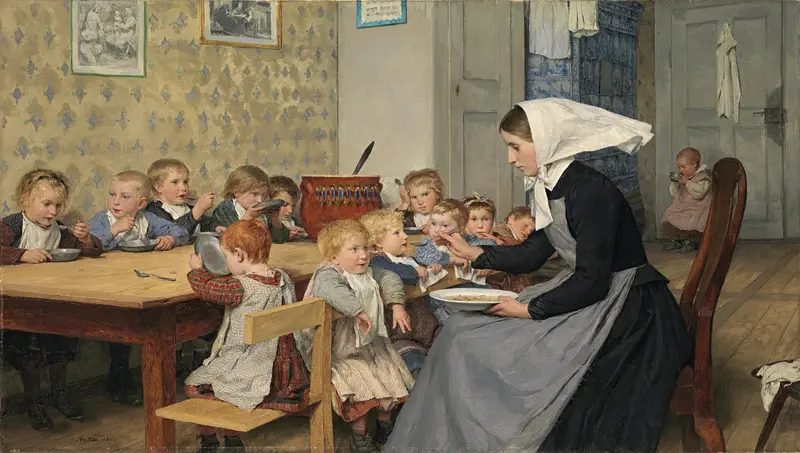
Die Kinderkrippe I
Albert Anker
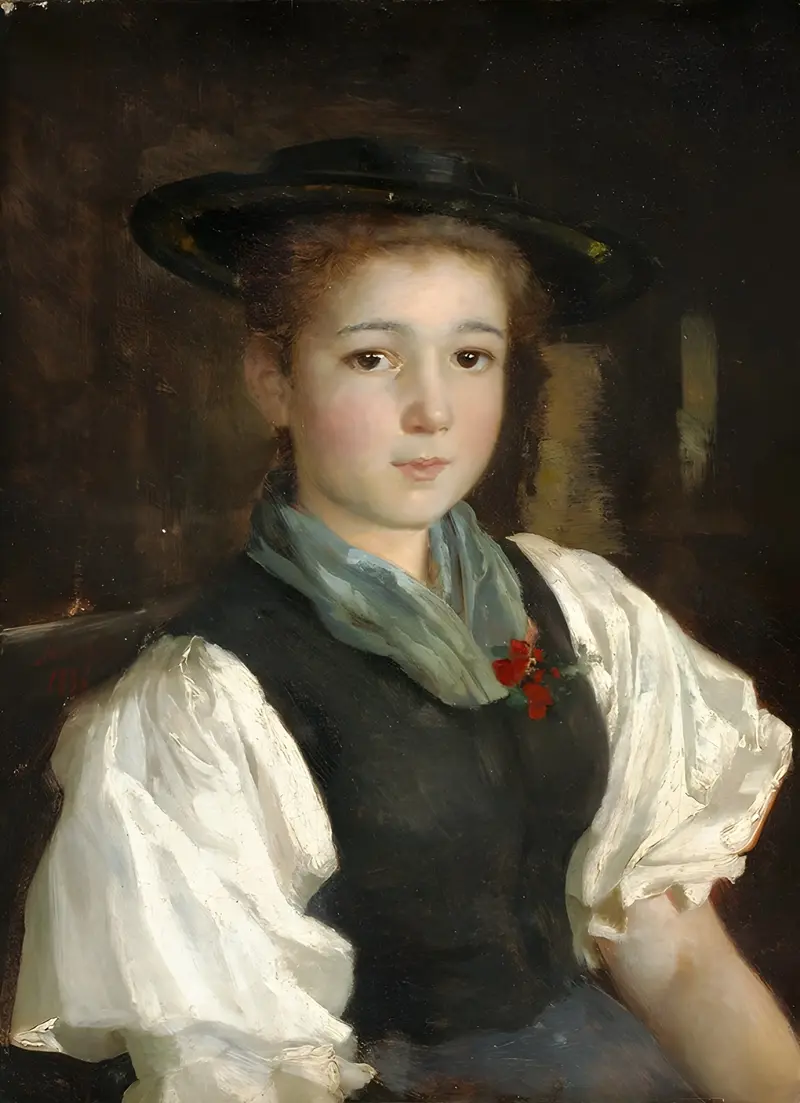
Bauernmädchen (Farm Girl)
Albert Anker
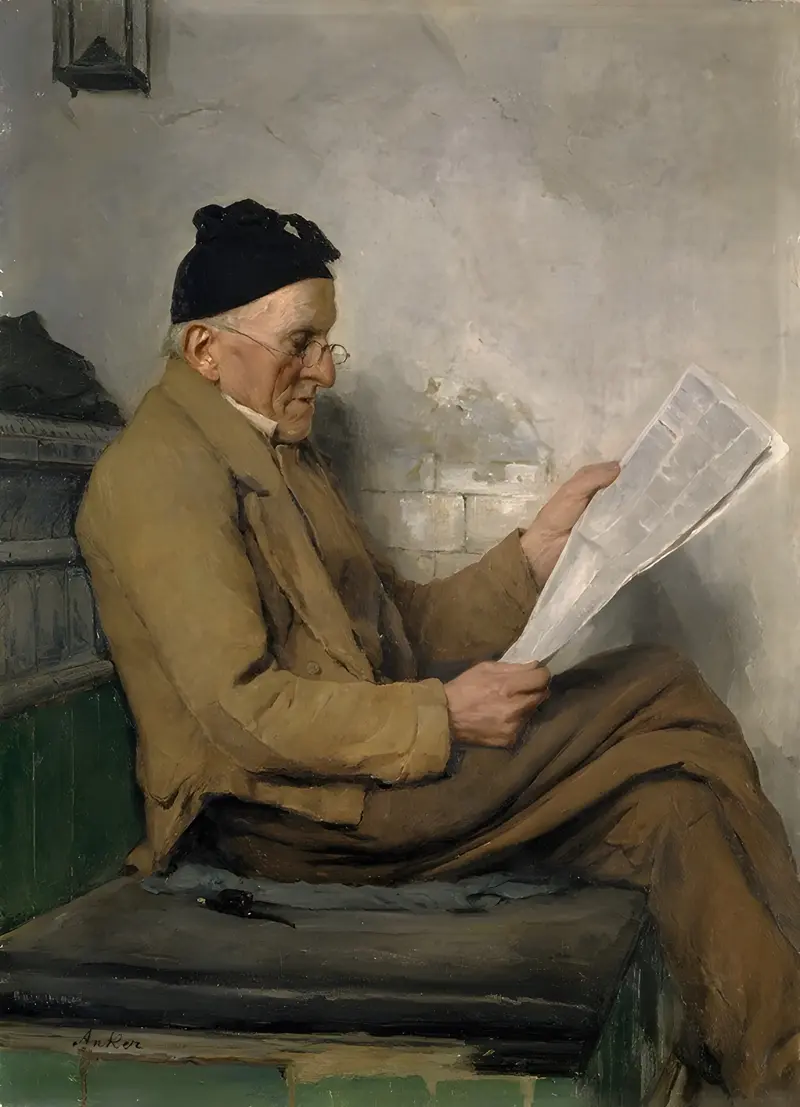
Farmer Reading on the Stove Bench
Albert Anker
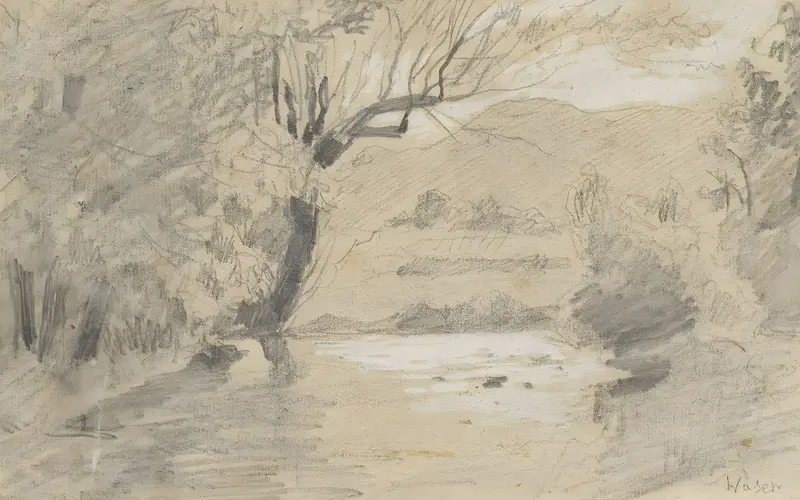
Flusslandschaft in Wasen (Emmental)
Albert Anker
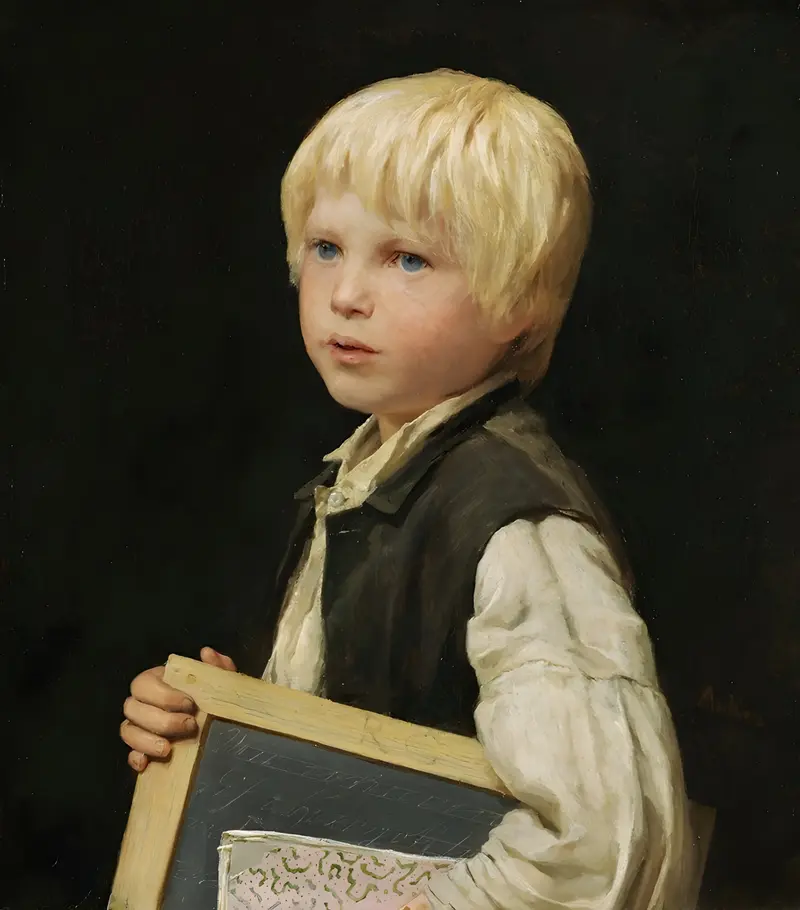
School Boy
Albert Anker
More Genre Scene Art

Banquet of the Officers of the St George Civic Guard
Frans Hals

Rembrandt and Saskia in the Scene of the Prodigal Son
Rembrandt van Rijn

Bal du moulin de la Galette
Pierre-Auguste Renoir

Quadrille at the Moulin Rouge
Henri de Toulouse-Lautrec

A Burial at Ornans
Gustave Courbet

When Will You Marry?
Paul Gauguin