
Knitting girl watching the toddler in a cradle — History & Facts
What draws the eye first is the hush: a girl, barefoot and intent, knits with practiced hands as a cradle rests nearby, its tiny occupant bundled and dreaming. The filtered daylight, mottled through thick summer leaves, falls gently on her pale blouse and the curve of her cheek, giving the moment a sense of quiet industry and watchfulness. The cradle’s heart-shaped cutout hints at care and affection, while the careful sheltering of the infant with a makeshift canopy speaks to resourcefulness.
The girl’s posture—upright, absorbed, yet angled toward the cradle—signals her double role: both child and caretaker, her world bounded by duty and tenderness. The palette is lush with greens and earth, anchoring the scene in a garden’s calm, while the basket of yarn at her feet suggests continuity, as if this is one in a long chain of such afternoons. Painted in 1885, this work belongs to a tradition of late nineteenth-century European genre painting, where artists like Albert Anker found dignity and beauty in everyday rural life. In a period when industrialization was reshaping society, such images offered viewers—often urban and middle-class—a vision of innocence, order, and familial harmony rooted in the countryside.
Works like this were sometimes commissioned for private homes, intended to remind their owners of values like care, patience, and the quiet heroism of daily tasks. Now held in the collection of Sotheby’s, Knitting girl watching the toddler in a cradle survives as a window into a world where childhood and responsibility are closely entwined, inviting us to linger over the details and imagine the lives unfolding just beyond the frame.
More Artworks by Albert Anker

Portrait Of A Girl
Albert Anker
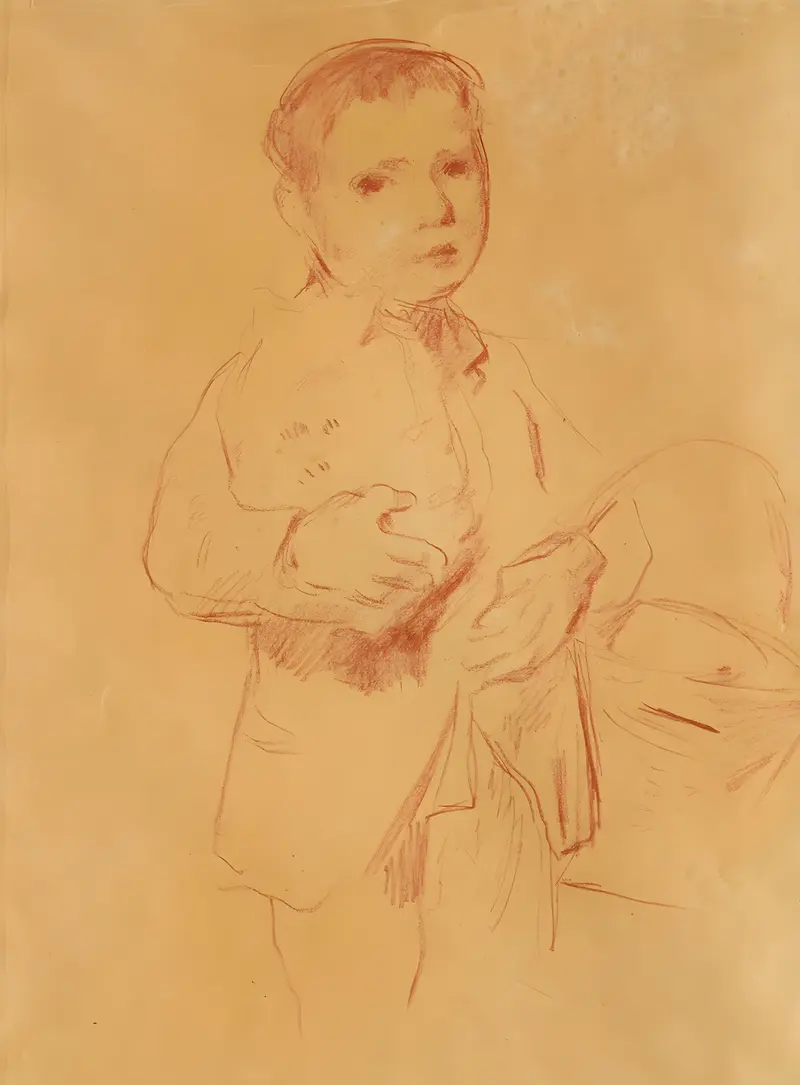
Boy with a basket
Albert Anker
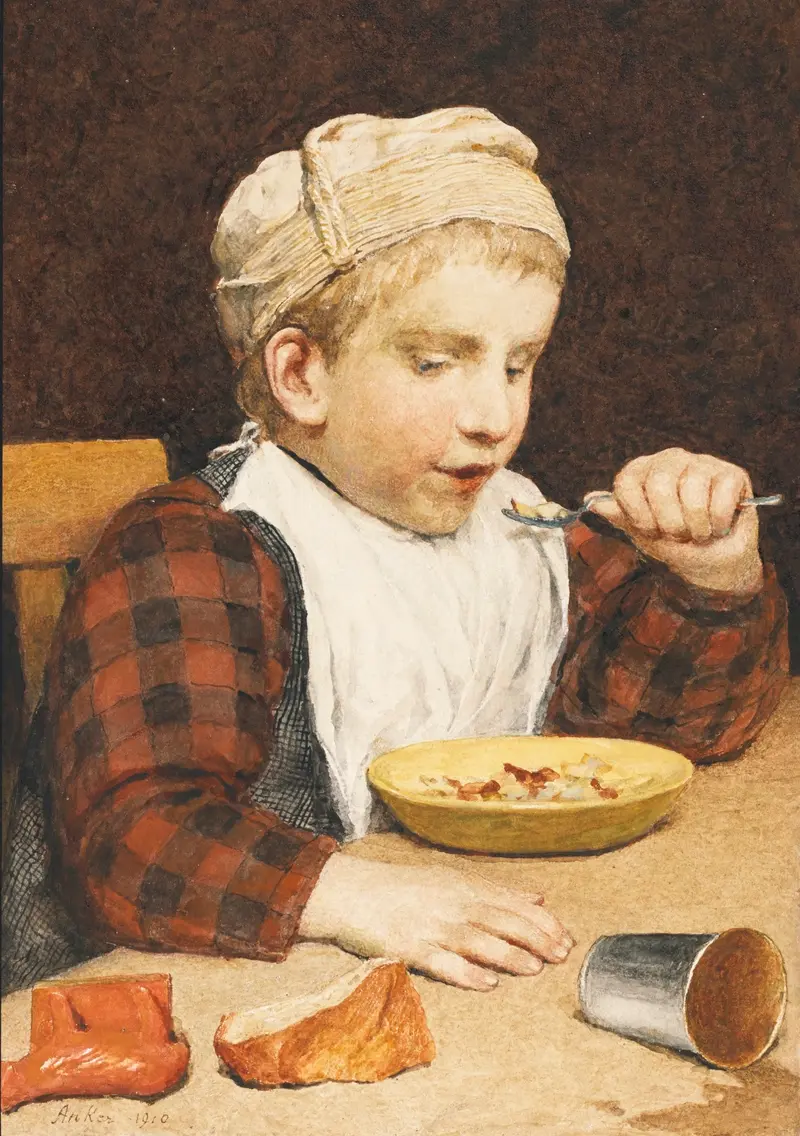
Knabe Mit Mütze Beim Essen
Albert Anker
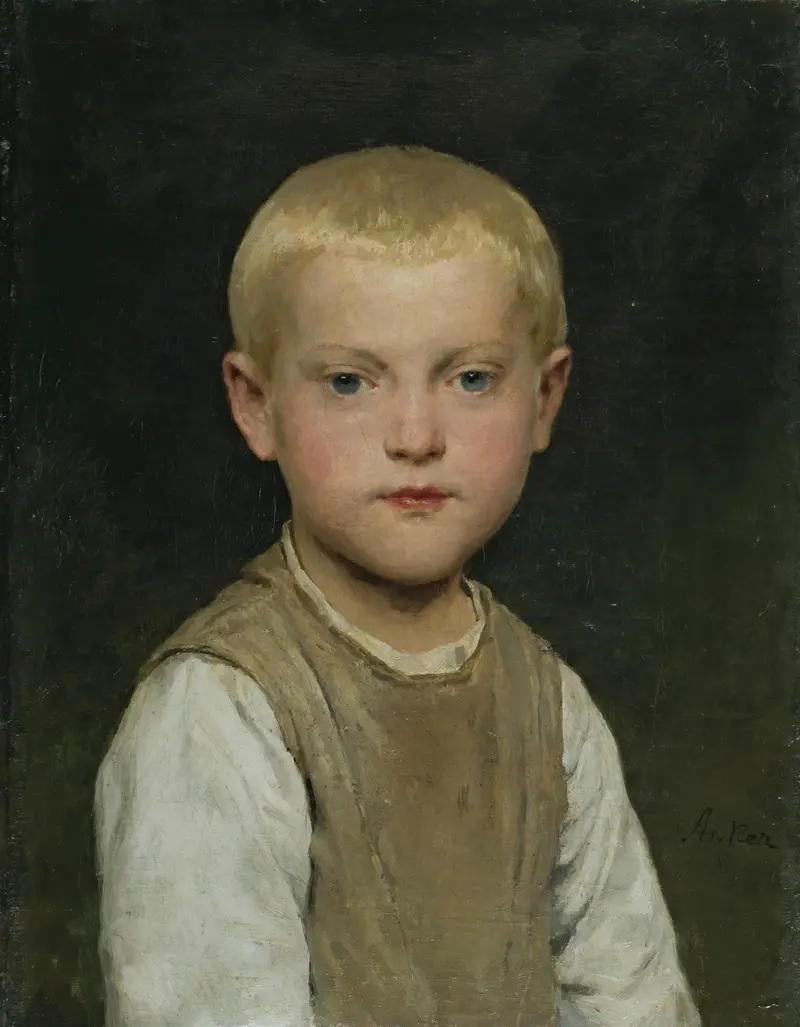
Knabenbildnis (Dr Heiri)
Albert Anker
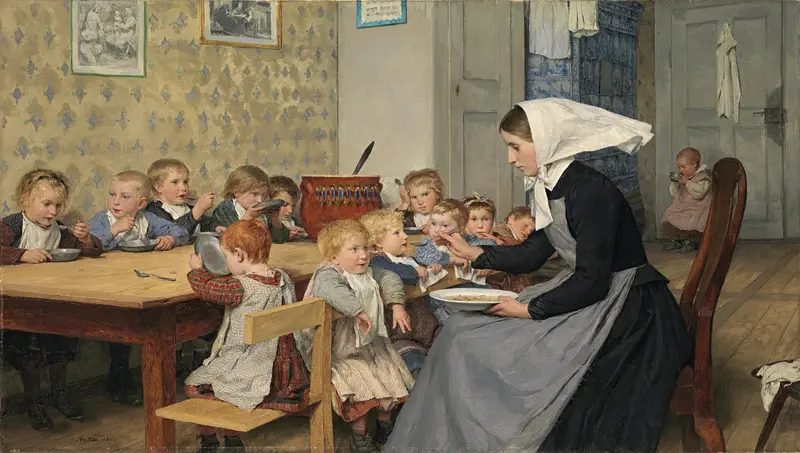
Die Kinderkrippe I
Albert Anker

L’instituteur et le pasteur
Albert Anker
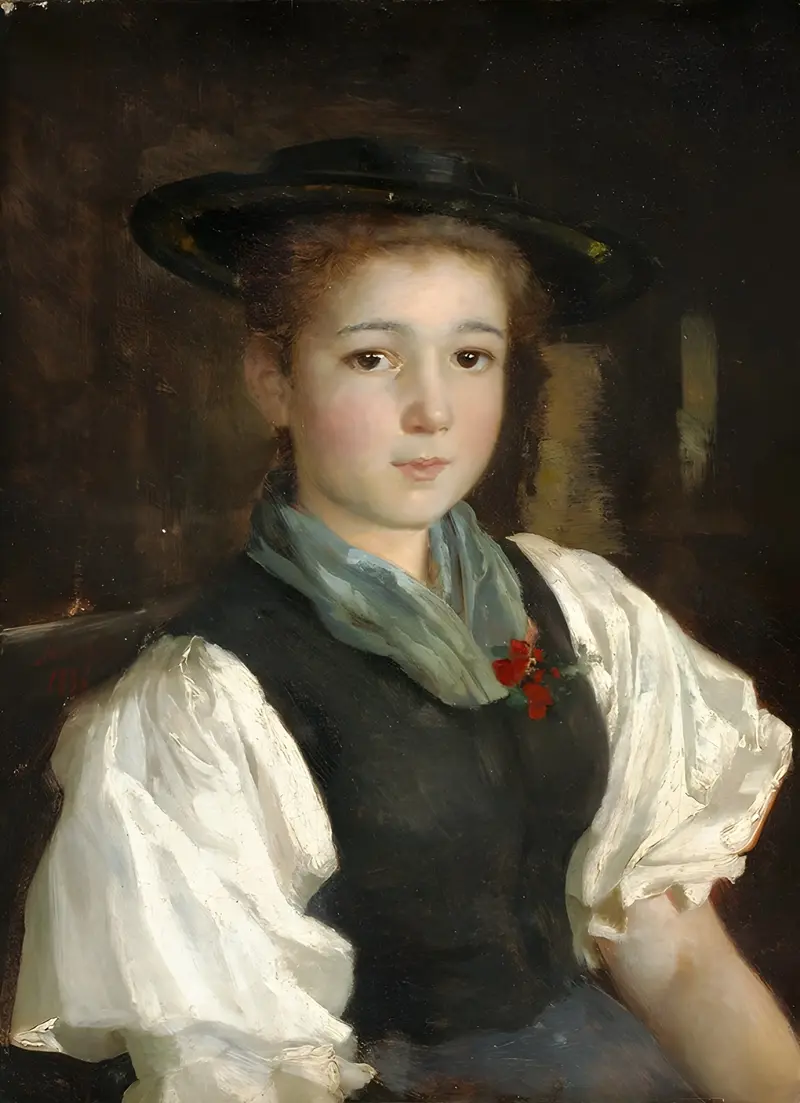
Bauernmädchen (Farm Girl)
Albert Anker
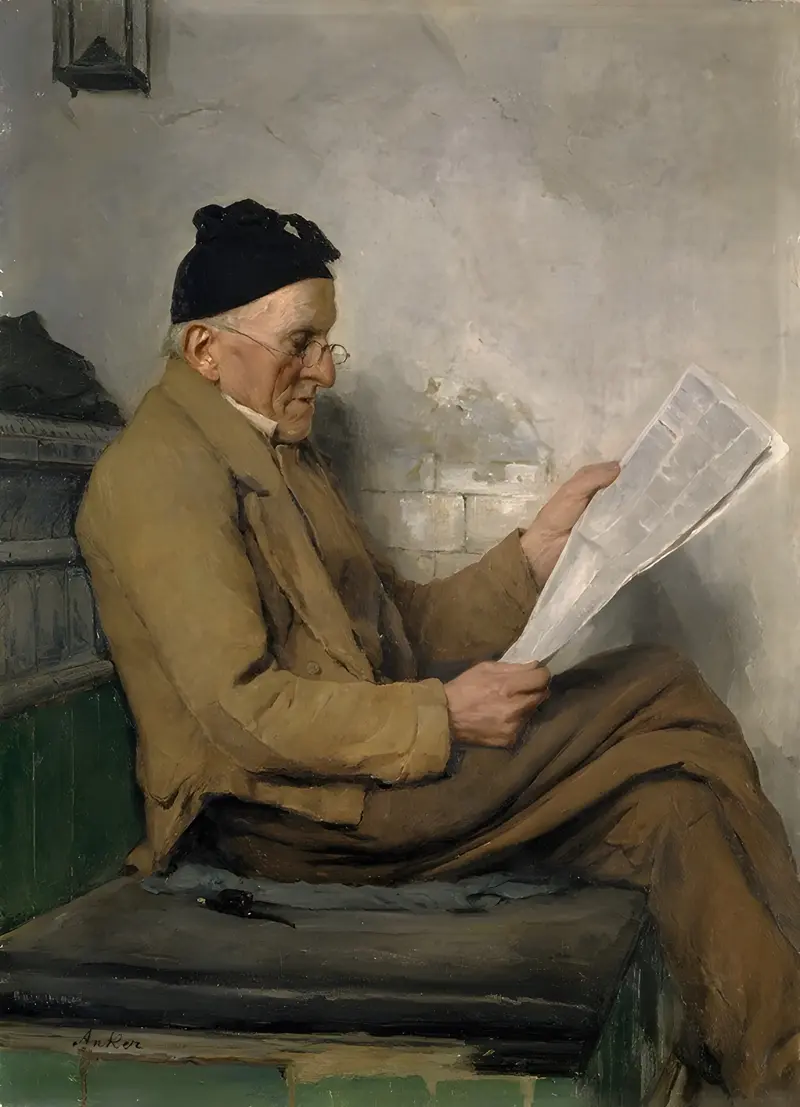
Farmer Reading on the Stove Bench
Albert Anker
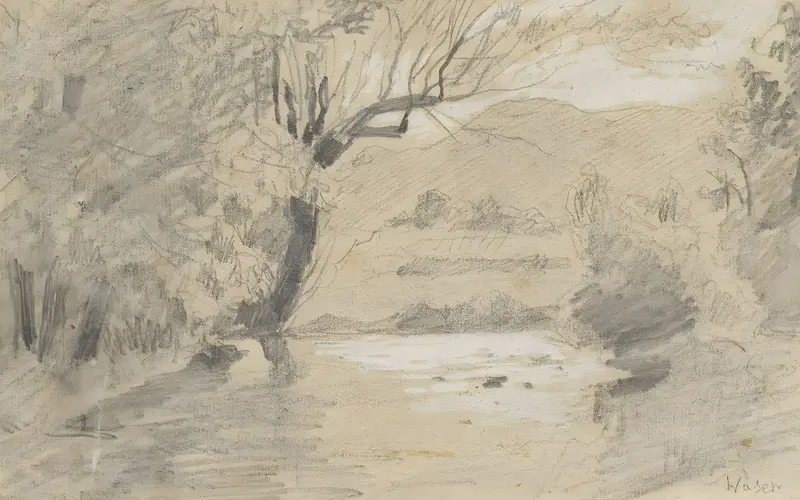
Flusslandschaft in Wasen (Emmental)
Albert Anker
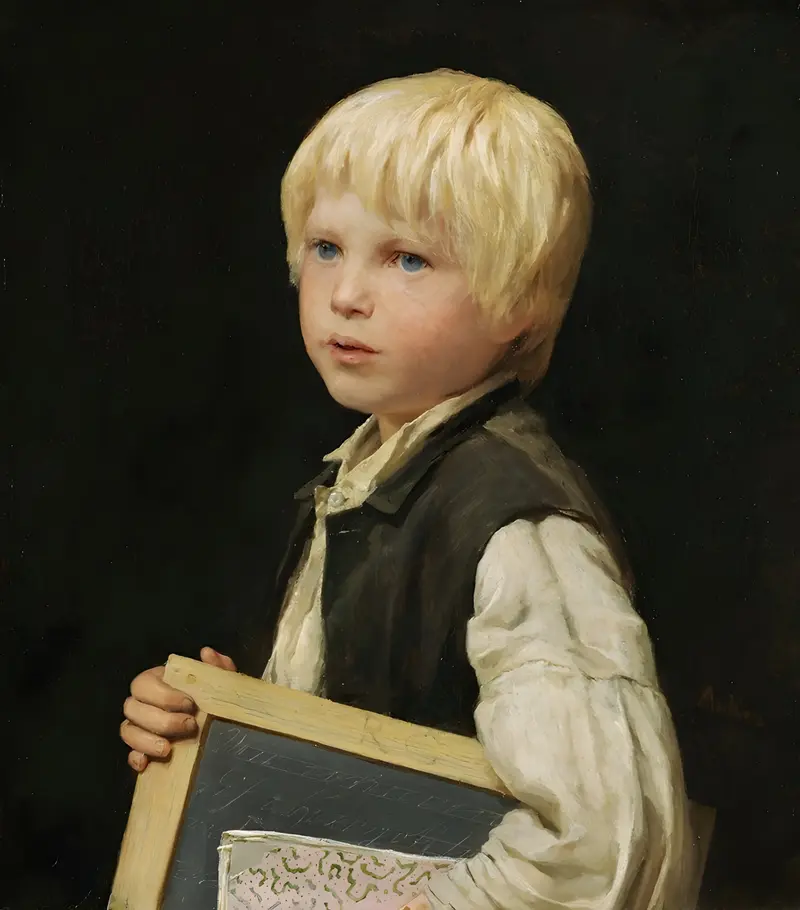
School Boy
Albert Anker
More Genre Scene Art

Banquet of the Officers of the St George Civic Guard
Frans Hals

Rembrandt and Saskia in the Scene of the Prodigal Son
Rembrandt van Rijn

Bal du moulin de la Galette
Pierre-Auguste Renoir

Quadrille at the Moulin Rouge
Henri de Toulouse-Lautrec

A Burial at Ornans
Gustave Courbet

When Will You Marry?
Paul Gauguin