Koe — History & Facts
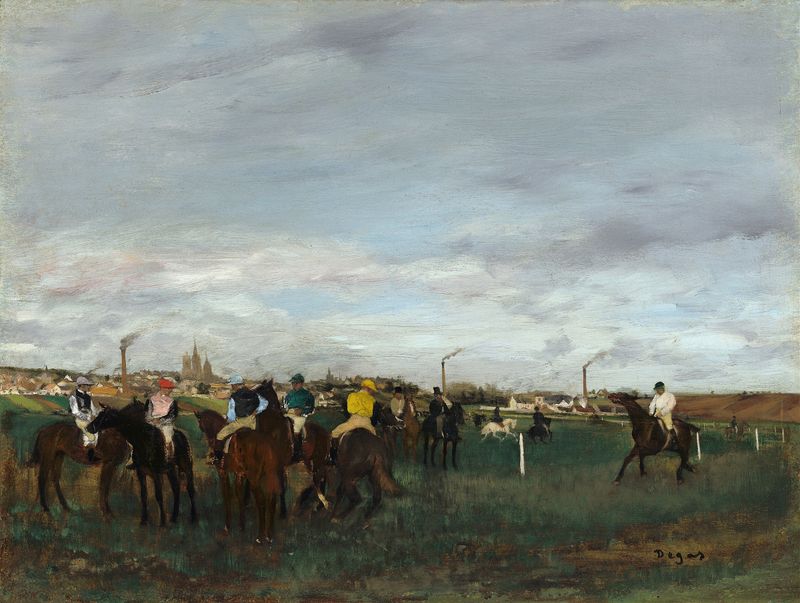
What secret hides in the quiet of the canvas? A serene moment unfolds in Koe, where divinity and nature entwine harmoniously, whispering the profound beauty of existence. Look to the foreground, where a gentle cow grazes lazily. Notice how the soft, earthy tones of its coat contrast with the lush, verdant grass beneath it. The delicate brushwork captures the texture of both animal and landscape, inviting the viewer to linger in this pastoral tranquility.
Warm sunlight bathes the scene, casting subtle shadows that evoke a sense of depth and warmth, while a gentle breeze seems to ripple through the surrounding foliage, adding to the painting's serene atmosphere. The tension between the creature's placidness and the vibrant life around it speaks to the divine simplicity that Berchem masterfully conveys. Each detail, from the glistening highlights on the cow's fur to the dappled light filtering through the trees, suggests a deeper connection to nature and spirituality. This tableau becomes a meditation on life’s rhythms, inviting viewers to consider the sacredness in everyday moments. Created in 1644, this work emerged during a time of flourishing Dutch art, as Berchem was establishing his reputation in a pivotal artistic milieu.
Living in Haarlem, amidst the Baroque movement, he drew inspiration from the countryside that surrounded him. The emphasis on idyllic rural scenes and the reverence for nature reflected both a personal and collective quest for beauty and meaning in the turbulent socio-political landscape of 17th-century Europe.
More Artworks by Nicolaes Pietersz Berchem
Browse all →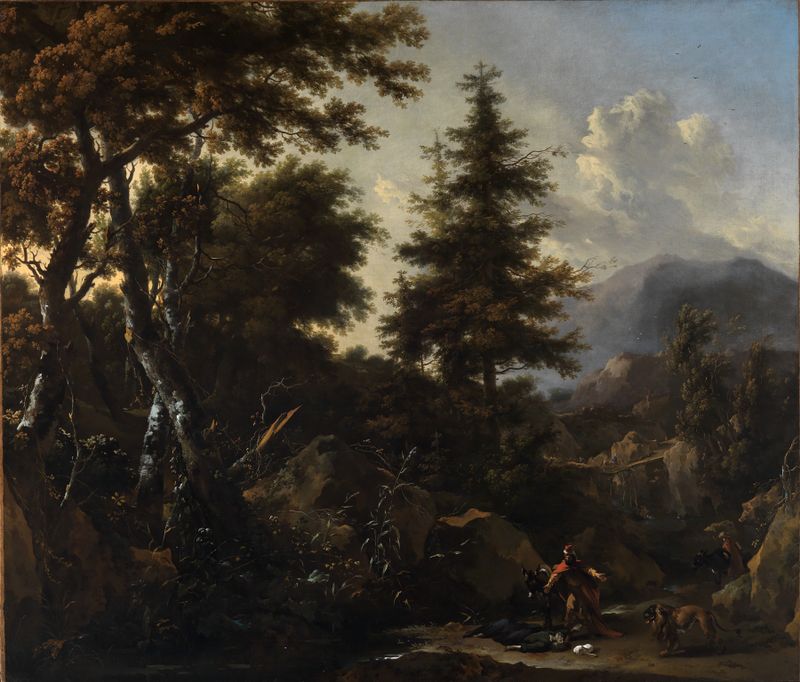
Schlucht im Bergwald mit alttestamentlicher Staffage
Nicolaes Pietersz Berchem
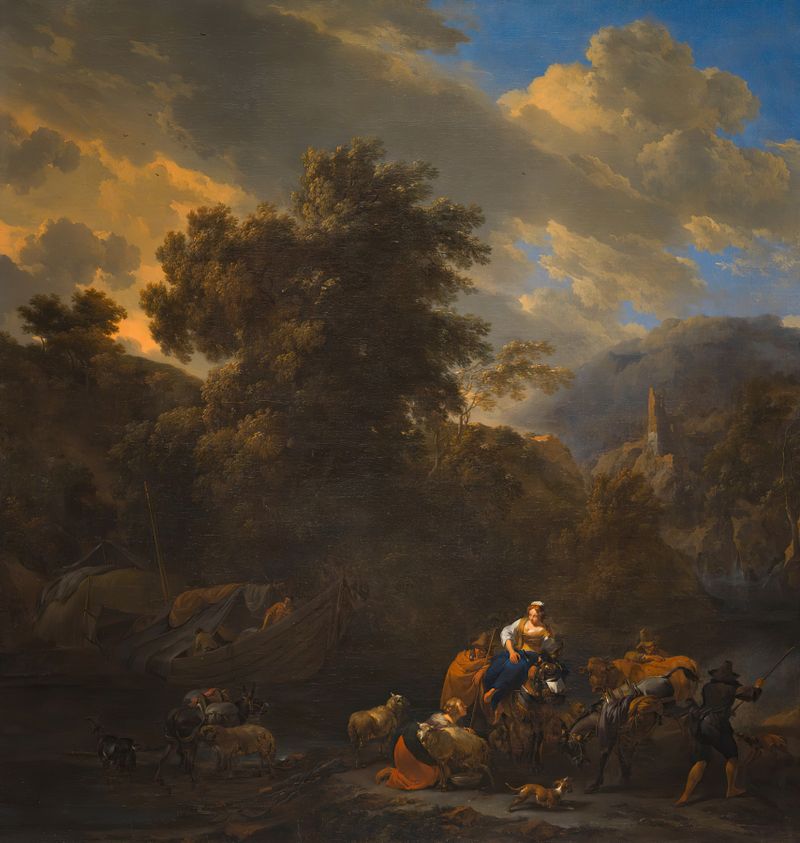
Italianate Landscape with Figures and Pack Animals on the Banks of a River
Nicolaes Pietersz Berchem
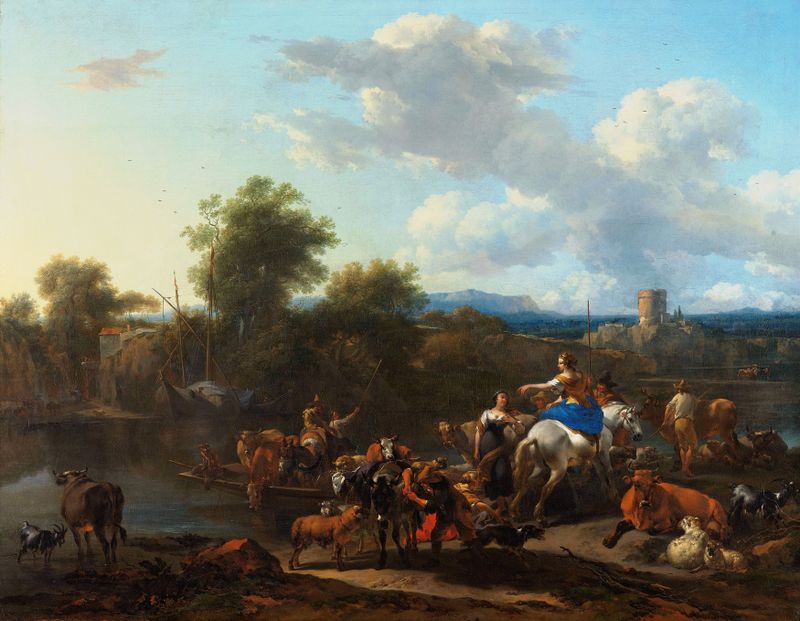
The Cattle Ferry
Nicolaes Pietersz Berchem
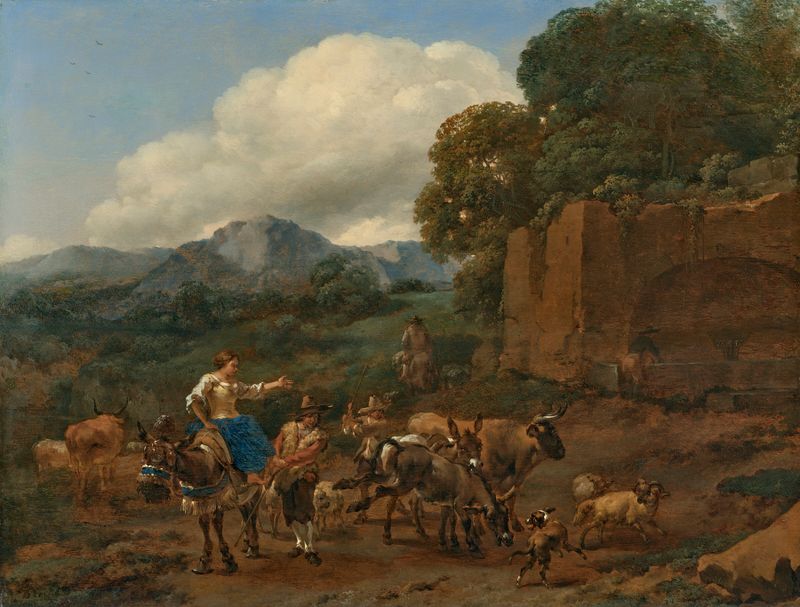
An Italianate landscape with a shepherdess on a mule and a shepherd, herding cattle, sheep, donkeys and dogs on a mountain track next to ruins
Nicolaes Pietersz Berchem
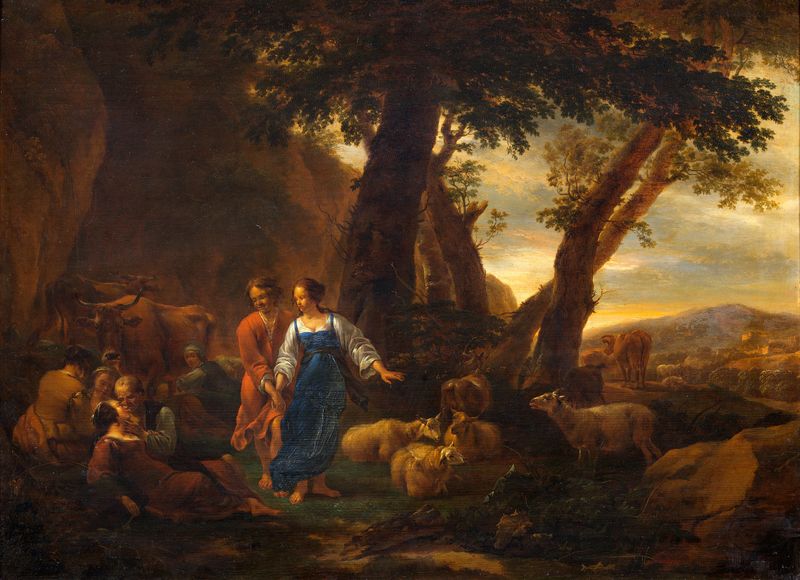
Landscape with Peasants and Cattle
Nicolaes Pietersz Berchem
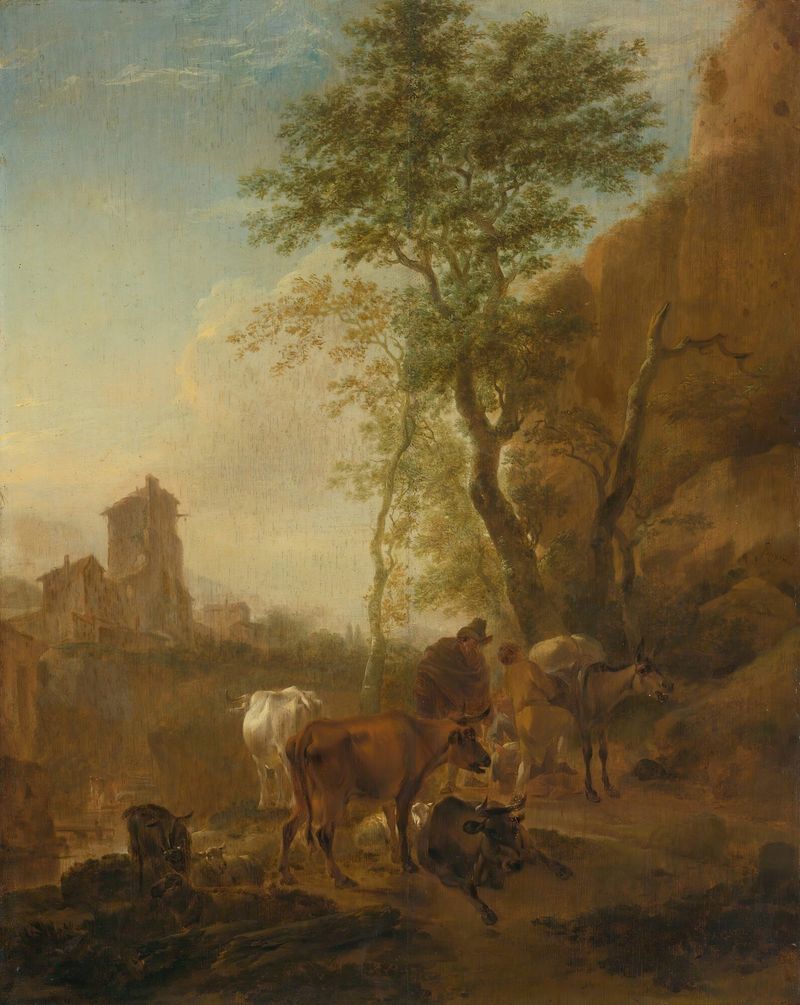
Italianate Landscape With Cows
Nicolaes Pietersz Berchem
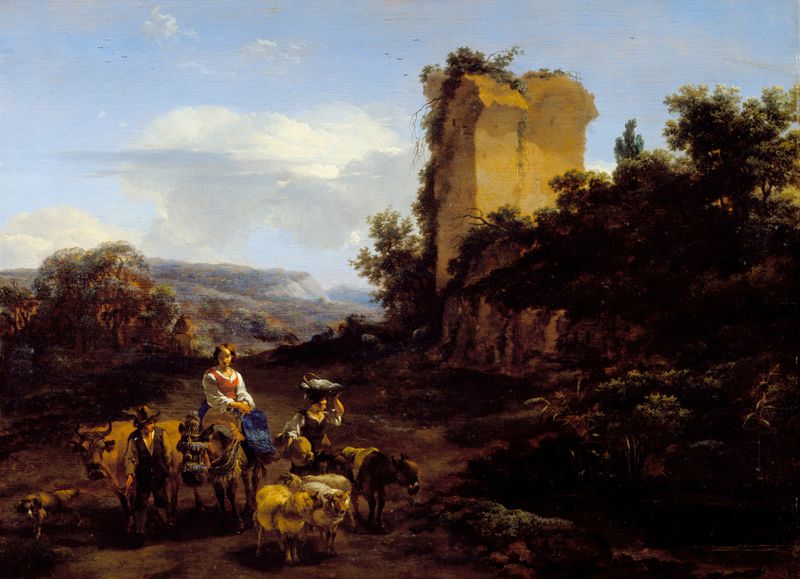
Landscape with Ruins and Travelers
Nicolaes Pietersz Berchem
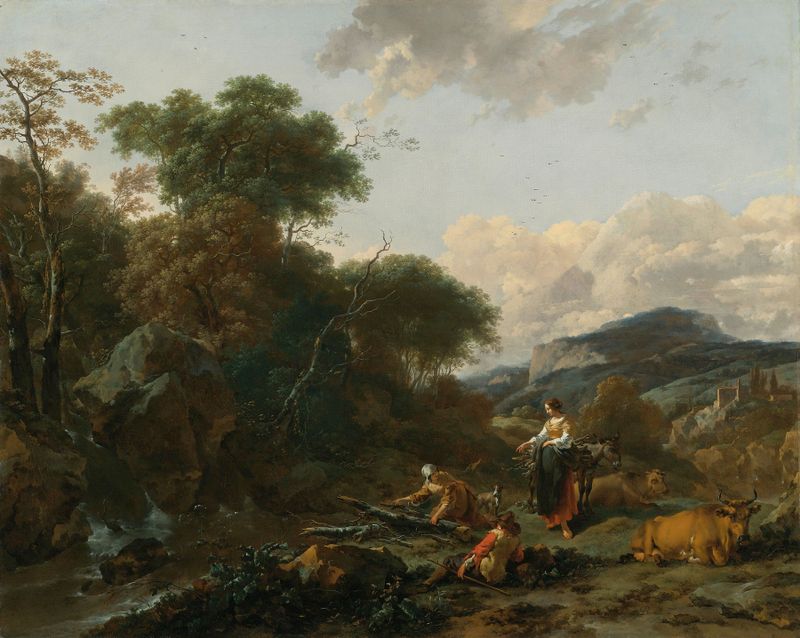
A Landscape With Figures
Nicolaes Pietersz Berchem
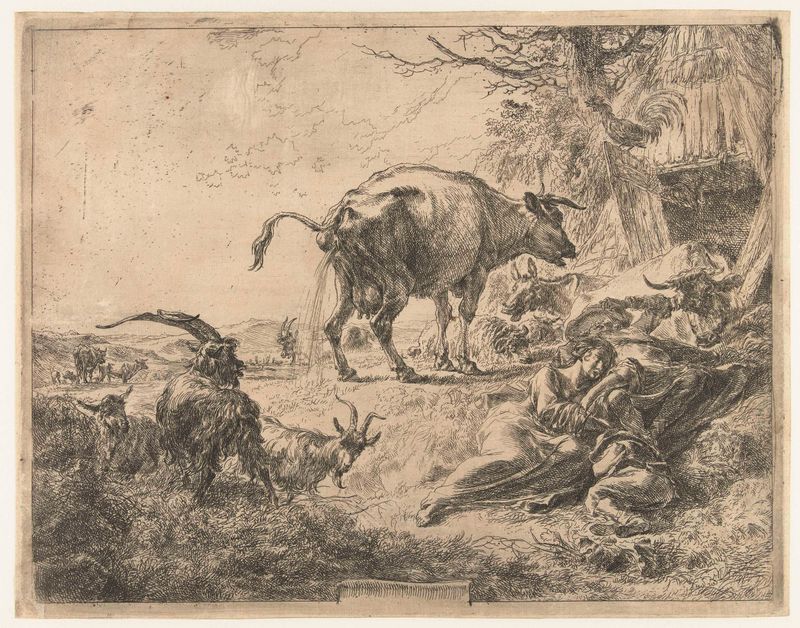
Slapende herdersfamilie en rustend vee
Nicolaes Pietersz Berchem
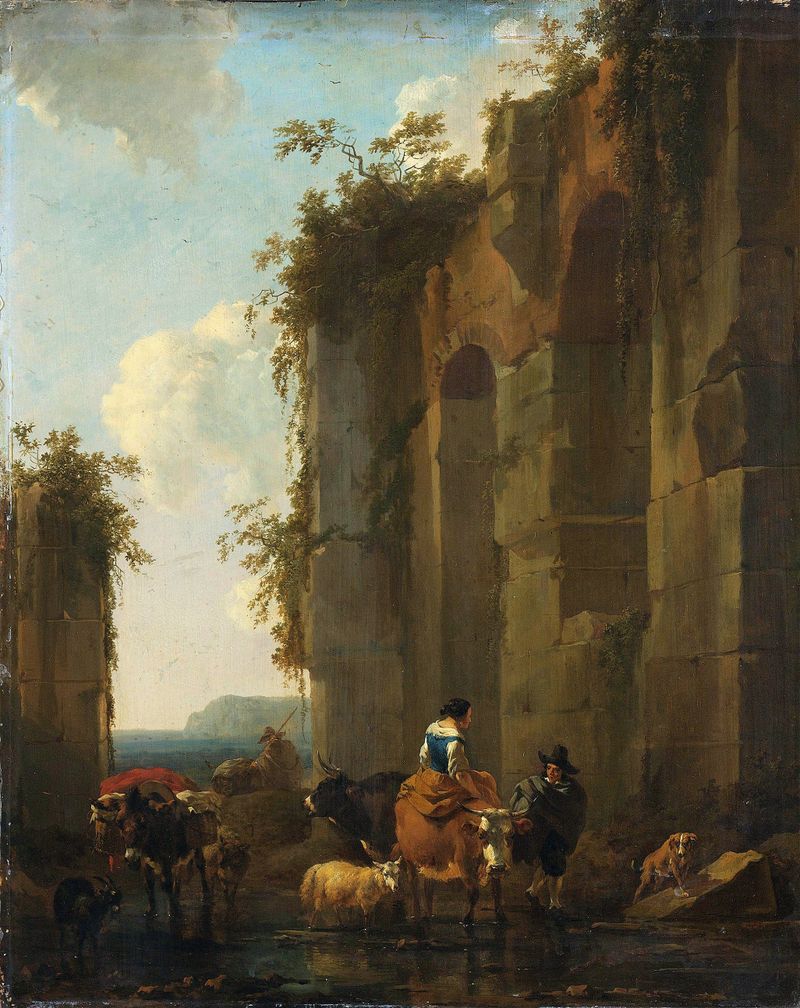
Ruins in Italy
Nicolaes Pietersz Berchem