Koppen van een geit en een koe — History & Facts
In the quietude of Koppen van een geit en een koe, the viewer is invited to ponder the fleeting moments captured within the canvased frame, where memory and nature intertwine in a delicate embrace. Focus first on the stark contrast between the goat and the cow, their heads turned slightly towards each other, each animal rendered with meticulous detail. Notice how the brushwork conveys the texture of their fur and the subtle play of light highlights the glint of their eyes, stirring life into their stillness. The background, softly blurred, creates a dreamy atmosphere that nudges the viewer to linger, while earthy tones dominate, grounding the composition in natural beauty. Within the simplicity of this pastoral scene lies a wealth of significance.
The juxtaposition of the goat and cow may symbolize the duality of nature—wildness and domestication, freedom and dependence. The tender gaze shared between them hints at a moment of connection that transcends the ordinary, evoking a sense of nostalgia for the simplicity of rural life that resonates deeply within us. Each detail—the slight tilt of an ear, the soft curve of a jaw—invites reflection on the bonds formed in the quiet spaces of existence. Painted in the 17th century, Berchem created this work during a transformative period in Dutch art, when genre scenes began to flourish alongside landscapes.
Living in Amsterdam, he was influenced by the burgeoning interest in everyday life, as well as by the pastoral themes prevalent in his contemporaries’ works. This piece exemplifies the gentle, yet profound, storytelling emerging within the Dutch Golden Age, where each canvas becomes a site of memory and reverie.
More Artworks by Nicolaes Pietersz Berchem
Browse all →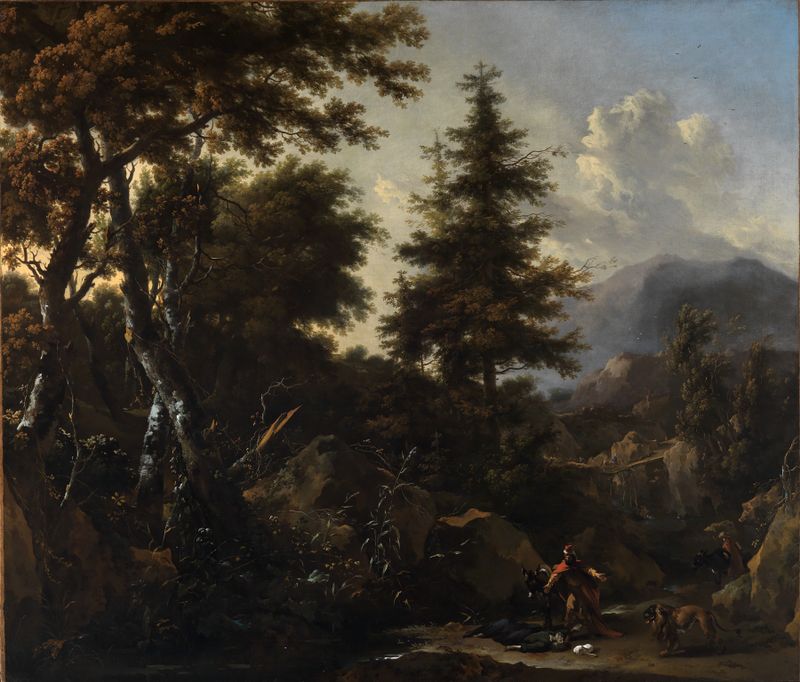
Schlucht im Bergwald mit alttestamentlicher Staffage
Nicolaes Pietersz Berchem
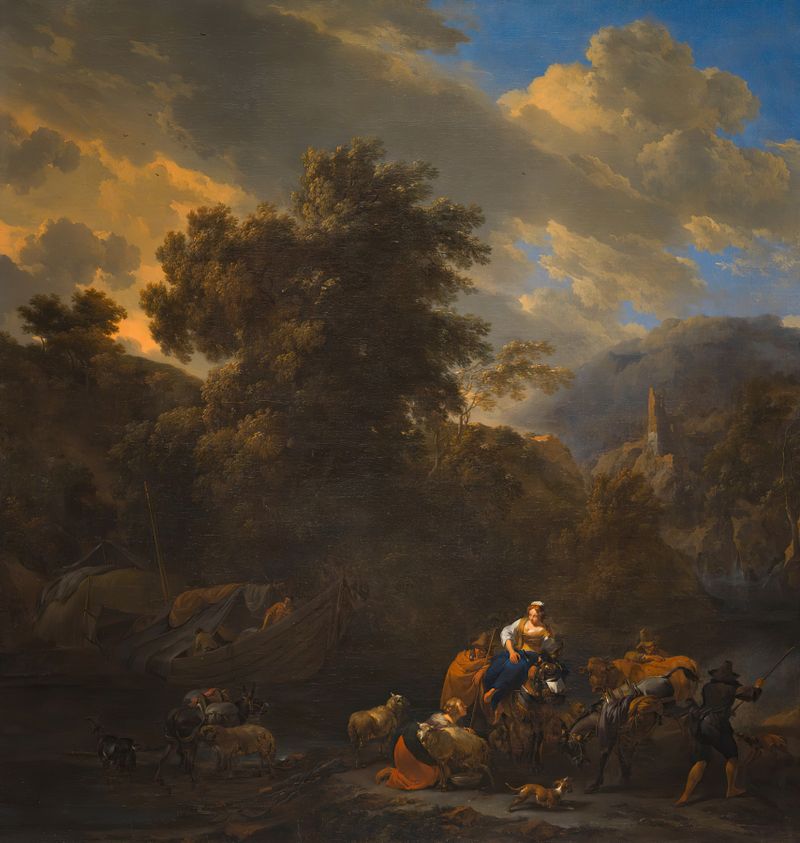
Italianate Landscape with Figures and Pack Animals on the Banks of a River
Nicolaes Pietersz Berchem
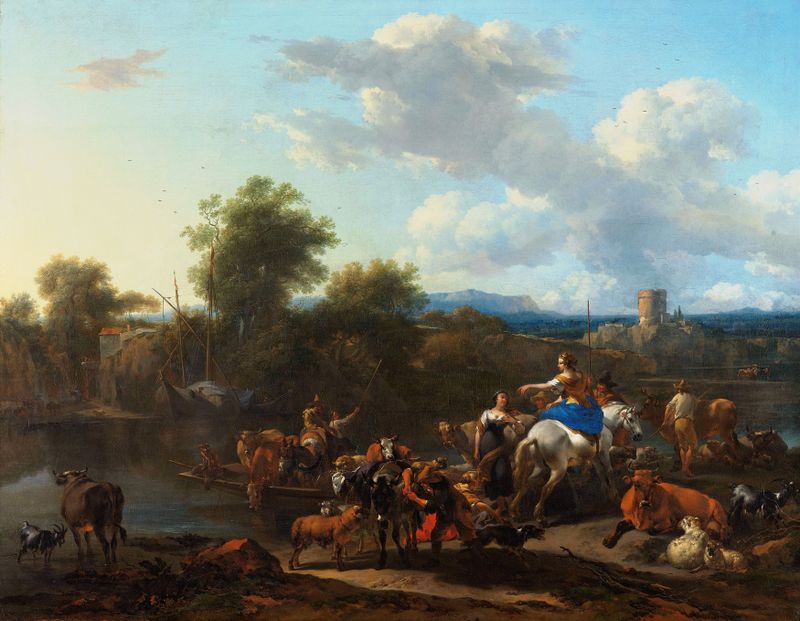
The Cattle Ferry
Nicolaes Pietersz Berchem
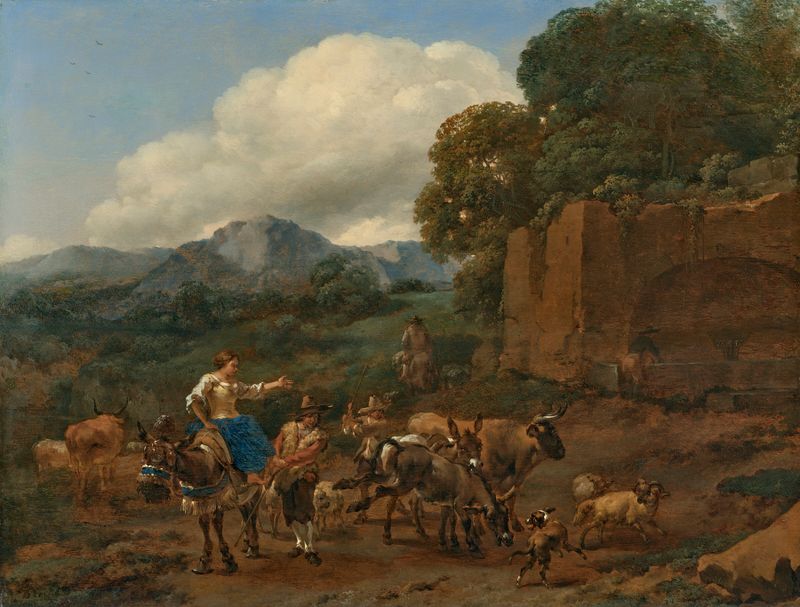
An Italianate landscape with a shepherdess on a mule and a shepherd, herding cattle, sheep, donkeys and dogs on a mountain track next to ruins
Nicolaes Pietersz Berchem
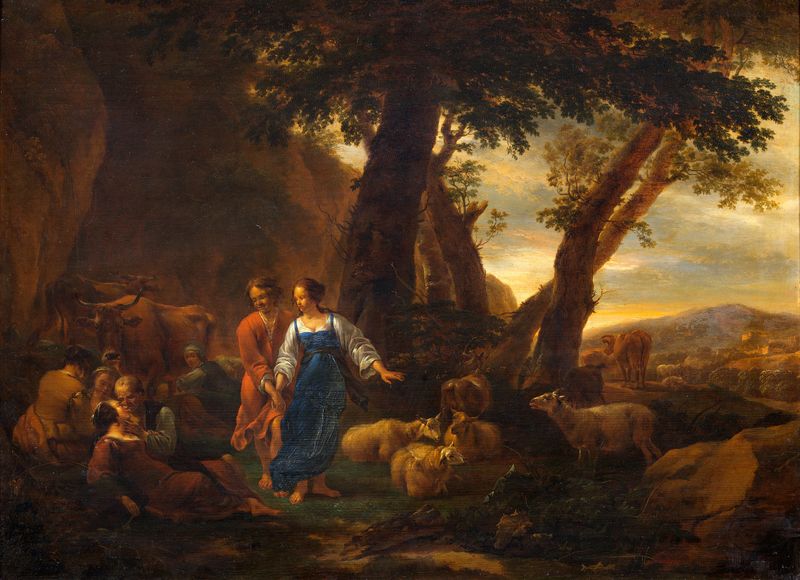
Landscape with Peasants and Cattle
Nicolaes Pietersz Berchem
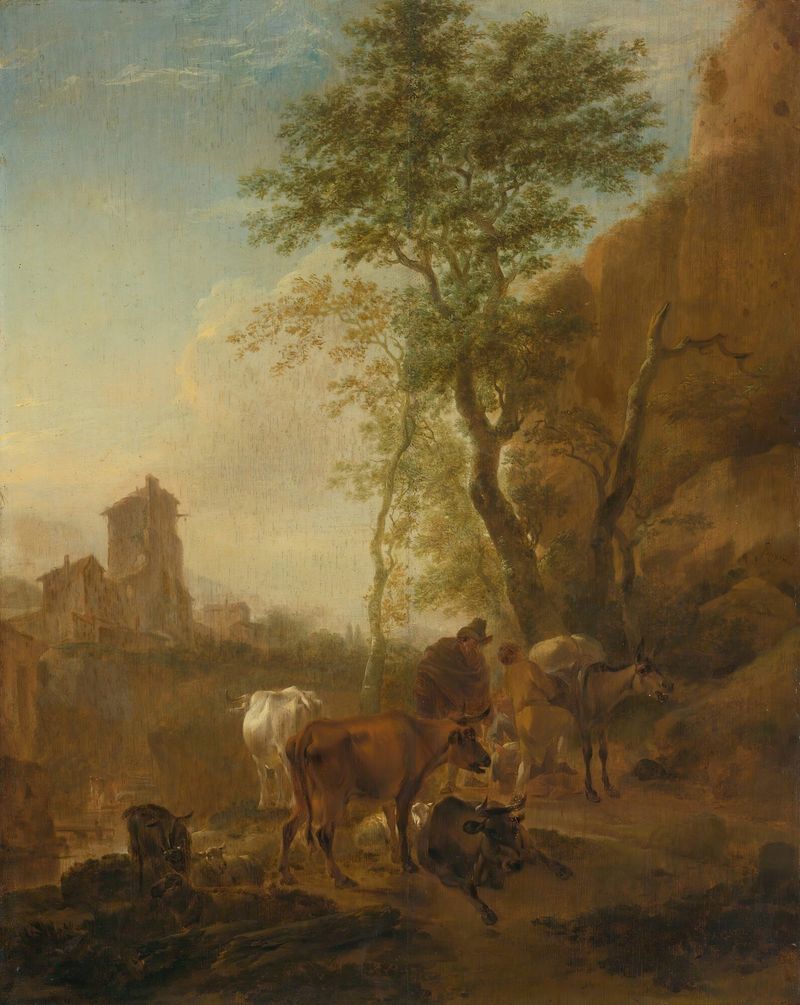
Italianate Landscape With Cows
Nicolaes Pietersz Berchem
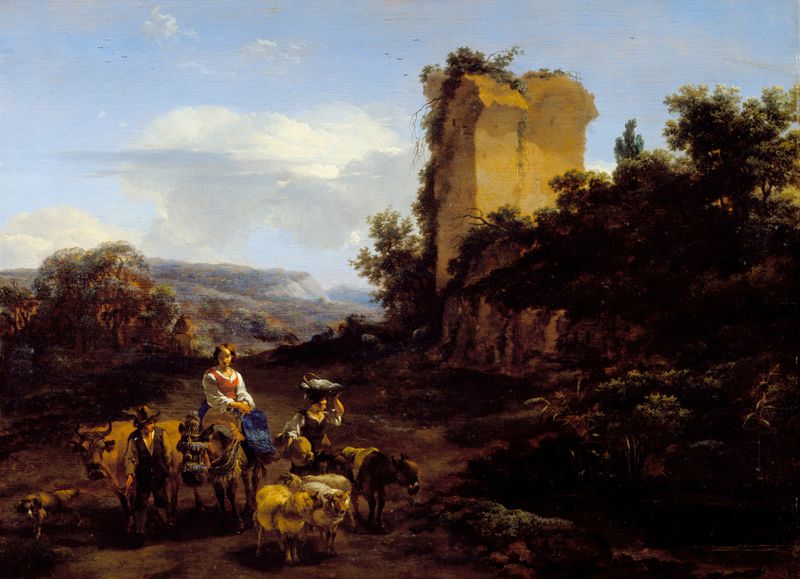
Landscape with Ruins and Travelers
Nicolaes Pietersz Berchem
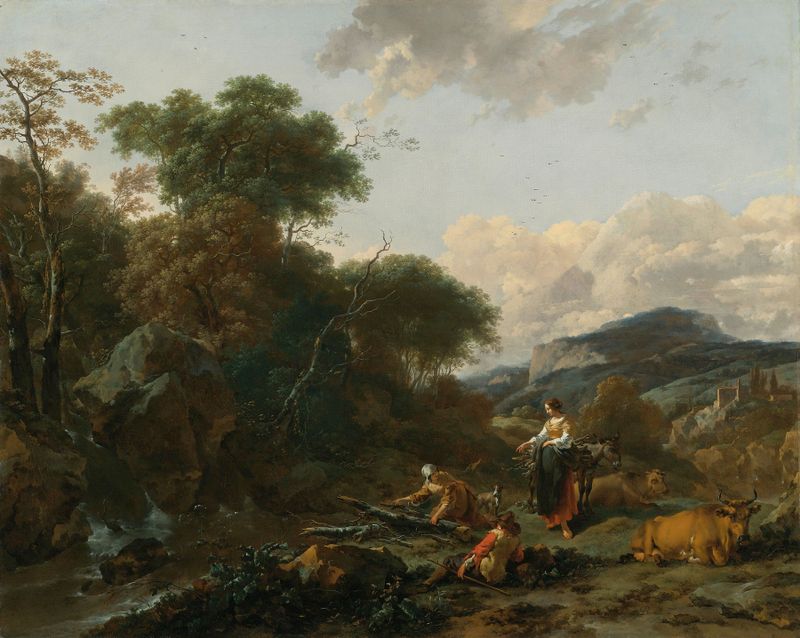
A Landscape With Figures
Nicolaes Pietersz Berchem
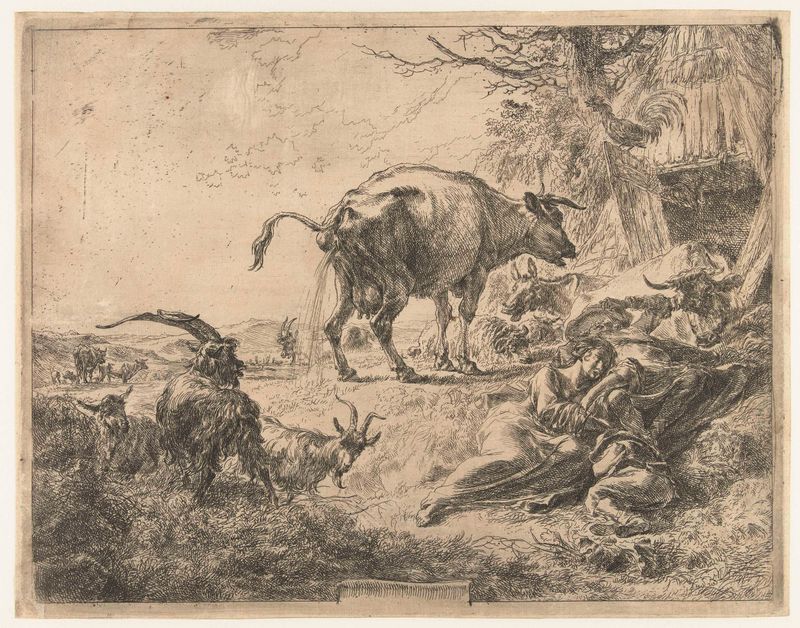
Slapende herdersfamilie en rustend vee
Nicolaes Pietersz Berchem
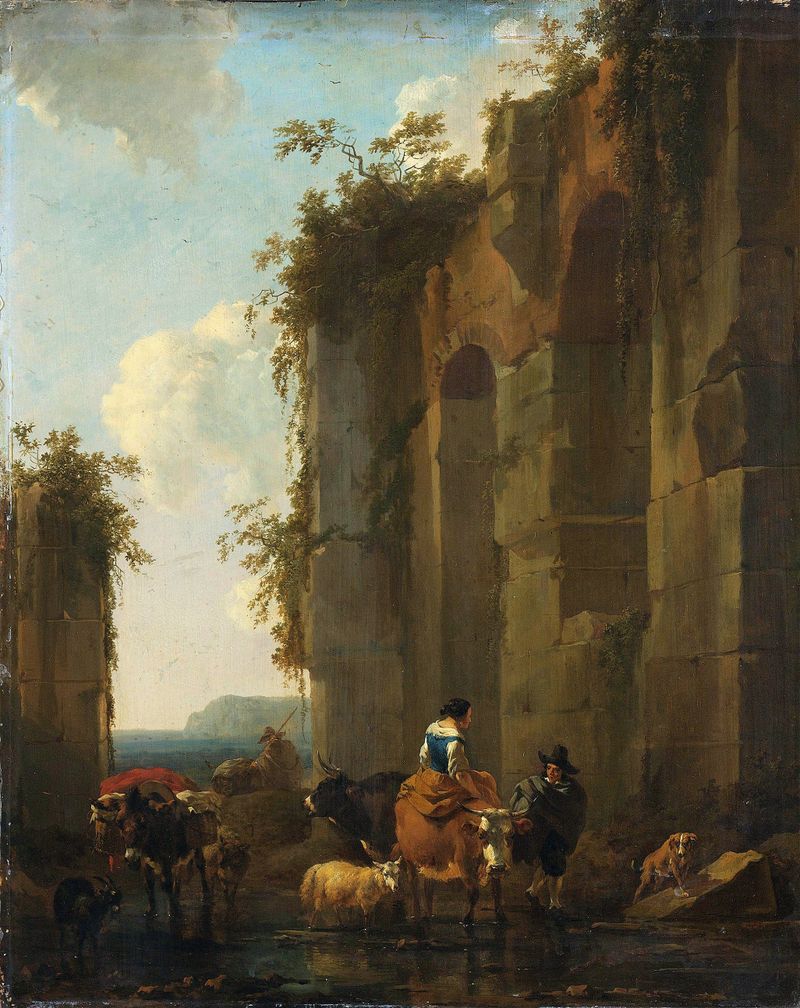
Ruins in Italy
Nicolaes Pietersz Berchem