Krajina — History & Facts
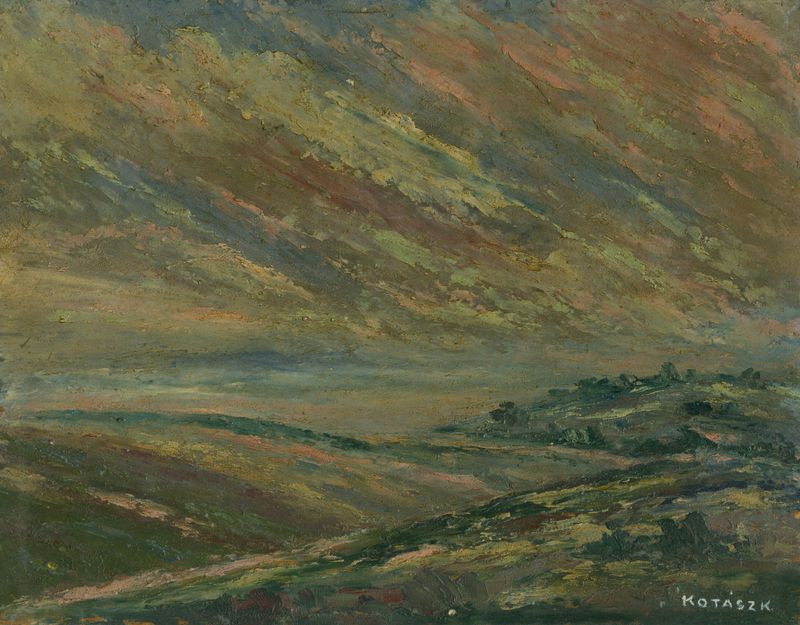
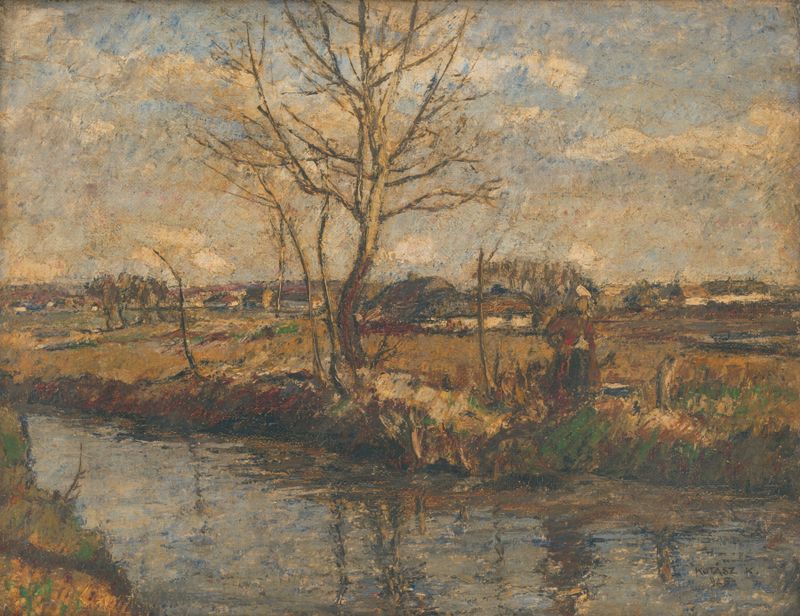
Can paint confess what words never could? In Krajina, Károly Kotász channels a visceral ecstasy that transcends the boundaries of language and speaks directly to the soul. Look to the expansive horizon where layers of muted greens and golds unfurl beneath a cloud-streaked sky. The gentle contours of the landscape draw your eye inward, inviting exploration of the interplay between the serene foreground and the dynamic backdrop. Notice how the brushstrokes create a rhythmic cadence, echoing the undulating hills, while the soft, diffused light bathes the scene in tranquility, hinting at an emotional swell just beneath the surface. Beneath its tranquil exterior lies a profound tension.
The vibrant palette juxtaposes the calmness of nature with a sense of longing, perhaps a desire for connection or escape. Each brushstroke seems to pulse with life, suggesting that the artist himself stood amidst this landscape, feeling its intricate emotions. The ethereal quality of the sky conveys fleeting moments of joy and melancholy in equal measure, inviting viewers to linger in their own reflections. Kotász painted Krajina in 1930, during a time of personal and artistic transition as Europe grappled with the upheaval of the post-World War I landscape.
Living in Hungary, he sought to express a deep connection to his homeland while navigating the complexities of modernism. This work emerged as a testament to both his inner journey and the collective consciousness of a society yearning for stability and beauty amidst chaos.