Scene in a Park — History & Facts
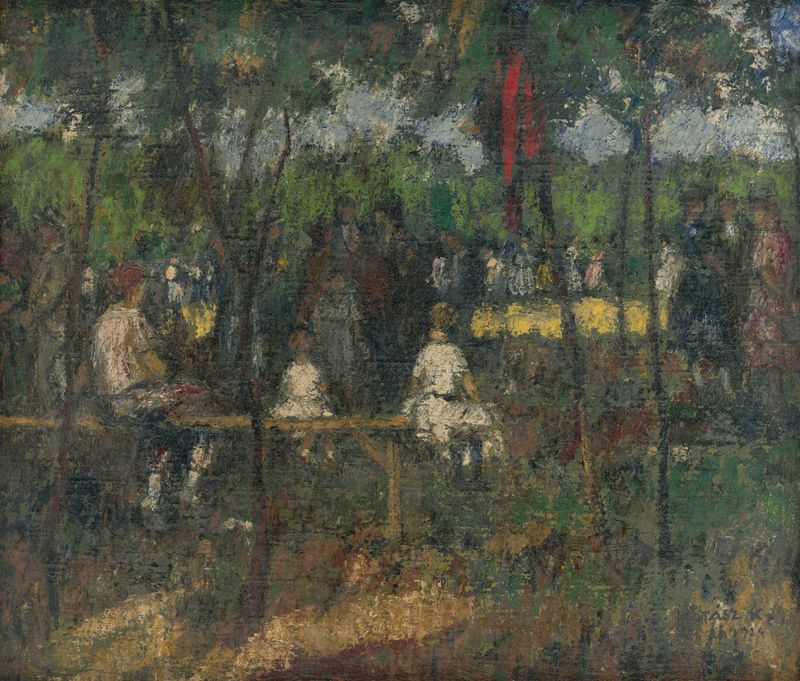
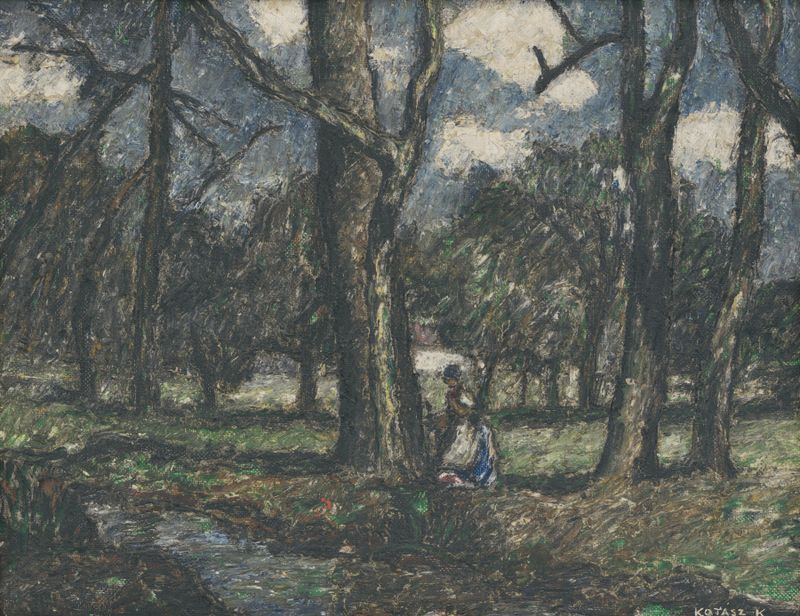
When did color learn to lie? In the tangled interplay of hues, the vibrant chaos presents questions that linger, inviting deeper reflection. Look to the center of the canvas, where figures merge into a flurry of movement — a collage of lively gestures and bold colors. The artist employs dappled strokes to create an atmosphere of joyous turmoil, as rich greens and sunny yellows clash with deep browns and shadowy blues. Each brushstroke dances with purpose, capturing the essence of a park bustling with life.
Notice how light filters through the foliage, dappling the ground and illuminating the faces of those immersed in their own worlds of laughter and leisure. Yet beneath this lively surface, a tension simmers, hinting at undercurrents of disarray. The figures, though seemingly carefree, exhibit an unsettling disconnect; their gazes are averted, and body language suggests isolation amidst the crowd. This dichotomy reflects the chaos inherent in human interaction — a celebration of life that simultaneously acknowledges the solitude that can exist in shared spaces.
The juxtaposition of vibrant colors pushes the viewer to question the authenticity of moments captured in time. Károly Kotász created this work during the late 1920s, a period marked by the aftermath of World War I and the rise of modernism in art. Living in Hungary, the artist was influenced by the shifting currents of society, grappling with the complexities of identity and community as Europe faced profound changes. The painting encapsulates this whirlwind of emotion, revealing the artist's keen observation of human nature amid a vibrant yet chaotic world.