Plain with a Working Farmer — History & Facts
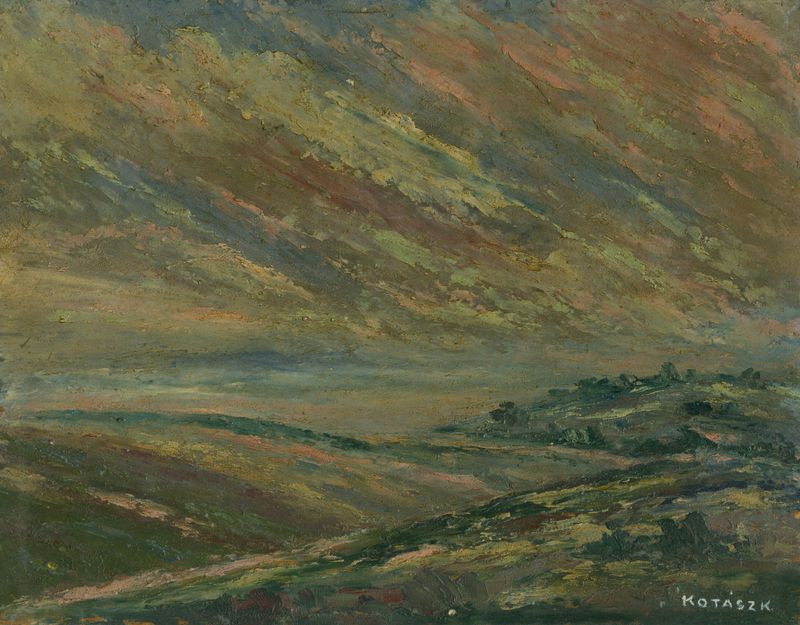
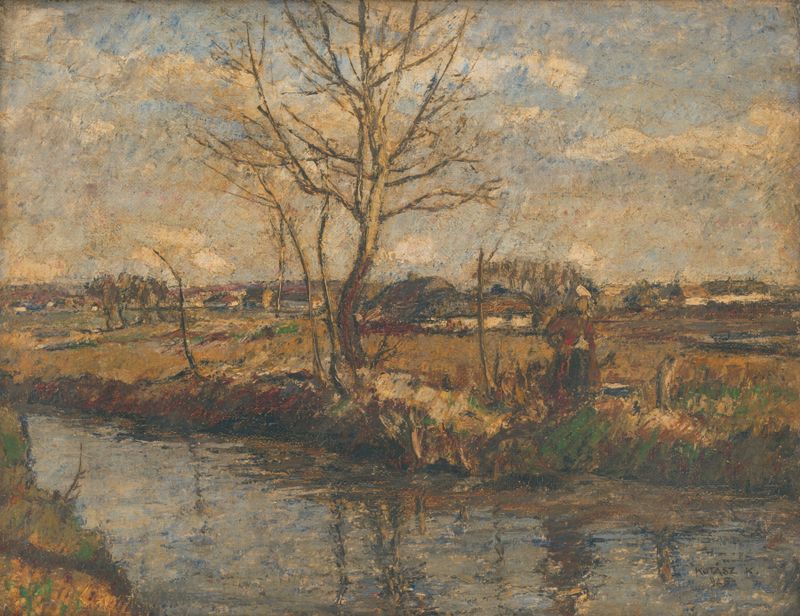
What secret hides in the quiet of the canvas? The stillness of a vast plain beckons, revealing more than mere landscape; it whispers of unfulfilled longing and the silent labor of a farmer. Look to the bottom left, where the figure of the farmer stands rooted in the earth, dark clothing contrasting against the richly textured greens and browns of the field. Notice how the brushwork captures the flow of the grass, each stroke alive with movement, inviting the eye to roam across the horizon. The play of light evokes the warmth of a fading day, illuminating the scene with a soft, golden hue that wraps around the farmer, merging him with the land he cultivates. Yet, beneath this tranquil exterior lies a deeper tension.
The expanse of the plain suggests both promise and isolation, as the farmer’s solitary presence speaks of a desire for fulfillment amidst the simplicity of life. The open sky looms overhead, hinting at dreams that stretch far beyond the immediate horizon, while the farmer’s focused gaze embodies a struggle between ambition and the harsh reality of agricultural existence, as if he is reaching for something just out of grasp. In this undated piece, Károly Kotász, a pivotal figure in Hungarian realism, captured the essence of rural life during a period of transformation in the late 19th to early 20th centuries. As modernity encroached upon traditional farming practices, the artist’s work reflected the profound connection between man and nature, underscoring the often-overlooked narratives of desire and labor inherent in pastoral life.