La Carcasse ou Le Stregozzo — History & Facts
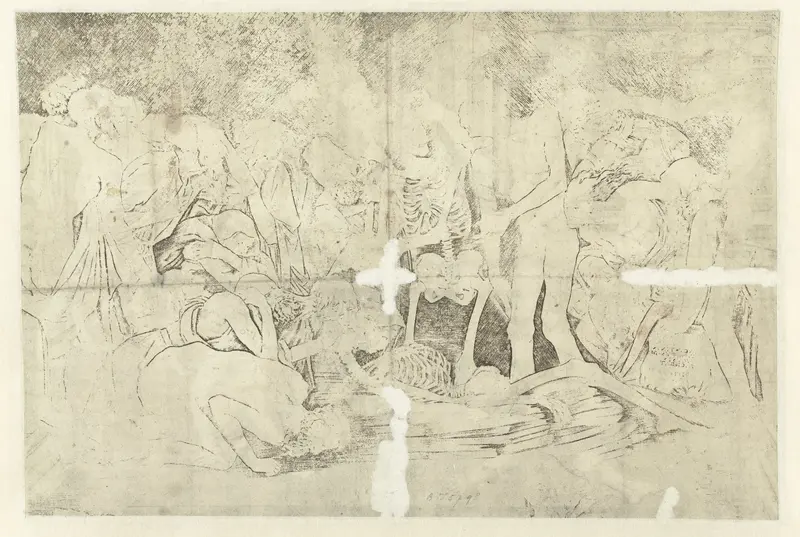
A riot of bodies, bones, and wild invention bursts from La Carcasse ou Le Stregozzo, drawing the viewer into a world where the border between the living and the dead is a mere suggestion. The eye is immediately caught by the monstrous skeletal beast at the center, its spine and ribs transformed into a grotesque chariot for a witch-like figure who clutches a basket, her hair streaming as if caught in a supernatural gale. Around her, muscular nudes wrestle with animal-headed creatures and impossible hybrids, their gestures exaggerated, their faces twisted in frenzy or glee.
Every inch of the print teems with motion: birds scatter in the upper left, while the ground below is littered with skulls and tangled flora, heightening the sense of chaos. The artist’s sharp, swirling lines and deep shadows conjure a mood of delirious revel, halfway between nightmare and carnival. This print belongs to a tradition of fantastical and grotesque imagery that flourished in the Renaissance, when artists like Agostino Veneziano delighted in pushing the boundaries of myth, folklore, and the human form. Such works, often known as "stregozzi" or witchcraft scenes, were prized by collectors for their virtuoso technique and their ability to shock, amuse, or provoke learned debate.
The world that produced this image was fascinated by the occult, the monstrous, and the power of imagination unchained—subjects that allowed artists to display both technical skill and a kind of visual wit. Now held in the National Museum of Western Art in Tokyo, this print survives as a testament to an era when artists reveled in the strange, and viewers delighted in deciphering the riddles set before their eyes. Let your gaze linger, and see what other marvels emerge from the shadows.