
La Côte Saint André — History & Facts
What secret hides in the quiet of the canvas? The answer lies within the delicate interplay of color and light, whispering stories of tranquility and reflection. Look to the left at the vibrant greens and soft yellows of the landscape, where the rolling hills meet the horizon. The warm hues blend seamlessly into the cool blue of the sky, creating a serene atmosphere that invites the viewer into this pastoral tableau. Focus on the subtle brushwork that captures the gentle movement of the grass and the clouds overhead, hinting at a breeze that never quite reaches the stillness of the water below.
Each stroke matters, bringing depth and life to the tranquil scene. Beneath the surface of this seemingly simple landscape lies a tension between nature's calm and the hint of an impending change. The juxtaposition of the lush land against the vastness of the sky suggests a world suspended in time, while the looming clouds may portend a shift in the weather, a metaphor for life’s unpredictability. The colors, both warm and cool, dance together, embodying the duality of peace and turmoil that often coexist in our daily experience. In 1880, while painting La Côte Saint André, Jongkind was immersed in his own artistic evolution, reflecting on the Impressionist movement that was gaining momentum.
Residing in France, he was influenced by his contemporaries, seeking to capture the beauty of nature through a more personal lens. This period marked a shift in his style, as he experimented with color and light, striving to convey emotion rather than mere representation.
More Artworks by Johan Barthold Jongkind
Browse all →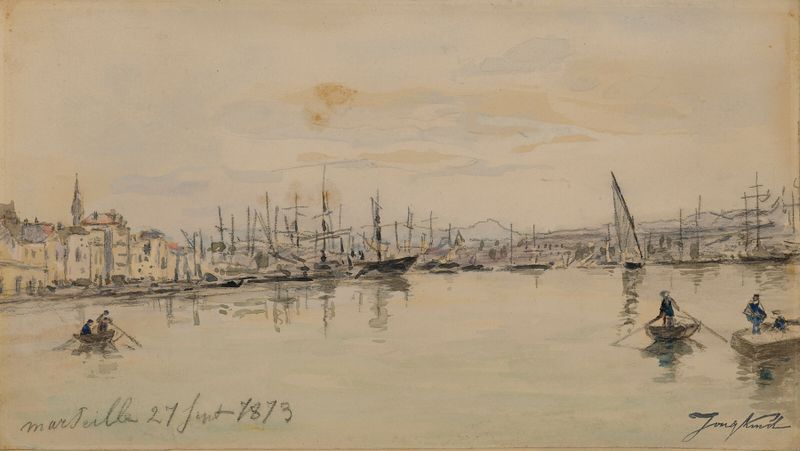
Le Port de Marseille
Johan Barthold Jongkind

Canal Saint-Martin
Johan Barthold Jongkind

Countryside near Brezins, between Grenoble and Vienne
Johan Barthold Jongkind

Notre-Dame vue du quai de la Tournelle
Johan Barthold Jongkind

Environs de Grenoble
Johan Barthold Jongkind

Clair de lune à Overschie (environs de Rotterdam)
Johan Barthold Jongkind

Port de Honfleur
Johan Barthold Jongkind
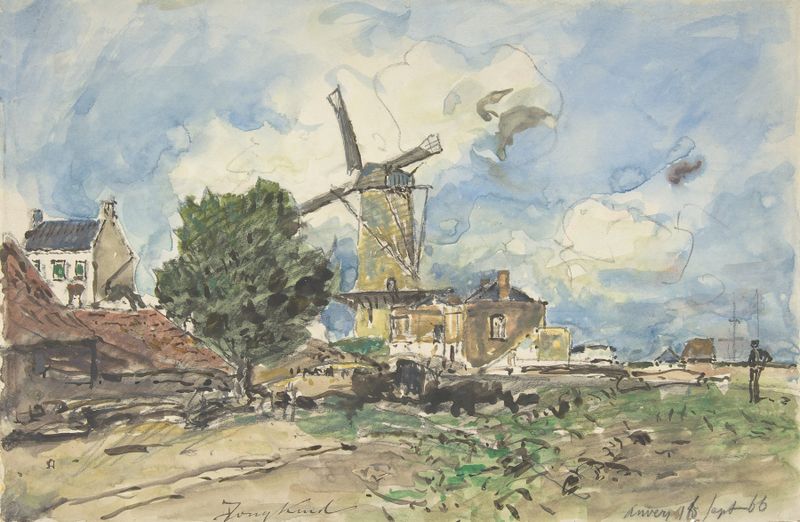
Wind Mill at Antwerp
Johan Barthold Jongkind

Le Havre
Johan Barthold Jongkind

The Church of Overschie
Johan Barthold Jongkind





