
La Danse italienne — History & Facts
What secret hides in the quiet of the canvas? In La Danse italienne, a serene celebration unfolds, inviting viewers to ponder the layers beneath its surface. Focus first on the dancers, elegantly poised in mid-motion, their flowing garments caught in a gentle breeze. Notice how the soft, earthy palette of greens and browns envelops them, providing a calming backdrop that enhances their joyous movement. The delicate interplay of light and shadow captures not just the figures but also the very essence of their spirited dance.
Each brushstroke breathes life into the figures, making them feel both fleeting and eternal. In this moment, a rich tapestry of contrast emerges. The laughter of the dancers is hinted at through their lively postures, yet there is a palpable stillness that pervades the scene. The soft focus of the background allows the viewer to feel a sense of nostalgia—an echo of past revelries that resonate with an unspoken longing.
The composition itself suggests that while joy is present, it exists in a delicate balance with the quietude of the surrounding landscape, hinting at the transience of happiness. Corot painted this piece between 1865 and 1870, during a significant period of transition in the art world. At this time, he resided in France, grappling with the rise of Impressionism while remaining steadfastly rooted in the classical tradition. His exploration of light and color marked a pivotal moment in his career, reflecting not just his personal evolution as an artist, but also the broader shifts occurring in the artistic community around him.
More Artworks by Jean-Baptiste-Camille Corot
Browse all →
View of Genoa
Jean-Baptiste-Camille Corot
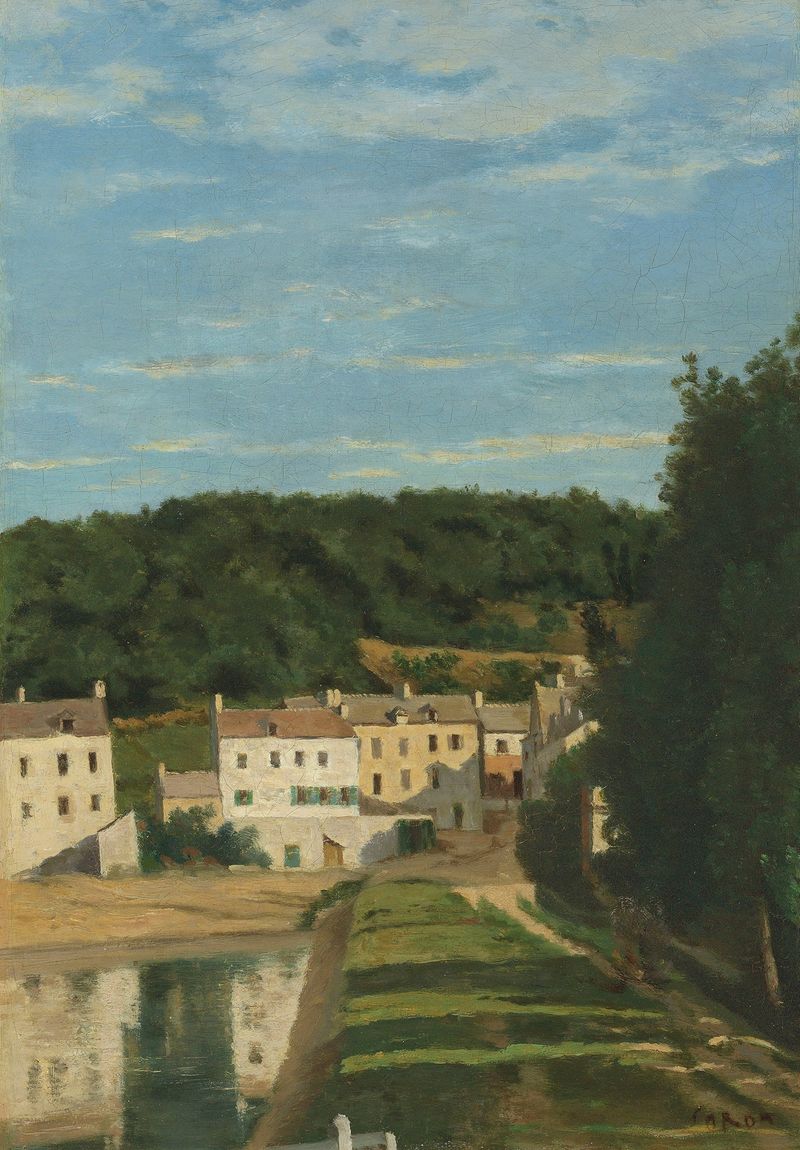
Les Maisons Cabassud À Ville D’avray
Jean-Baptiste-Camille Corot

La solitude. Souvenir de Vigen (Limousin)
Jean-Baptiste-Camille Corot
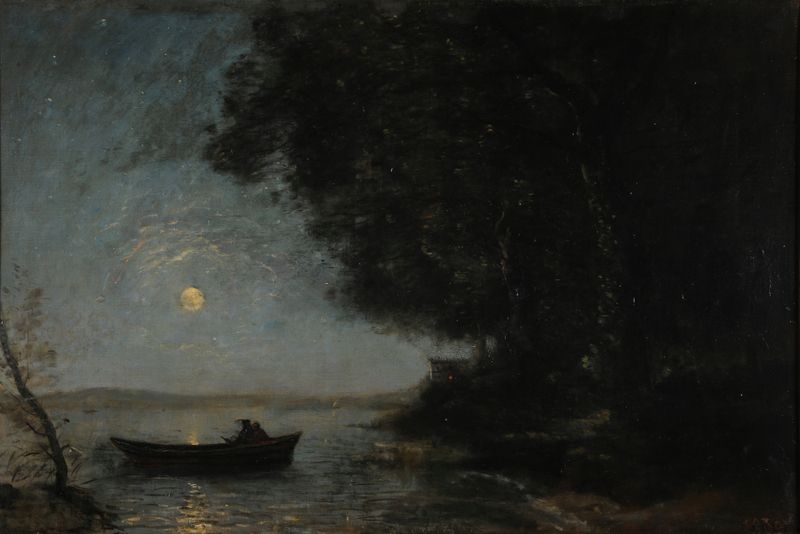
Le lac ; effet de nuit
Jean-Baptiste-Camille Corot
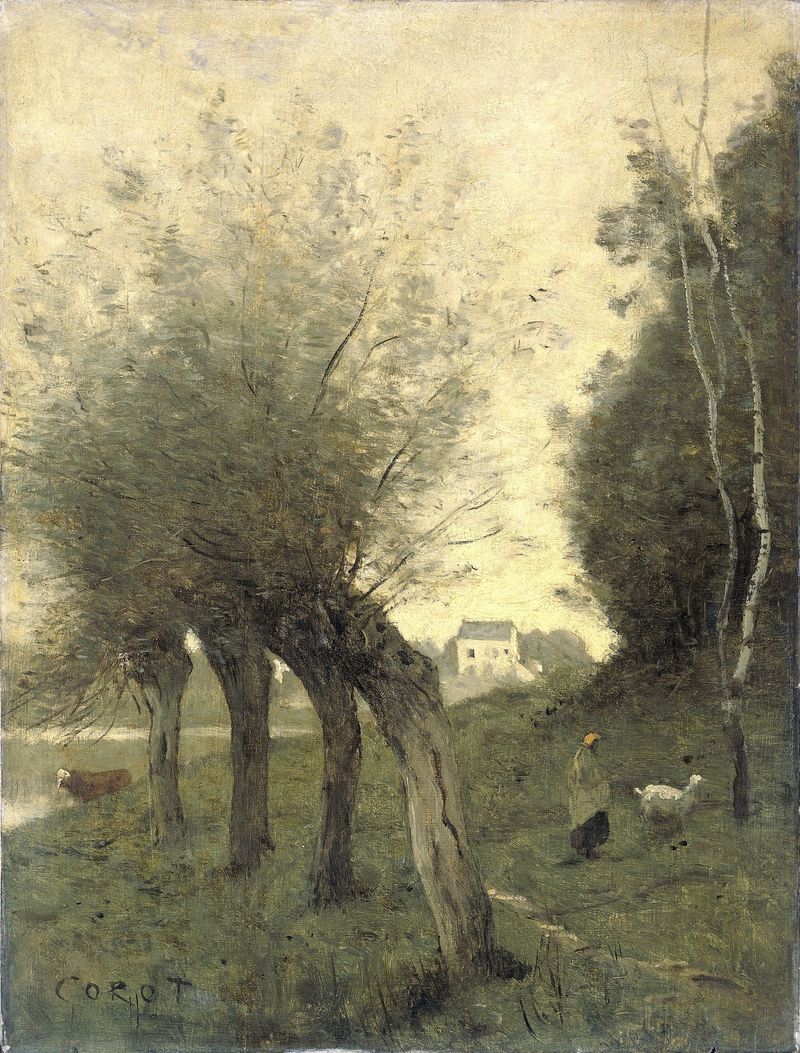
Landscape with Pollard Willows
Jean-Baptiste-Camille Corot
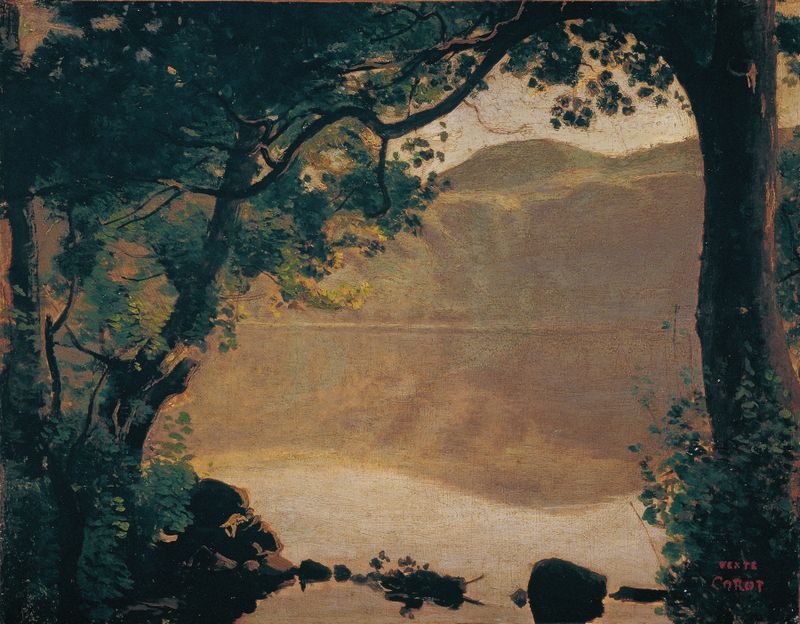
Der Nemisee
Jean-Baptiste-Camille Corot
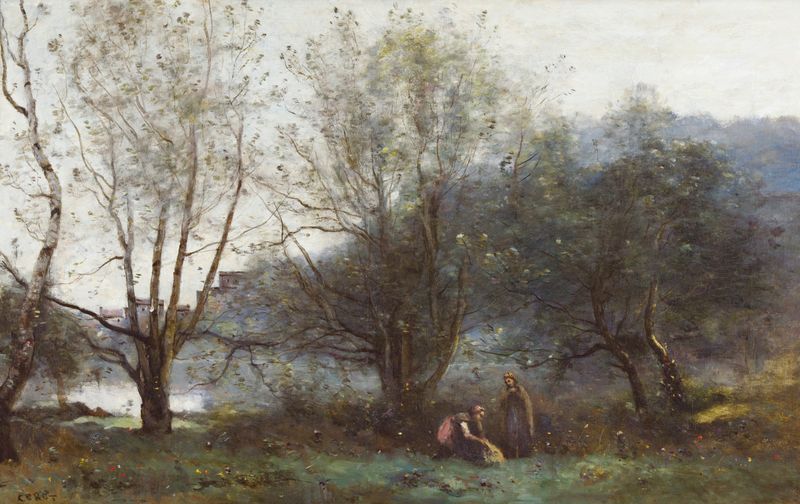
Les Étangs De Ville D’avray
Jean-Baptiste-Camille Corot
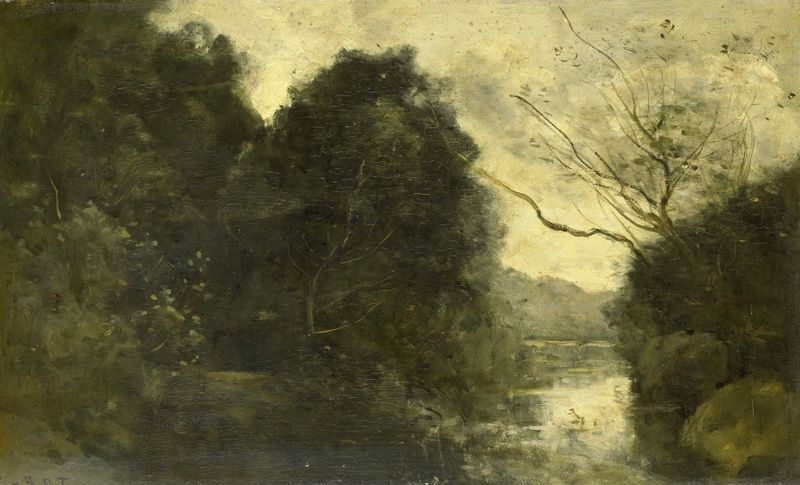
Pond in the Woods
Jean-Baptiste-Camille Corot
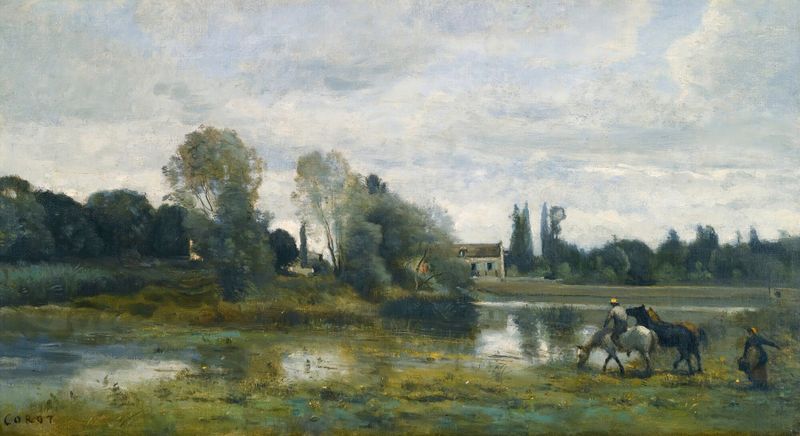
Ville D’avray; L’abreuvoir Des Chevaux
Jean-Baptiste-Camille Corot
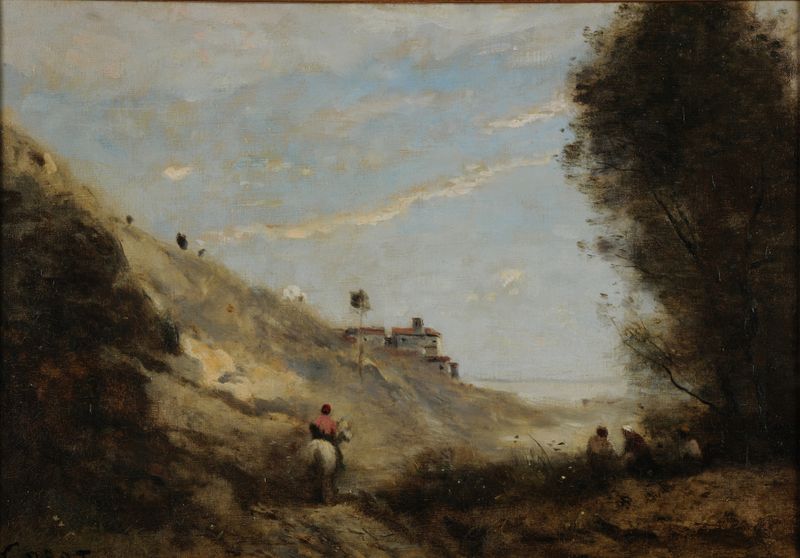
Le vallon au cavalier
Jean-Baptiste-Camille Corot





